Akili who was born in Burundi represented hosts Norway at the Oslo 2025 Homeless World Cup
meet akili
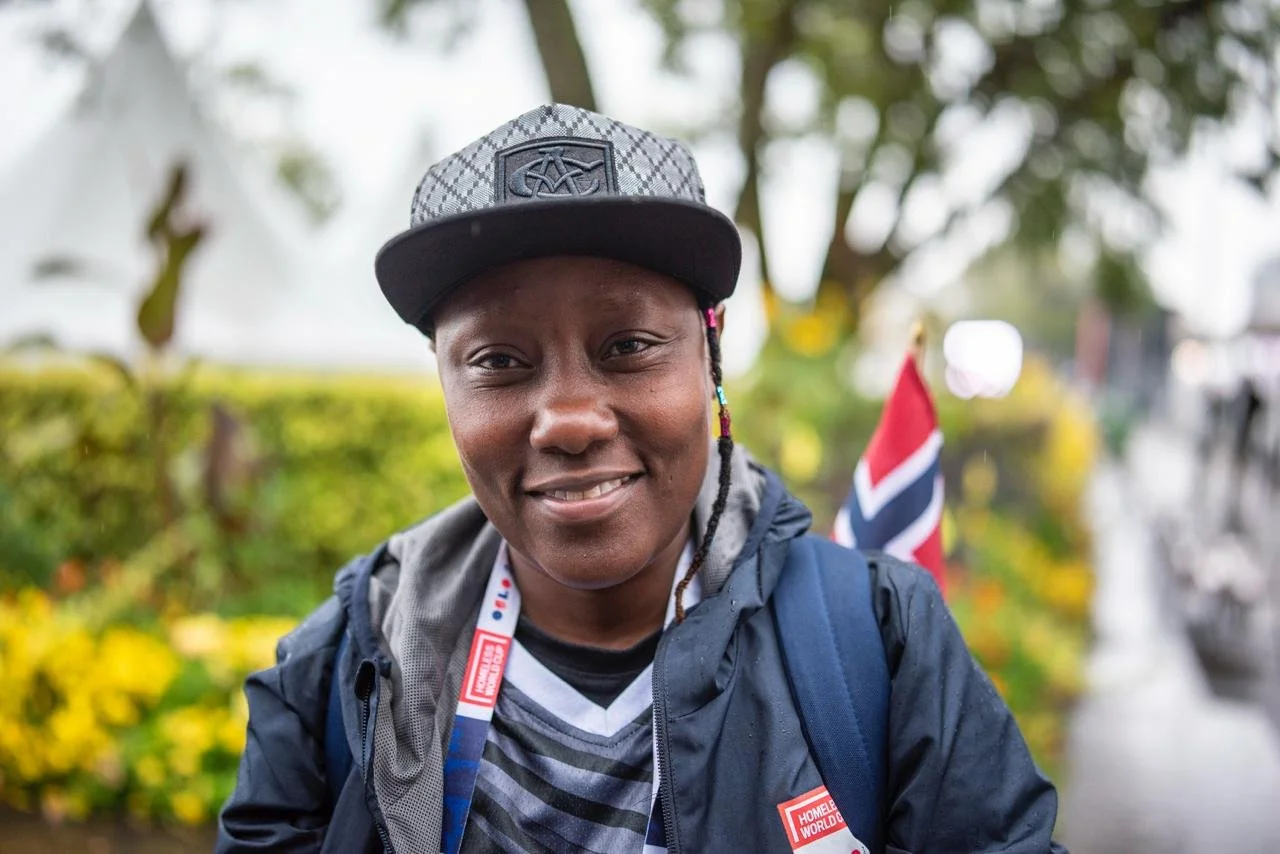
Norwegian player Akili Nadege sits across from me wearing her Norwegian playing kit accessorised by two multi-coloured wrist sweatbands. On her left wrist is a red, white, and blue one signifying the Norwegian flag. On her right, one demarcating the pride flag.
Speaking to me in a mix of Norwegian, English, and Swahili, Akili explains she had played football in her home country and missed it greatly but wasn’t sure she would ever have the opportunity to play again.
Born in Burundi, Akili arrived in Norway seeking asylum two and a half years ago. She came to Norway via Rwanda and the Congo. A gay woman hailing from a region where it is unsafe to be openly gay, she had had to seek asylum for her own safety. Almost three years on, she’s representing her adopted home country Norway at the Oslo Homeless World Cup.
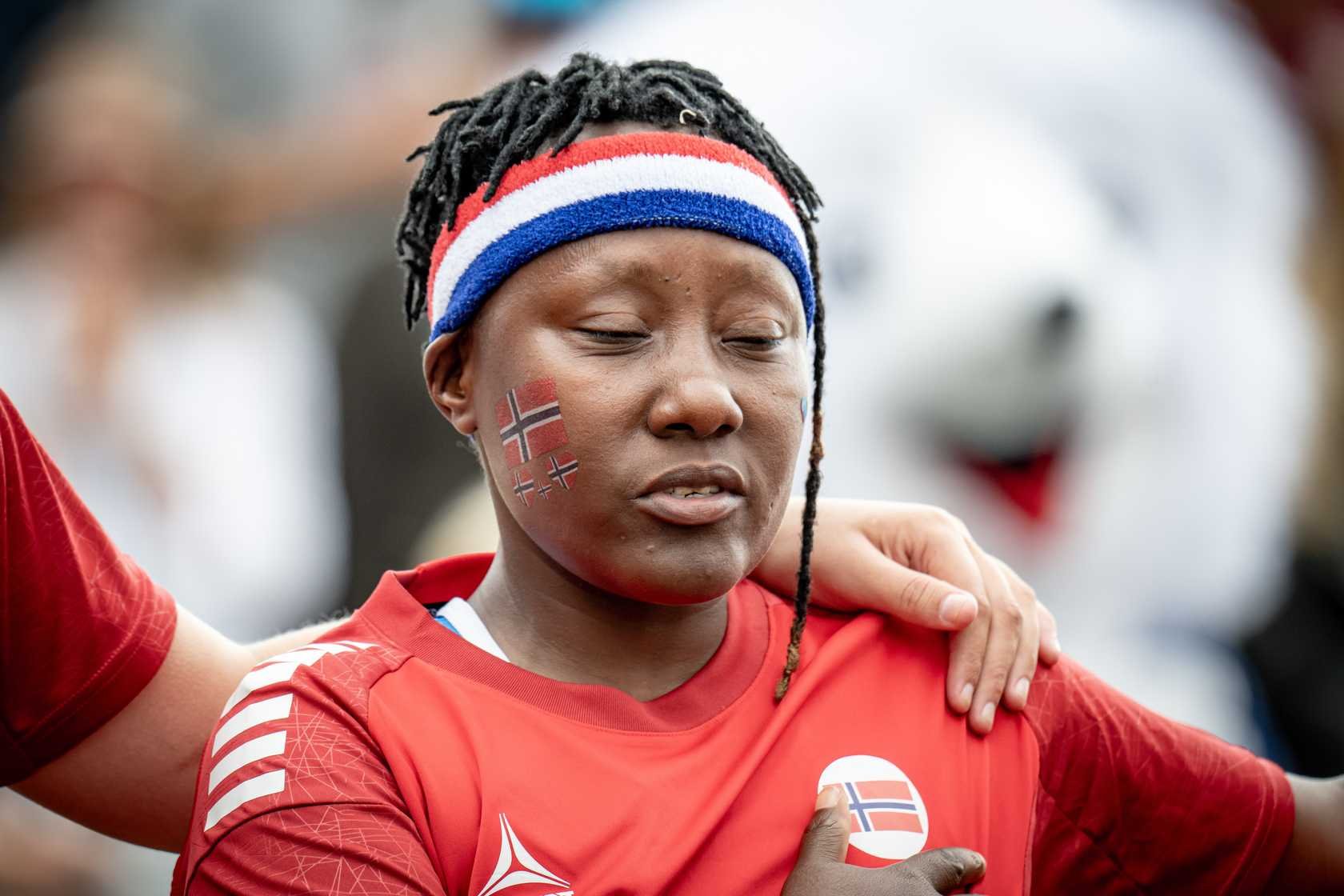
| Image: Anita Milas
Akili found her way back to football by chance one day when she was travelling to a local Norwegian store, she spotted the Norwegian street football program run by Homeless World Cup Host Member Country, the Salvation Army, taking place on a nearby pitch. Intrigued and keen to play, Akili hurried back home, put on some gear, and returned, asking one of the other players if she could join in. She’s been a regular ever since.
Akili’s no longer discriminated against in Norway she can be out and proud and doesn’t have to fear the threat of discrimination and violence that followed her in Africa. “I’m free. So I’m very happy, because there’s a lot of freedom here in Norway, as compared to back at home. I can wear whatever I want without anyone judging me.” Cue the multi-coloured, celebratory sweatbands. Also, the miniature Norwegian flag on a stick she has neatly, proudly, affixed to her backpack.
Akili’s football participation has also proved transformative, improving her physical and mental health. Her Homeless World Cup experience is an extension of that.
“People might feel that taking part in Homeless World Cup, it’s like you don’t have anything else to do. That is not the case, because it provides a space for you to take part and to be physically healthy and also to be mentally healthy and also to interact with other people,” she says. “So it’s like a clarion call for women to come and play football, and it also gives you some form of stature to feel valuable you are playing for your nation. So it feels very, very good.”
She adds: “Football is able to transform things, actually. Football can transport things from a bad state to a good state. Football is medicine for the heart.”
Words by Fiona Crawford