
Catching up with the Kings of Egypt
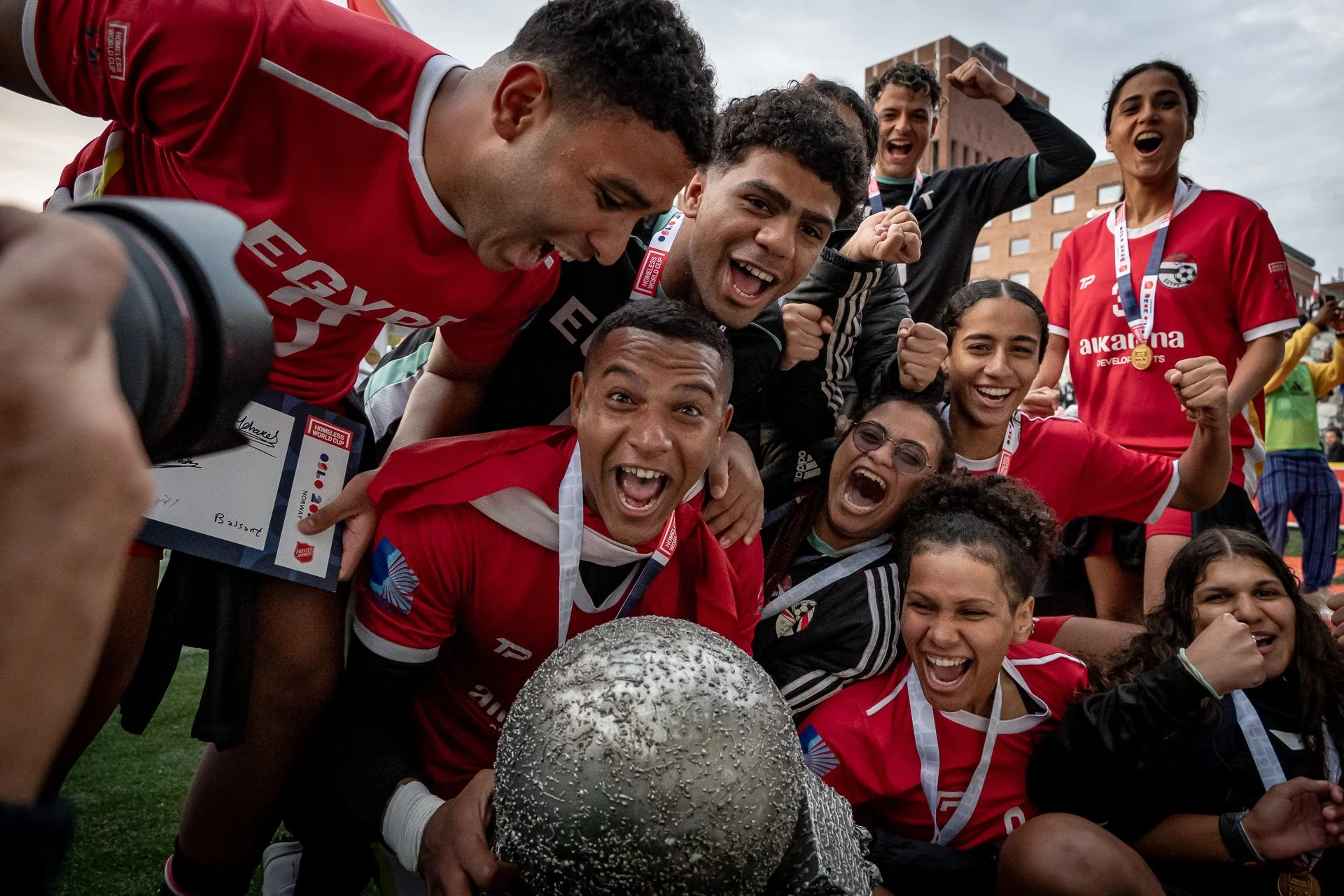
| Egypt won the Oslo 2025 Men’s Homeless World Cup. Photo: Anita Milas
We caught up with the Oslo 2025 Homeless World Cup Men’s champions a year on from the tournament
Egypt made history at the Oslo 2025 Homeless World Cup when they became the first African team to win the Men’s Homeless World Cup.
They beat the most successful team in Homeless World Cup history, Mexico, in the quarter-final, setting up a semi-final with South Africa before going on to face Portugal in the final.
A strange coincidence that connected all these games – an identical score – all the games were won 4-3. It’s clear the Egyptians found a winning formula, as well as a winning score.
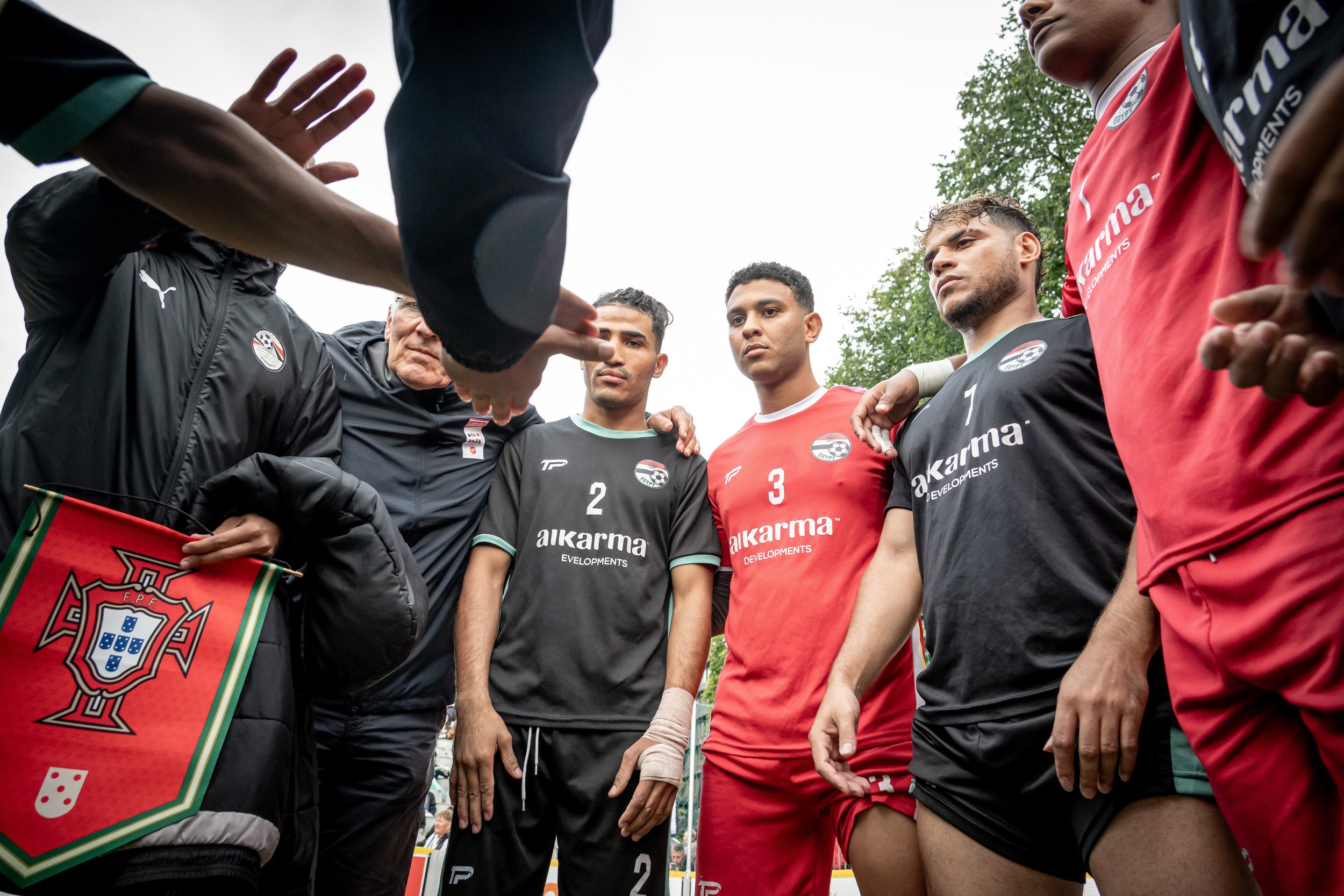
| Preparations ahead of the Oslo 2025 Homeless World Cup Men’s Final. Photo: Anita Milas
It might have been a year ago, but the impact of that game and the players experience in Oslo is still being felt.
We caught up with players Ahmed and Radwan who represented Egypt in the Norwegian capital. Both players grew up in Cairo, one of the most densely populated cities in the world.
Ahmed said: “I remember every single second of every single game - particularly the Mexico game [in the quarter final]. That was the toughest game we had but we were able to overcome this obstacle. I remember when we won the tournament we played Arabic music - that’s a moment I will never forget.”
Egypt came into the tournament believing as a team that they could go on and win.
“We were very united as a group, we were very close so we all had the same target and same goal, to do our best and ultimately to win. So that helped us with the tough tests,” Ahmed explains.
“Ibrahim [Egypt Team Manager] used to give me a lift to training and I would always say, we’re going to win this time - we had faith we could do it.
Even when we faced Mexico, it was a tough test but we got through it. Going into the final we were confident we were going to win,” Radwan said.
They had a lot of support from home too, with Ahmed saying “all of Egypt was watching and sending messages and supporting our games.”
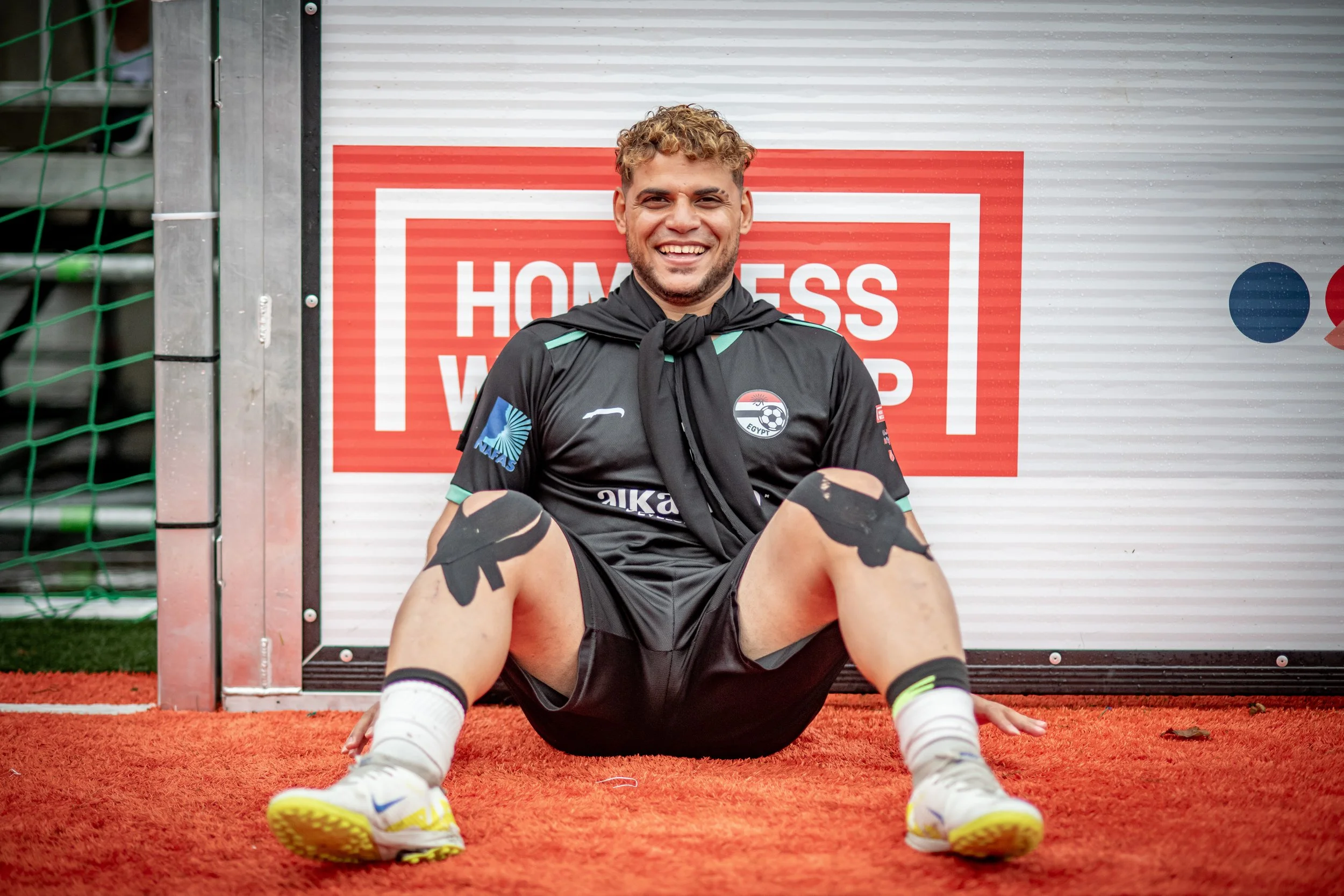
| Ahmed takes a moment after the final at the Oslo 2025 Homeless World Cup. Photo: Anita Milas
For Ahmed, 35, “[The Homeless World Cup] was the best thing that ever happened to me. The tournament and the trip changed my life. It was a great experience. When we came back to Egypt everyone was talking about us, and they still do up to this day.”
Ahmed grew up in Maasara, an industrial area with a mix of formal and informal housing. Ahmed works in a mobile phone shop and has done well but the salary he receives still means he and his young family, with two small children - a daughter, 5, and his son, 3, are among millions in Egypt who are living on and around the poverty line, earning around $200 a month.
Since returning to Egypt, Ahmed signed with an amateur football club, which at 35 he says wouldn’t have been possible without the Homeless World Cup. Playing for the club has given his monthly income a significant boost, helping to make monthly costs of rent and food more affordable for his young family.
Radwan grew up in a similar industrial area to Ahmed. His family lived in Dar El Salaam until he was eight in national housing that was rent conrolled.
They then moved to Sheikh Zayed City as part of a national housing project where the government offers heavily subsidised housing to people who were from low income backgrounds to help build and grow new neighbourhoods. He lives with his parents, his siblings and his grandmother. Millions of people across Egypt live in similar housing projects, which help people who have low income to access housing.
While he was at the Homeless World Cup, his brother worked extra hours to help supplement the money they were missing from his salary working as a cashier at a flower shop.
Radwan found a new focus and inspiration at the Homeless World Cup and is continuing his studies in Physical Education at a Public University in Cairo. He hopes to return to Europe to continue his studies after he experienced such kindness and support for his personal development during the tournament.
Like Ahmed, he has also recently signed for an amateur football club which will help to supplement the monthly amount he earns to help provide for his family.
The organisation behind the team
Egypt are represented by NAFAS in the Homeless World Cup network and both players joined the programme after being recommended by friends.
NAFAS’s CEO, Ibrahim Shash explains that the majority of their participants are living in industrial areas with informal housing and state sponsored housing programmes. Some 40-50% of people in Egypt are living in poverty, he explains, this he says is assessed, as living off the equivalent of $200 a month or E£10,000.
The goal of NAFAS is to initiate and manage sports programmes that give street children and young people at risk a place to breathe, hence their name, which means “breath” in Arabic.
By creating a positive space through sports, participants can receive help tailored to their unique needs with social reintegration as the ultimate goal.
Founded in 2012, NAFAS originally focused on helping homeless children who were living on the street, but over the years they have expanded their outreach programme to different areas of Cairo, and now also offer support to young people, men and women. While priority is given to those with more desperate needs, they have a “don’t turn anyone away” policy.
Ahmed is now working with NAFAS, supporting the next generation of players to join; “it changed my life”, Ahmed explains, "now I want to change the lives of others.”
A tournament that creates opportunity and builds connections
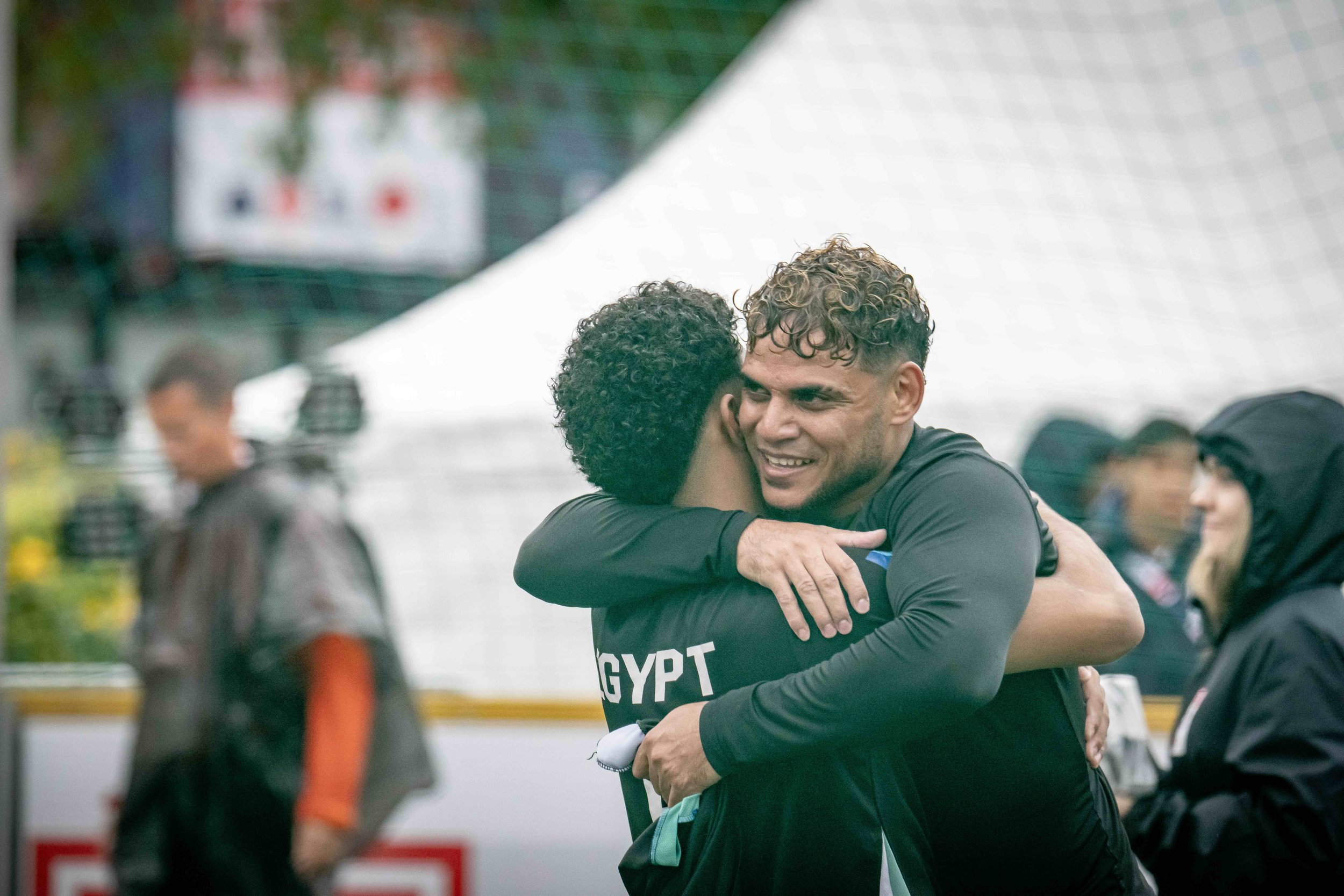
|“It changed my life, now I want to change the lives of others” - Ahmed Photo: Anita Milas
The tournament didn’t just give the players an opportunity to play football, it also gave them a chance to experience another culture and one of the things both players spoke about – smiling all the time while they remembered – was the kindness of the people in Oslo and at the tournament.
They also remembered the acts of fair play, how when they faced teams that were at a different standard they would allow them to play, to get into the game, have a chance to play and score.
Ahmed said: “It’s not all about winning, it’s about having fun together.”
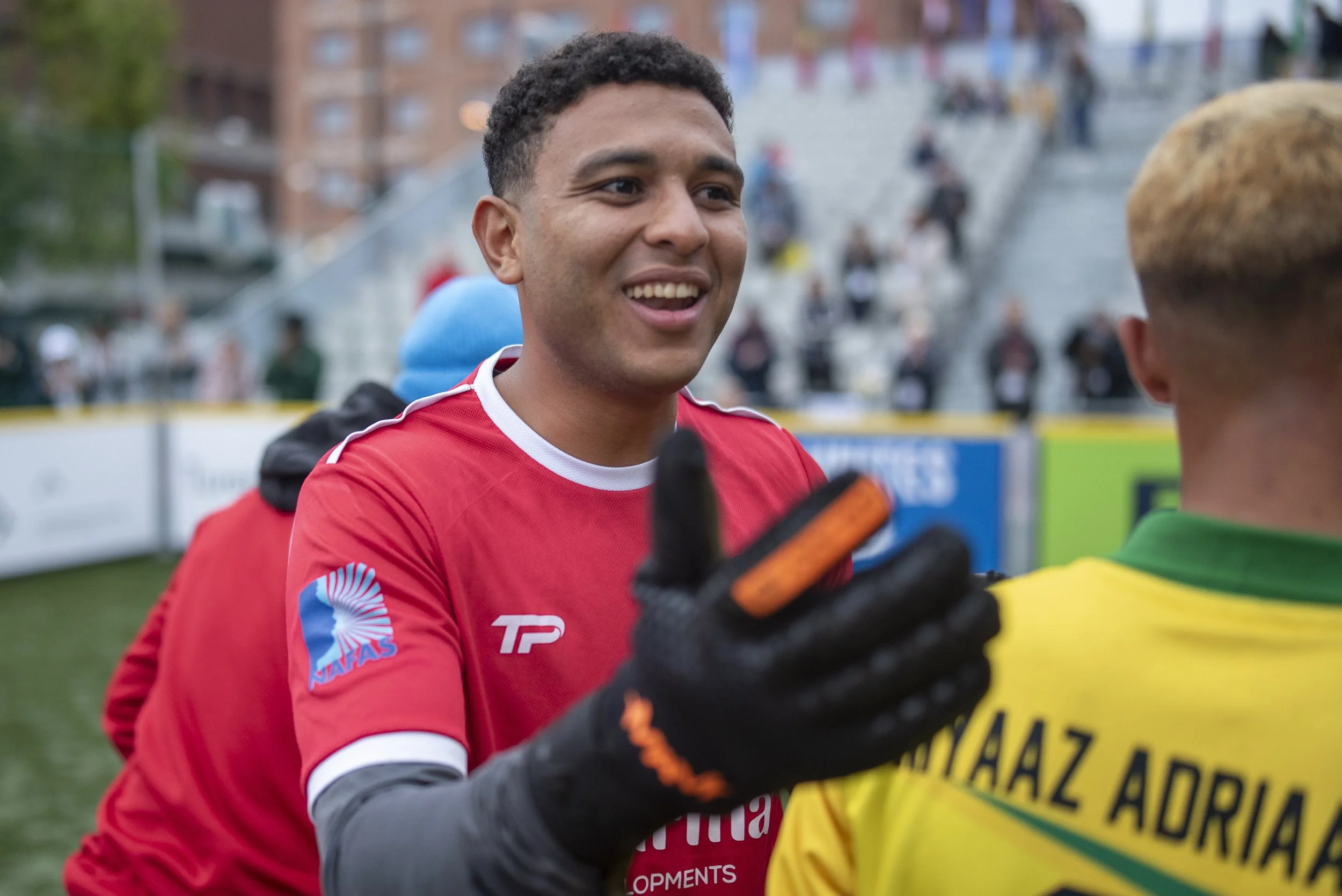
| “Everyone was looking at us from a completely different perspective” - Radwan Photo: Donnie Nicholson
“The tournament in Norway was fantastic. From the way people treated us from the moment we arrived. They were incredibly proud of us, especially when we won and were doing so well. Everyone was looking at us from a completely different perspective,” said Radwan.
This gave both players a new outlook on life, leaving the Norwegian capital feeling more hopeful for the future and with a new perspective.
When asked what advice they would give to future players, Ahmed said “Make the most of the experience. You have to make sure you don’t waste this opportunity. Meet as many people as you can, I met two or three people from every country and we’re still in touch today. Connecting with and meeting people from all over the world was such a big part of the Homeless World Cup for me.”
“I loved every single person who was part of the Homeless World Cup, including the medics, including the media, the volunteers. Everyone was very nice and kind and supportive and they offered me all the support I needed while I was there.”
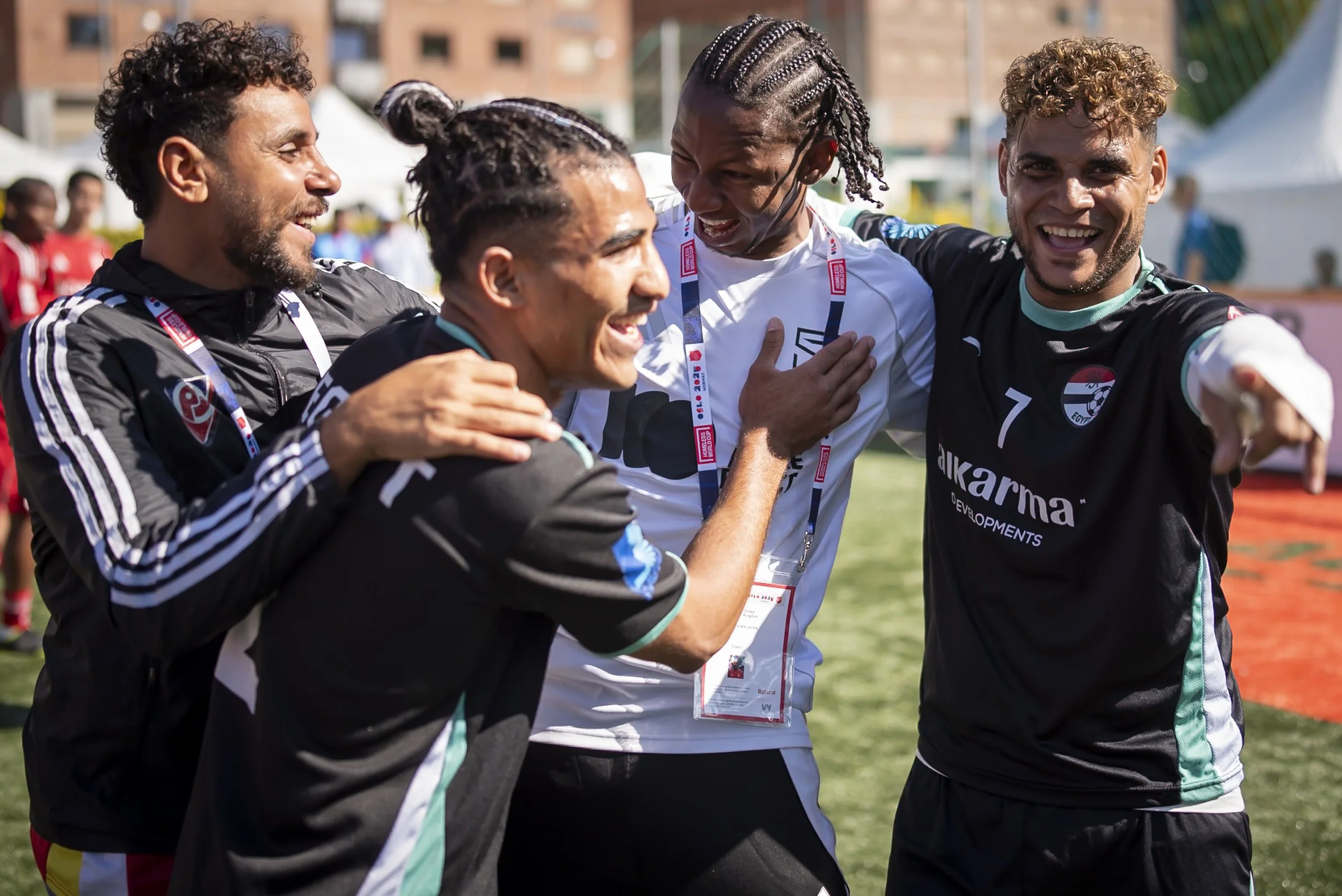
| Ahmed and his teammates celebrate with player turned coach Frankie Juma from Team England Photo: Donnie Nicholson
A life changing and unforgettable opportunity
Ahmed and Radwan both agreed the Homeless World Cup was a life changing opportunity and one they would never forget.
Radwan hopes other people will be able to go and have the same experience they did; “Don’t waste any time being bored, you have to take advantage of the experience, stay awake, do a lot of things. Enjoy yourself, have fun.”
“The people and everyone involved in the Homeless World Cup are really kind so it’s really good to have a connection with people and build friendships.”
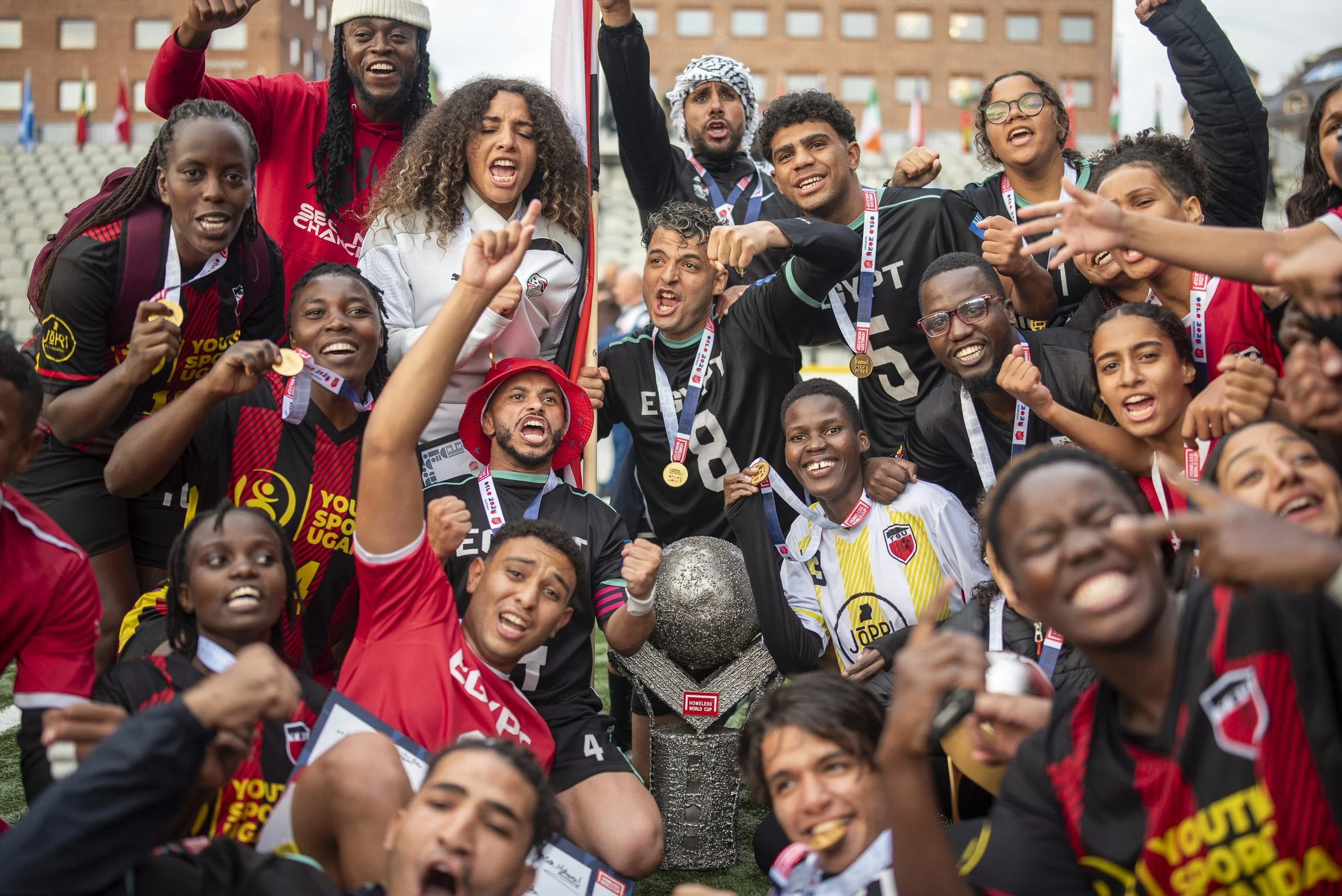
| Egypt and Uganda made history at the Oslo 2025 Homeless World Cup as it was the first time two African nations had won both tournaments. Photo: Donnie Nicholson
The Egyptian team that won in Oslo still meets and play street football together, coming together to remember that remarkable week when they became world champions.
Looking ahead to Mexico City 2026 Homeless World Cup, despite the Mexican’s obvious home advantage, both players believe that not only Egypt can go back and defend their title, but that they’ll go one better and win the Women’s Homeless World Cup too.
“God willing, we are going to win it again, nothing is impossible, anything can be done.”
Watch this space, Mexico. The Egyptians are coming.
#RoadToMexico #FootballChangesLives