
Keeping Score: What volunteering at the Homeless World Cup taught me

| Jordan Lee and other volunteers at the Seoul 2024 Homeless World Cup. Image: Jordan Lee
Every match at the Homeless World Cup has a scoreboard. Goals are counted, results are recorded and winners are celebrated. But some of the most important things cannot be measured in numbers. After volunteering as a scorekeeper at the Seoul 2024 Homeless World Cup, Jordan Lee reflects on what he learned about football, spectatorship and why seeing players as more than their circumstances matters.
By Jordan Lee
The Homeless World Cup gives people experiencing homelessness a valuable opportunity to represent their country through football. But their hard work and passion alone are not enough for them to be truly recognised as players. It also depends on how spectators see and respond to them.
I began thinking about this while volunteering in the Competition team at the Homeless World Cup in Seoul. On the surface, my role was straightforward: follow each match, record the goals, confirm the final result, and make sure the score was communicated accurately. Because games moved quickly from one to the next, the work required constant attention. A goal could be scored in an instant, and a match could change direction within a few minutes.
Yet sitting close to the pitch showed me that keeping score was not simply an administrative task. Each number represented something that had happened between players: a successful pass, a defensive mistake, a difficult save, a moment of individual skill, or a decision made under pressure.
Recording the scores required me to watch the players in the same way I would at any other football tournament - focusing on their skill, effort and performance on the pitch. That is part of what makes the Homeless World Cup special: it gives people the opportunity to be seen differently, not through the circumstances they have experienced, but as players representing their countries and competing to win.
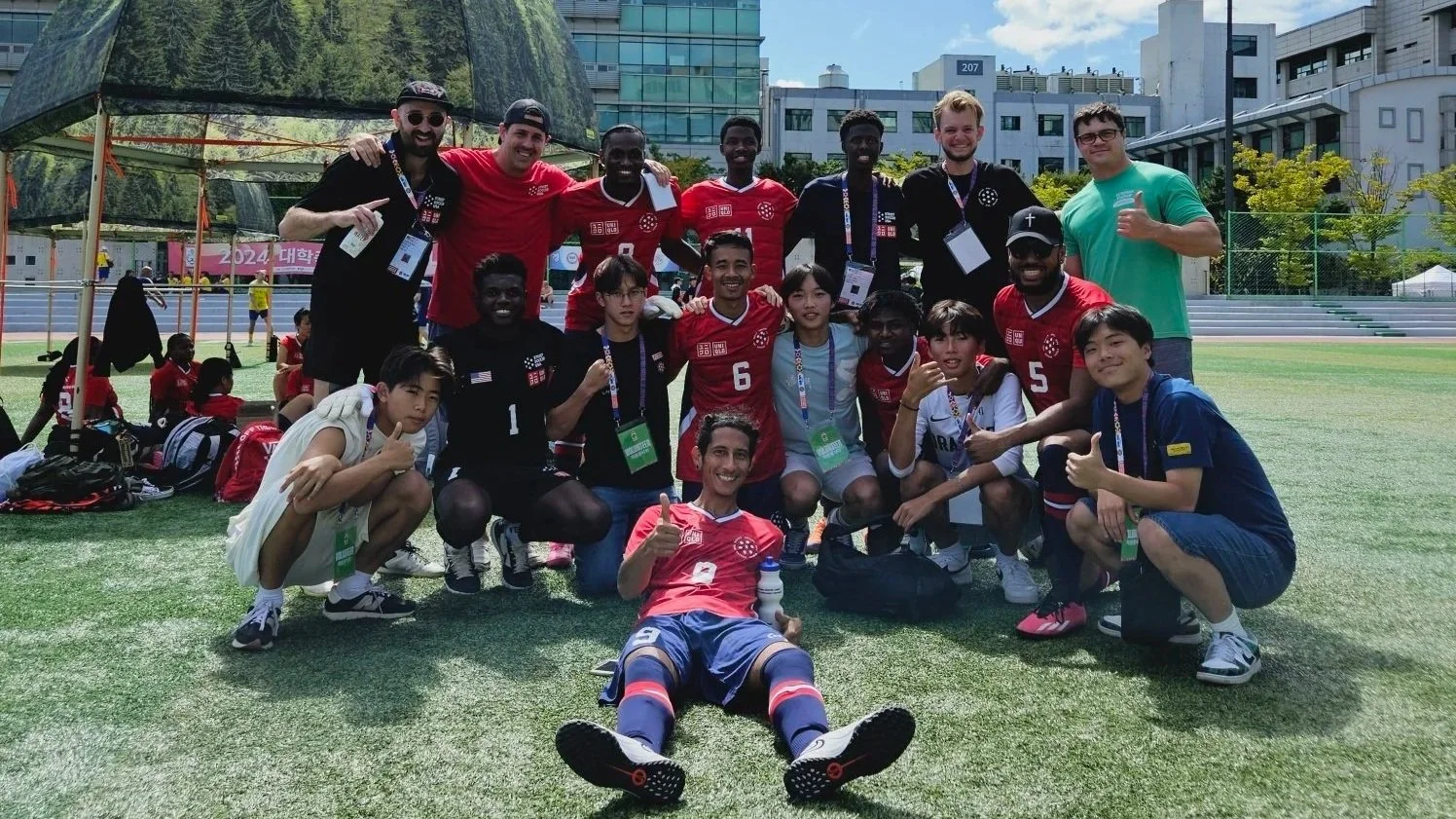
| Jordan Lee and fellow volunteers with Team USA at the Seoul 2024 Homeless World Cup. Image: Jordan Lee
Before volunteering, I already understood that the Homeless World Cup was connected to serious social issues. Many spectators likely arrived with a similar awareness. However, while watching the matches, I noticed how quickly the immediate reality of football took over. Players argued over decisions, encouraged their teammates, reacted to missed opportunities, celebrated goals, and became frustrated after conceding. These were not unusual or symbolic reactions. They were ordinary experiences of competition.
This creates an important tension within the tournament. The Homeless World Cup is built around a social issue, but the people on the pitch are not simply representatives of that issue. They are also competitors taking risks and expressing themselves. Their experiences of homelessness are relevant to the meaning of the tournament, but those experiences do not explain every pass, tactical choice, goal, or celebration.
The role of the spectator
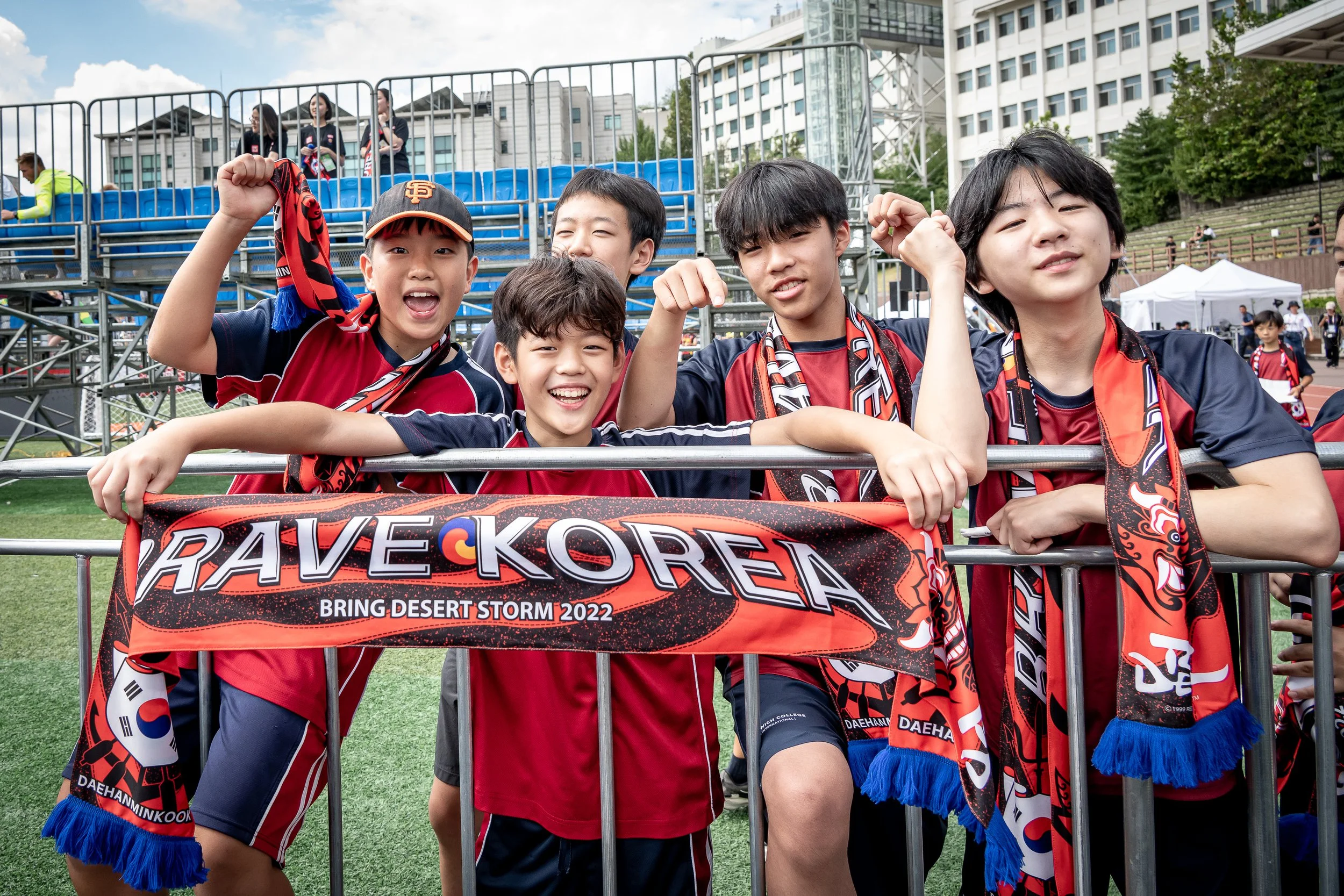
| Young fans at the Seoul 2024 Homeless World Cup. Image: Anita Milas
When spectators watch the Homeless World Cup, they may be aware of the difficult experiences that have brought players to the tournament. However, the event offers an opportunity to look beyond those circumstances and recognise the players as footballers - people with talent, ambition and a genuine desire to compete.
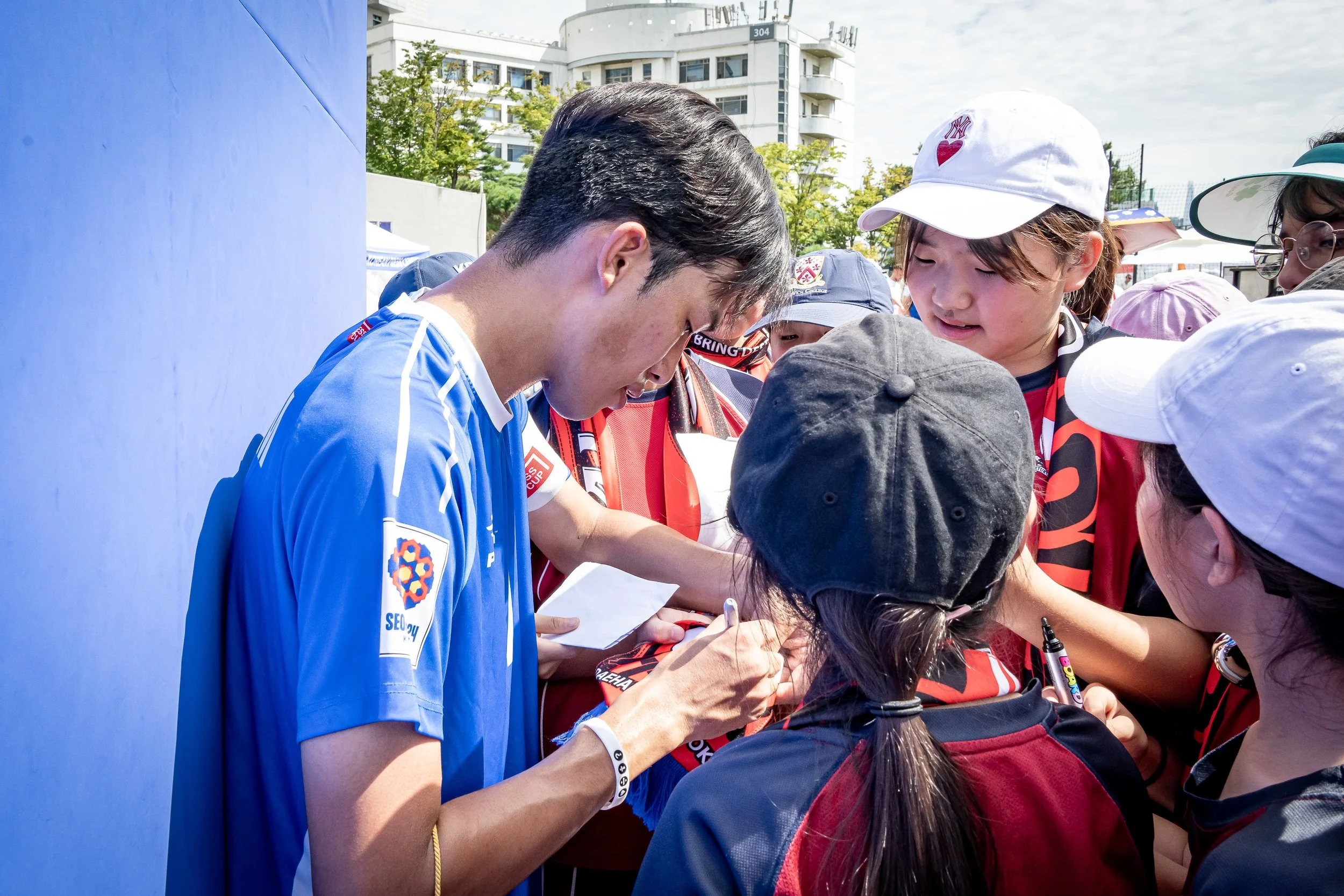
| Seong Jun Kim, Korea’s Captain signs young fans scarves at the 2024 Seoul Homeless World Cup. Image: Anita Milas
This is where the philosophy of spectatorship becomes significant. Watching a sport is never completely neutral. The spectator’s perspective helps shape what the athlete becomes in the moment: a performer, a symbol, or a message. In the Homeless World Cup, the same player can be viewed in numerous ways. The difference comes not only from the match itself, but also from the meaning spectators attach to it.
My experience as a scorekeeper made this especially clear. The score sheet didn’t care about a player’s background. It recorded what happened during the match. It showed which team scored, how the game progressed, and who eventually won.
At the same time, numbers could not capture everything I observed. A final result could not show how intensely a team had defended, how a player responded after making a mistake, or how teammates supported one another after a loss. The score provided one form of recognition, but watching the match closely provided another. Numbers, it turns out, were only part of the story.
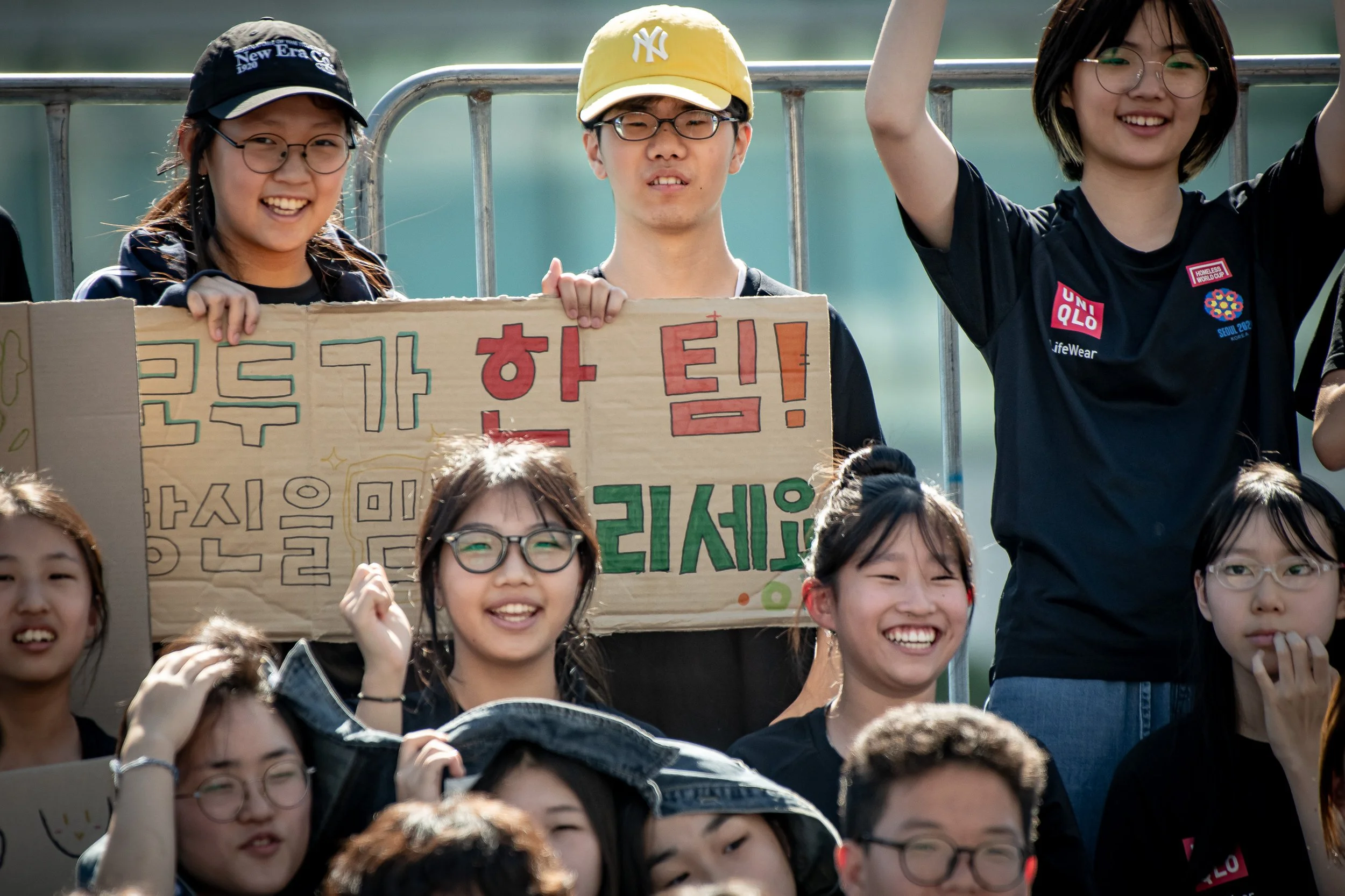
| “We’re all one team!” - Spectators at the Seoul 2024 Homeless World Cup. Image: Anita Milas
The tournament also raises a deeper question about recognition and awareness. Is a player fully seen when the audience looks only for the hardship that brought them there? Or does understanding an individual require attention to the ordinary aspects of the game, the passes, the missed chances, the tactical choices, the celebrations, the joy after winning, and the frustration after losing? The Homeless World Cup is powerful not because it takes people away from the day to day reality of homelessness, but because it places that reality beside another truth: they are also athletes.
This understanding also influenced how I viewed my role as a volunteer. Volunteering was not only about helping the event run smoothly. It also required sustained attention to what the players were doing. Accuracy mattered because the match mattered and recognising why it mattered helped me understand something more about the tournament itself.
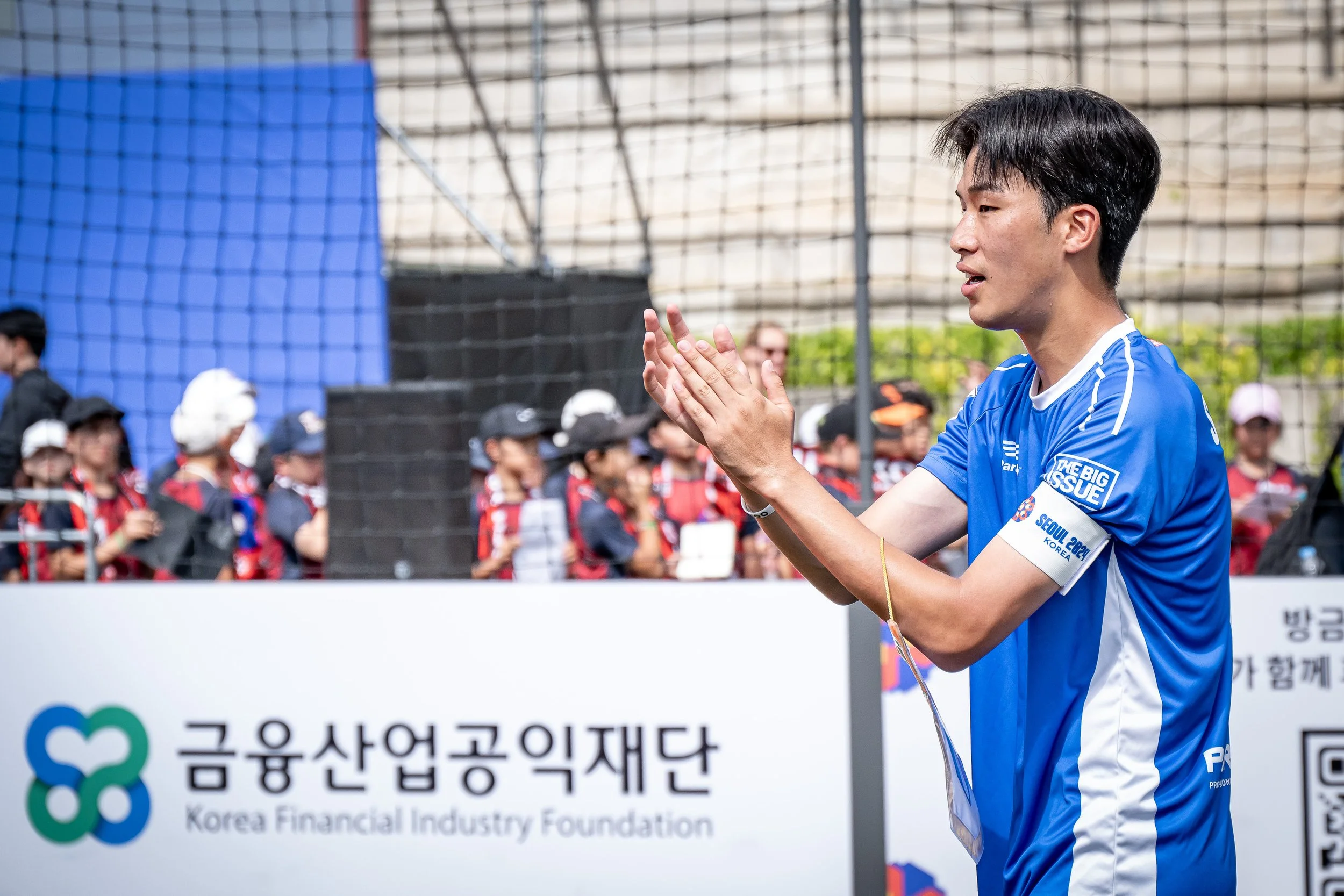
| Seong Jun Kim captained the Korean team at the Seoul 2024 Homeless World Cup
The Homeless World Cup is more than a football tournament or a social initiative. It is a space where perceptions can change, both on and off the pitch.
For future volunteers, this may be one of the most meaningful aspects of participating in the Homeless World Cup. Volunteers contribute by carrying out practical responsibilities, but they also become part of the audience surrounding the players. The way they watch, speak about, and respond to the matches helps shape the atmosphere of the tournament.
Players may have experienced difficult periods in their lives, but they are also athletes with ambition and skill who experience the disappointment, joy and determination that are part of football.
As spectators, perhaps the question isn't just whether we care, but whether focusing on someone's circumstances prevents us from seeing the full picture.
The Homeless World Cup reminds us that people are never defined by a single experience. The players on the pitch may have faced homelessness, but they are also athletes, teammates, leaders and competitors. When we recognise all of these things at once, we begin to see people for who they truly are. And perhaps that's what the tournament is really about.
Words: Jordan Lee
The Homeless World Cup’s mission is to use football to support and inspire people who are homeless to change their own lives; and to change perceptions and attitudes towards people who are experiencing homelessness.
Help us to reach that goal.
Our International Volunteer Squad for the tournament is currently full, but there are lots of ways you can get involved with and support the Homeless World Cup.
Buy a seat in the Impact Stadium – our virtual stadium helps us to continue the work we do. We are a registered charity, and your donations are vital to help keeping the Homeless World Cup going.
Come to a Homeless World Cup – The Homeless World Cup is free to attend and unticketed. We’d love to see you there and experience the action in person.
Follow us on social media and help us share the word – All our latest news and stories as well as highlights from tournaments past and present are shared on our social media platforms. Help us get the word out about how the Homeless World Cup is changing lives.
Fundraise for us – Do you have a challenge coming up and want to raise money for the Homeless World Cup? Get in touch. We’d love to have your support.
Partner with us – Are you a company or professional that is interested in using football to change lives? Get in touch. We’d love to hear from you.