From Microfinance Frustration to Global Innovation - Understanding Poverty Stoplight’s Appeal
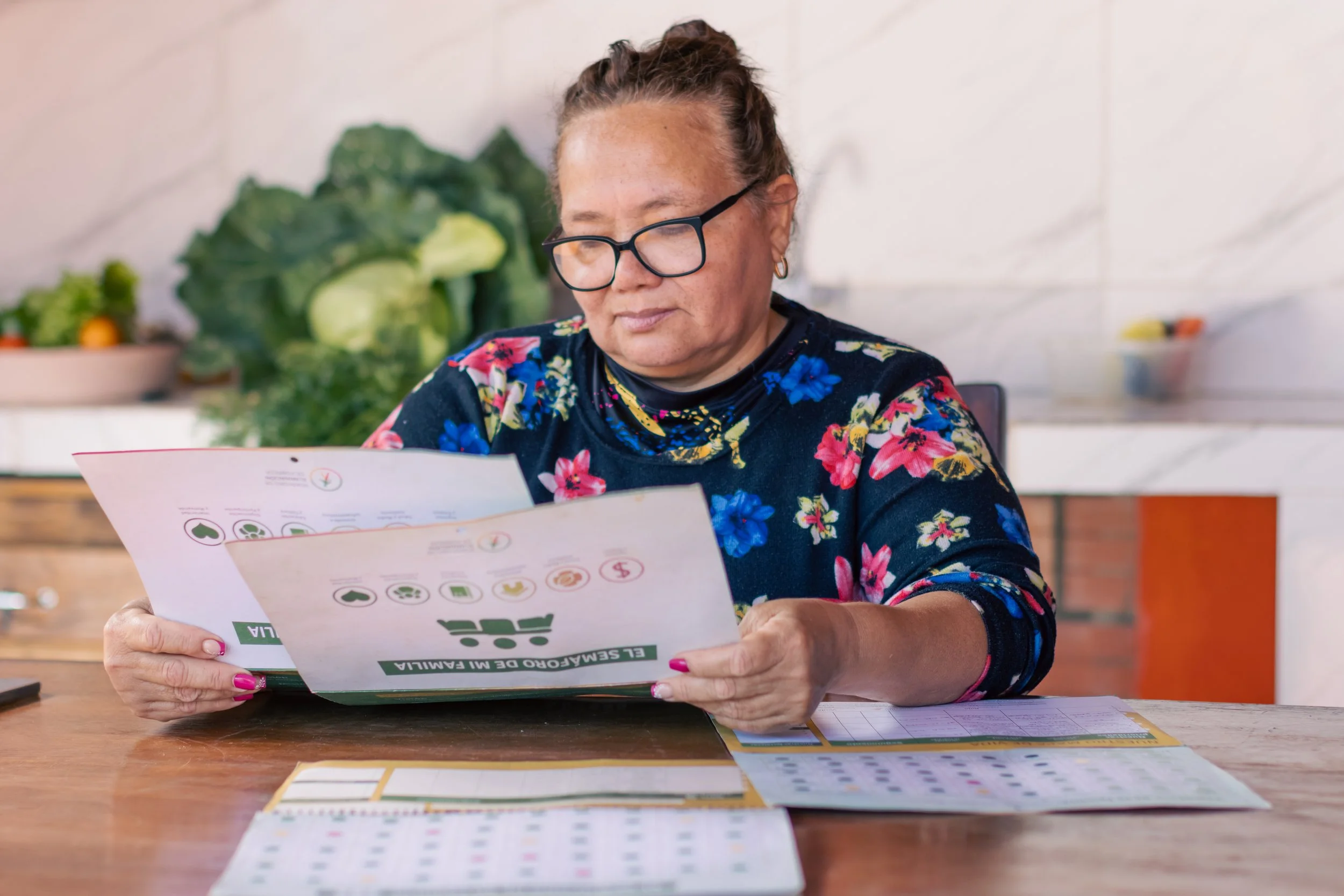
Image credit: Poverty Stoplight - Fundación Paraguaya
Fundación Paraguaya and their Poverty Stoplight have scaled from a microfinance organisation working in Paraguay’s communities to a major poverty measurement tool and coaching methodology working to eliminate poverty across 59 countries, reaching over 580,000 families worldwide and achieving tangible systems change.
This expansion demands serious attention. The Poverty Stoplight’s remarkable international adoption suggests it addresses something that the core of traditional poverty approaches have missed. Understanding its appeal and impact requires examining its current reach and the journey that shaped its creation. (1)
The Multidimensional Poverty Awakening
The Poverty Stoplight emerged from a specific moment of disillusionment. Many development practitioners will recognize this feeling. When Fundación Paraguaya was founded in 1985, the microfinance sector believed microfinance would be “a silver bullet that was going to be able to lift millions and millions of people out of poverty,” as Julia Corvalán, PhD (Poverty Stoplight Global Operations Manager) explains. After years of successfully running microfinance programs serving low-income women through village banking, however, “we were not seeing changes beyond the specifics of their loans and the businesses that they were running.” Families could repay loans cycle after cycle. They maintained their small enterprises. Yet they remained trapped in the same conditions.
This frustration crystallized between 2009-2011. The global development discourse was shifting toward multidimensional poverty concepts during this period. People working in these fields started to understand that poverty is not just based around how much income you make in a month. Someone may have sufficient income, according to World Bank standards, but may still have unsafe housing, no access to health or dental care, violence in the home, or no access to clean water within the home. It was this understanding of what poverty actually is, based on conversations with the people experiencing it themselves, that led Dr. Martin Burt (Founder and Chief Executive Officer, Poverty Stoplight and Fundación Paraguaya) to create a measurement tool that looked at multiple objective and subjective factors. These included the ability to control your emotions, or how often the person experiences feelings of happiness.
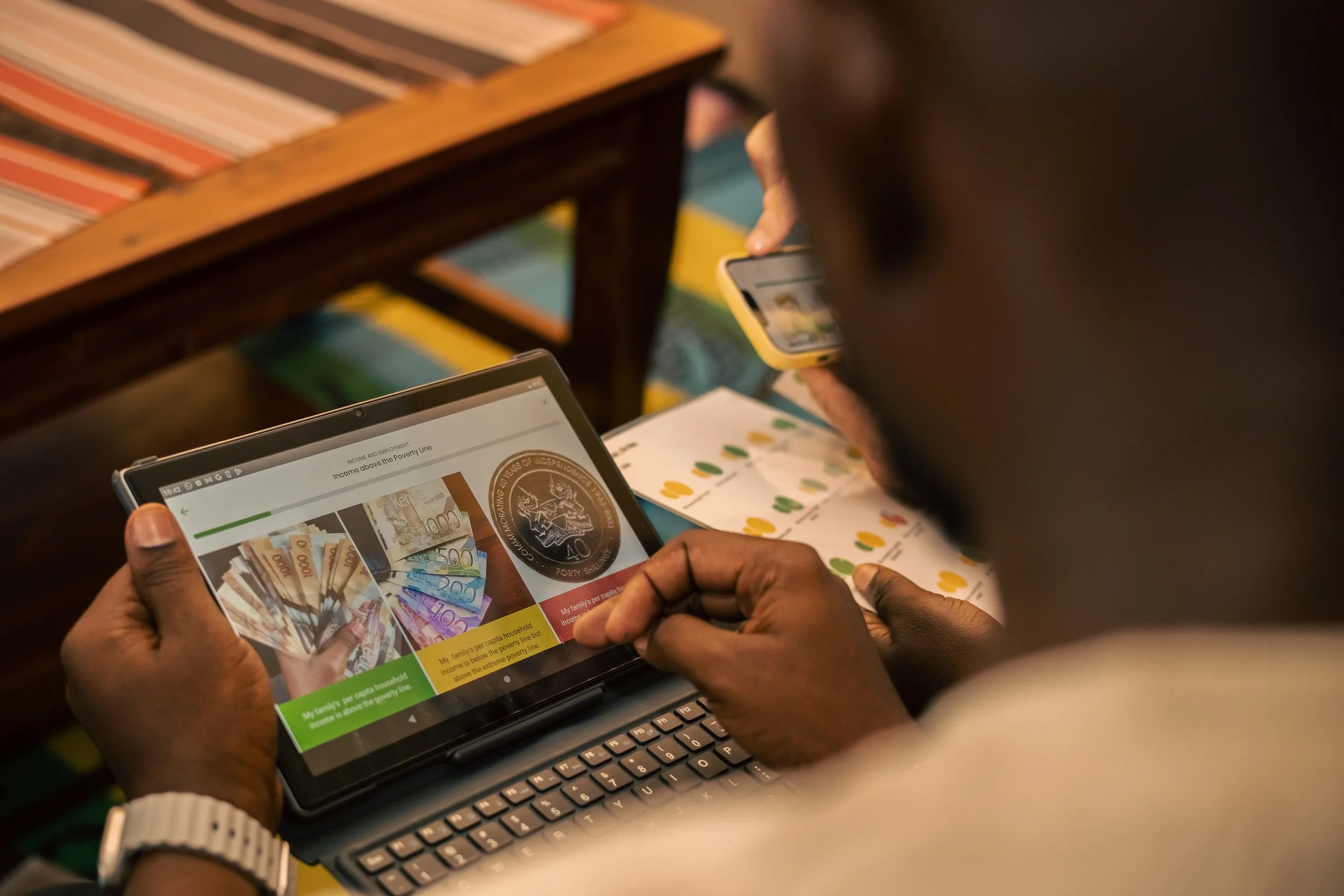
Image credit: Poverty Stoplight - Fundación Paraguaya
Once they identified what should be measured, he and his team discovered that “no such tool existed that could be used by the families themselves and that we could implement as an organization.” This is important because the sector has various top-down models that tell the people at the very top what needs to be addressed in order to end poverty, but nothing at the ground level that could be understood and used by the people being surveyed - the people actually experiencing poverty. This gap drove Fundación Paraguaya to develop their own approach. It would fundamentally challenge who controls the poverty measurement and elimination process.
The Poverty Stoplight methodology is inspired by and draws from many strong theories from well-known experts, but importantly it brings them all together in a way that empowers the individual. Amartya Sen’s (2) capability approach, a framework for assessing human welfare and development that focuses on a person’s real opportunities and freedoms to live a life they value and treats poverty as capability deprivation (3) rather than simply income shortage, is one such area that the methodology draws from explicitly. It also incorporates Paulo Freire’s (4) emphasis on critical consciousness (5), helping families develop an understanding of their own living conditions. Another, Albert Bandura (6) self-efficacy theory provides the psychological framework, explaining that a person’s belief in their ability to succeed in a specific situation influences how they approach that situation. Finally, Ken Wilber’s (7) integral theory supplies the holistic approach which combines perspectives from the individual, the collective, the subjective and the objective dimensions.
Taking a look at all four perspectives when working with poverty elimination allows a more complete picture than one single view can offer. This allows for a more accurate representation of both the challenges that must be overcome and the solutions available.
The Poverty Stoplight model uses the traffic light metaphor in order to make it easier to understand. Green represents “non-poverty”—a minimum threshold of well-being. Yellow indicates “poverty” and areas needing improvement. Red signals “extreme poverty” and areas that need significant improvement.
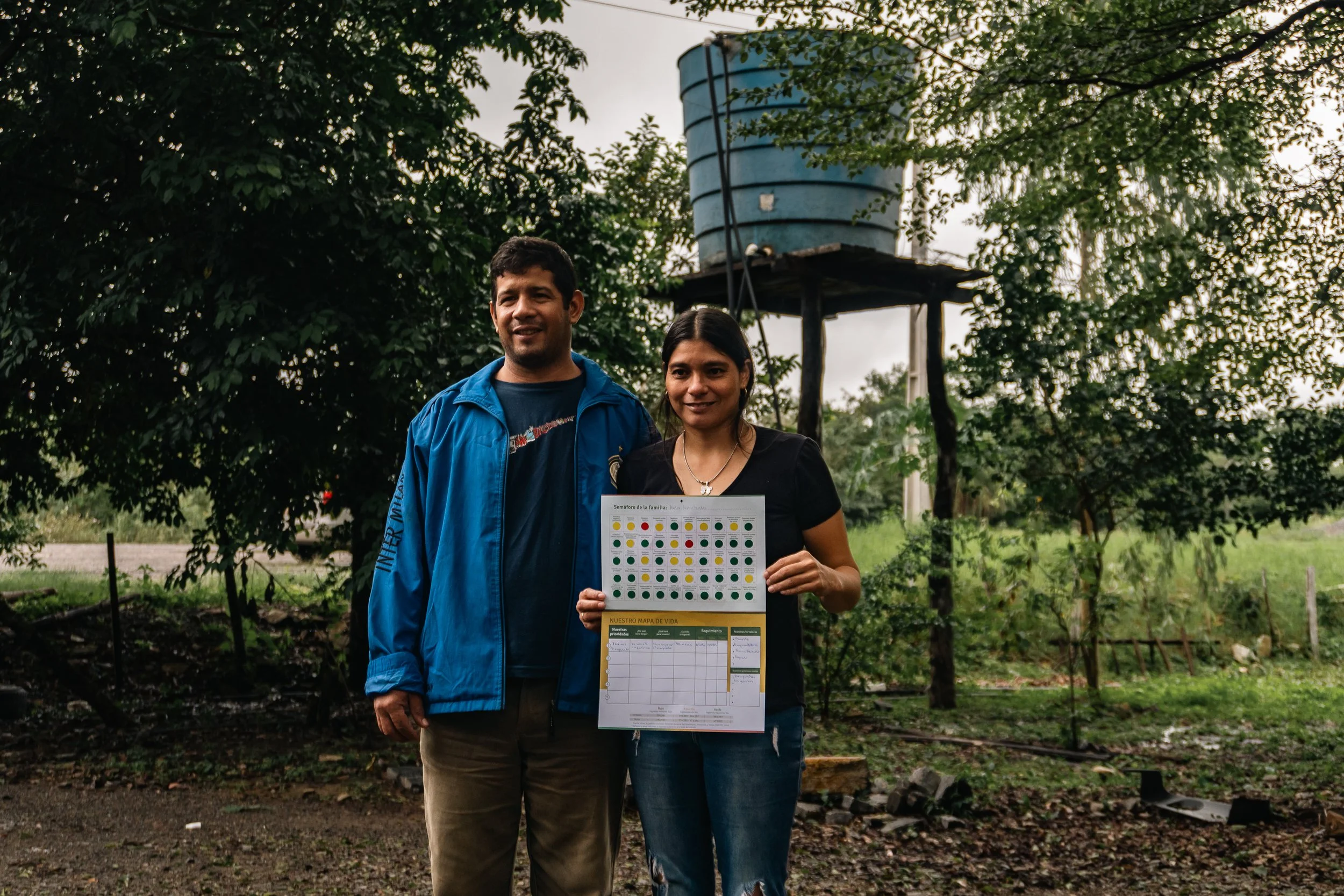
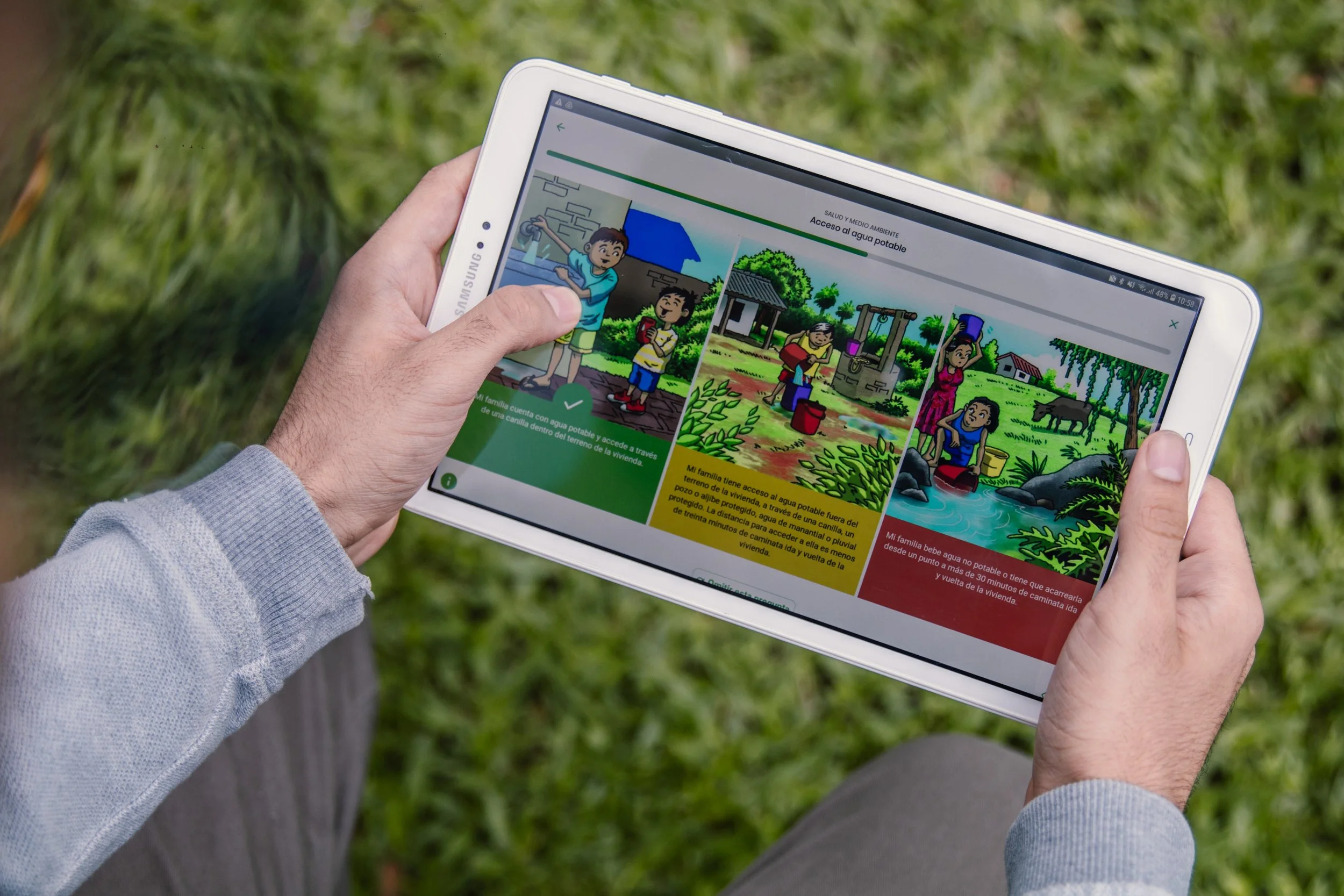
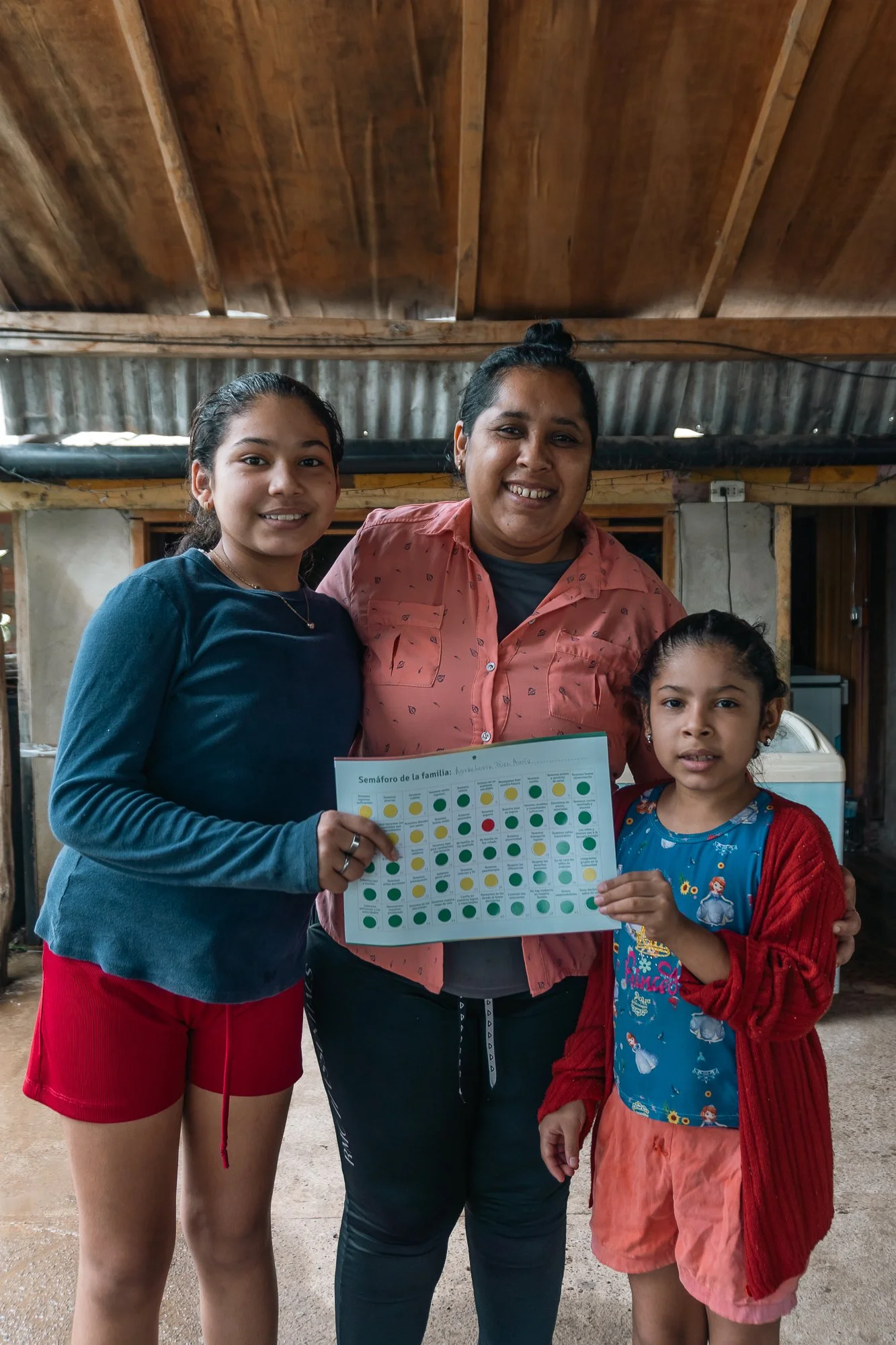
The visual system provides crucial accessibility for the families. It breaks what can feel like an overwhelming challenge down into 40-50 specific indicators across six dimensions, so families can identify where there are issues and establish concrete priorities. These range from housing and health to organization and inner motivation.
At the community level when the Stoplight is adapted to meet the specific definitions and standards of that location, families themselves contribute to defining what ‘poverty’ and ‘non-poverty’ mean to them. In this process it was revealed that beyond material needs, families valued subjective indicators that are often overlooked in poverty measurement. Things like having “control over my own emotions,” “control over my life decisions,” and “a map of my life,” Corvalán notes.
Agency Without Abandoning Structure
Perhaps the model’s most compelling contribution is its approach to the persistent tension between individual agency (someone’s ability to make changes to their own lives) and structural constraints (systemic deprivations). Rather than choosing sides in this debate, the Poverty Stoplight attempts integration. The process begins by addressing what Corvalán identifies as a common barrier: “there can sometimes be a sense of resignation, you know, I resigned to this condition because I was born poor and my ancestors were poor and therefore, I need to die poor.” First, families conduct self-assessments that focus on the particular circumstances that they feel they have control over. The assessment can be displayed in a central part of their home as a reminder, emphasizing individual and family ownership.
Yet the methodology also explicitly includes “Organization and Participation” as one of six core components - where ‘families actively engage in community groups and make their voices heard, they can drive the changes they wish to see in their communities”. Corvalán’s examples reveal this balance in practice. Families assess whether they “are part of a group,” “know how to contact public officials,” and “vote in elections.” The model includes capacity building so communities can learn “how to write letters” and work collectively to address shared problems. When communities identify systemic barriers like inadequate roads in rural Paraguay, the initiative guides collective organizing. One community spent two years advocating to local authorities, ultimately securing 200 meters of improved road access. Now children can still access their school when weather used to block them from attending during rainy seasons, amongst other benefits.
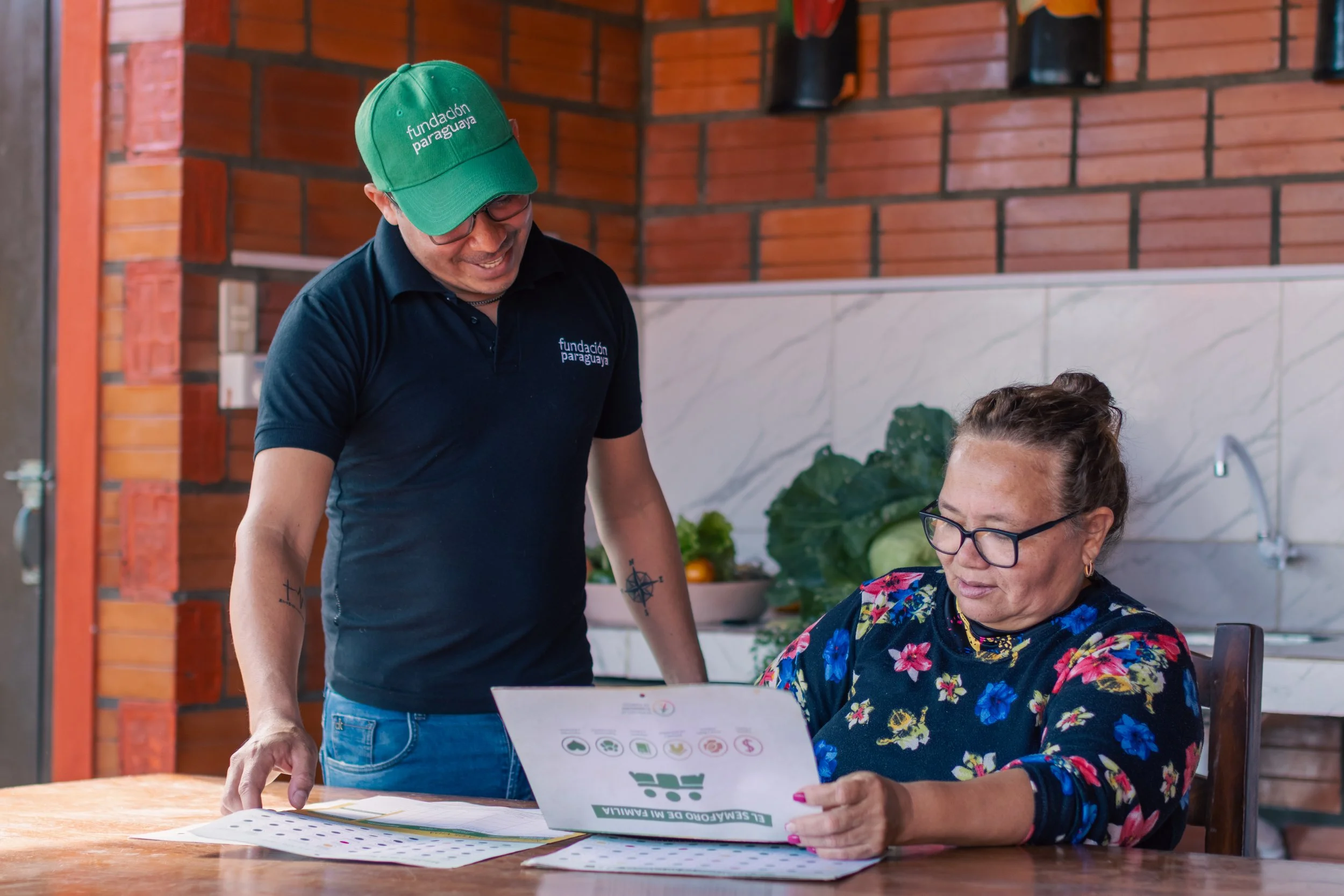
Image credit: Poverty Stoplight - Fundación Paraguaya
Promise and Acknowledged Limitations
The methodology’s global adoption suggests it meets real needs in development practice. Organizations value what Corvalán describes as a “fine grained, granular level of data that is geo-referenced.” This provides detailed family-level information from specific communities while enabling families to prioritize their own improvement areas. The approach has been implemented by over 200 private sector companies globally and over 800 civil society organizations. It has also been integrated into government programs, suggesting its practical use across multiple contexts.
However, academic evaluation reveals important limitations. Potential adopters must understand these constraints. Most significantly, Martin Burt’s own PhD dissertation concluded that “taken as a whole, the Poverty Stoplight has limited robustness” due to methodological constraints that compromise validity (Burt, 2016). Independent research shows the program works better for moderate poverty. A recent program evaluation demonstrated that “the Poverty Stoplight program is particularly effective for families who suffer from moderate poverty, while there is some room for improving the program’s effectiveness for those who suffer several extreme deprivations” (OECD Observatory of Public Sector Innovation, 2019).
These limitations reflect inherent issues in participatory development. The approach prioritizes accessibility and family ownership over statistical rigor. It emphasizes bottom-up, or grass-roots, assessment while working to challenge existing institutional structures as a secondary goal. It promotes individual agency while acknowledging structural constraints—but may not fully address the most severe forms of systematic exclusion.
Enriching Development Practice
Despite these limitations, the Poverty Stoplight offers valuable insights for development practice (Burt, 2013). Its global adoption demonstrates demand for approaches that genuinely centre affected communities in defining and addressing their own priorities. The model’s theoretical sophistication shows how academic frameworks can inform practical tools that are accessible to those outside of academia. Its integration of the tangible and the emotional implications of poverty acknowledges the complexity of human deprivation.
Most importantly, the program’s emphasis on “poverty elimination rather than reduction” challenges the field’s often modest ambitions. As Corvalán concludes, “we need to go beyond the idea of reducing or alleviating poverty. We need to talk about really ending poverty, eliminating poverty.”
This aspirational vision, combined with practical tools for family-level action, may explain why the model continues spreading globally despite its acknowledged limitations.
The Poverty Stoplight’s appeal lies in offering a more complete approach to persistent problems. It seeks to balance human agency with structural realities while maintaining ambitious goals for systemic change. To find out more please visit www.povertystoplight.org.
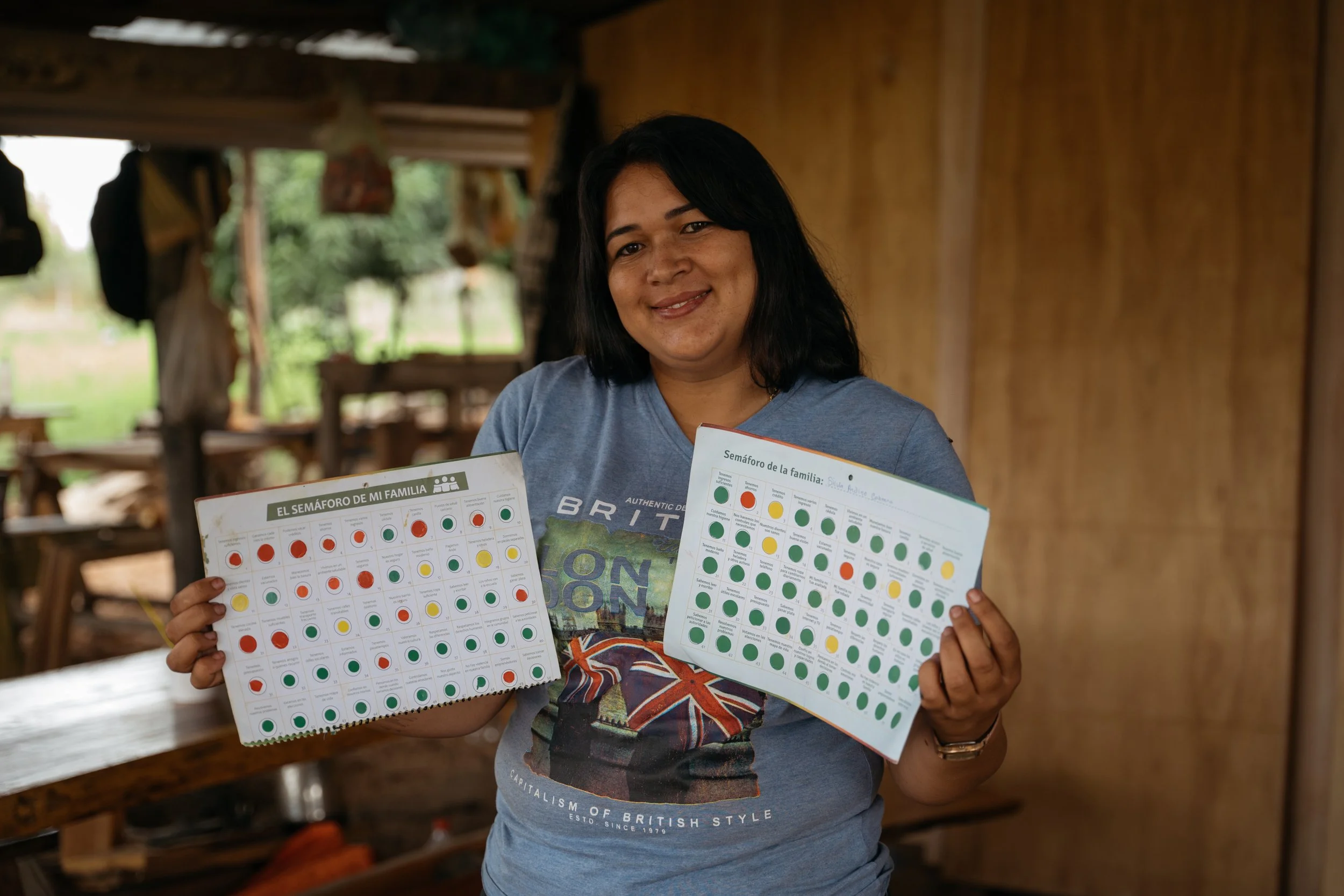
Image credit: Poverty Stoplight - Fundación Paraguaya
Words: Roy Krøvel, Julia Corvalán and Jessica Kantor
Images: Poverty Stoplight - Fundación Paraguaya
Footnotes:
1. Burt, M. (2013). The “Poverty Stoplight” approach to eliminating multidimensional poverty: Business, civil society, and government working together in Paraguay. Innovations: Technology, Governance, Globalization, 8(1-2), 47-67. https://doi.org/10.1162/INOV_a_00165
2. Burt, M. L. (2016). The Poverty Stoplight: A new metric for microfinance [Doctoral dissertation, Tulane University]. Note: Dissertation abstracts and excerpts available through Tulane University Digital Library catalog; full text may require institutional access.
3. Hammler, K. (2021, December 7). Poverty is more than lack of money, it’s lack of freedom. Medium. [Note: This article references a conference presentation by Pane, J.C. & Hammler, K. on the Poverty Stoplight and Capabilities Approach at the Human Development and Capabilities Association Conference in Buenos Aires, Argentina]
4. Institute of Development Studies. (2020, December 9). The Poverty Stoplight: Learning from a promising new participatory methodology.
5. OECD Observatory of Public Sector Innovation. (2019, January 31). Poverty Stoplight.
6. Tellez, N., Ramos, N., & Hammler, K. (2020). El Efecto Del Semáforo En La Agencia de Las Familias de La Comunidad de Cerrito Benjamín Aceval. Fundación Paraguaya. [Referenced in OECD Observatory report]