
The greatest football come back: The japanese player who came back to life
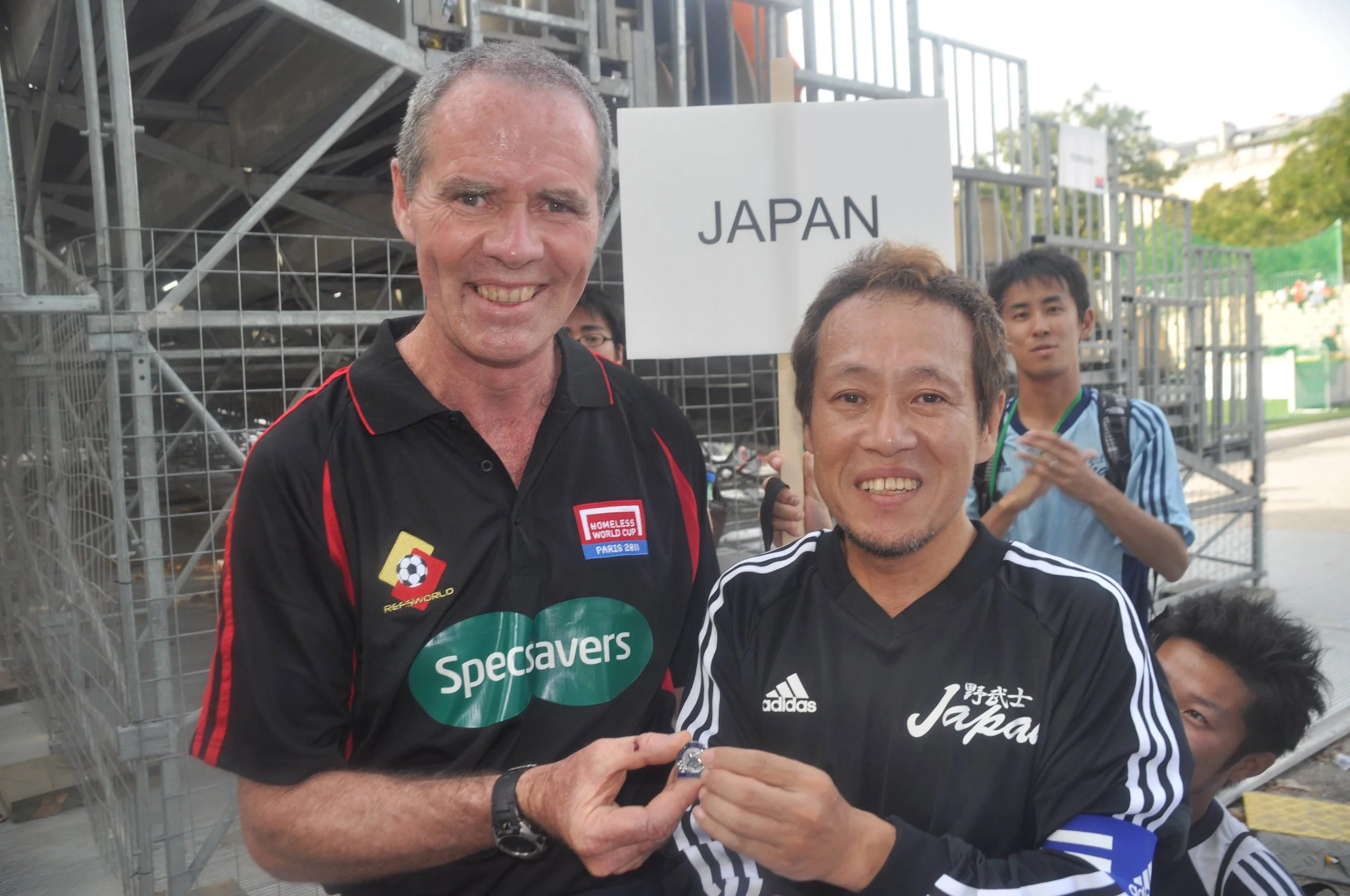
| Yoshi-Hiro was awarded a FIFPRO Award for fair play at the Paris 2011 Homeless World Cup
Each player has their own personal hurdles to overcome to reach the Homeless World Cup, but Japanese player Yoshi-Hiro Matsuda might be the first who had to prove he was still alive
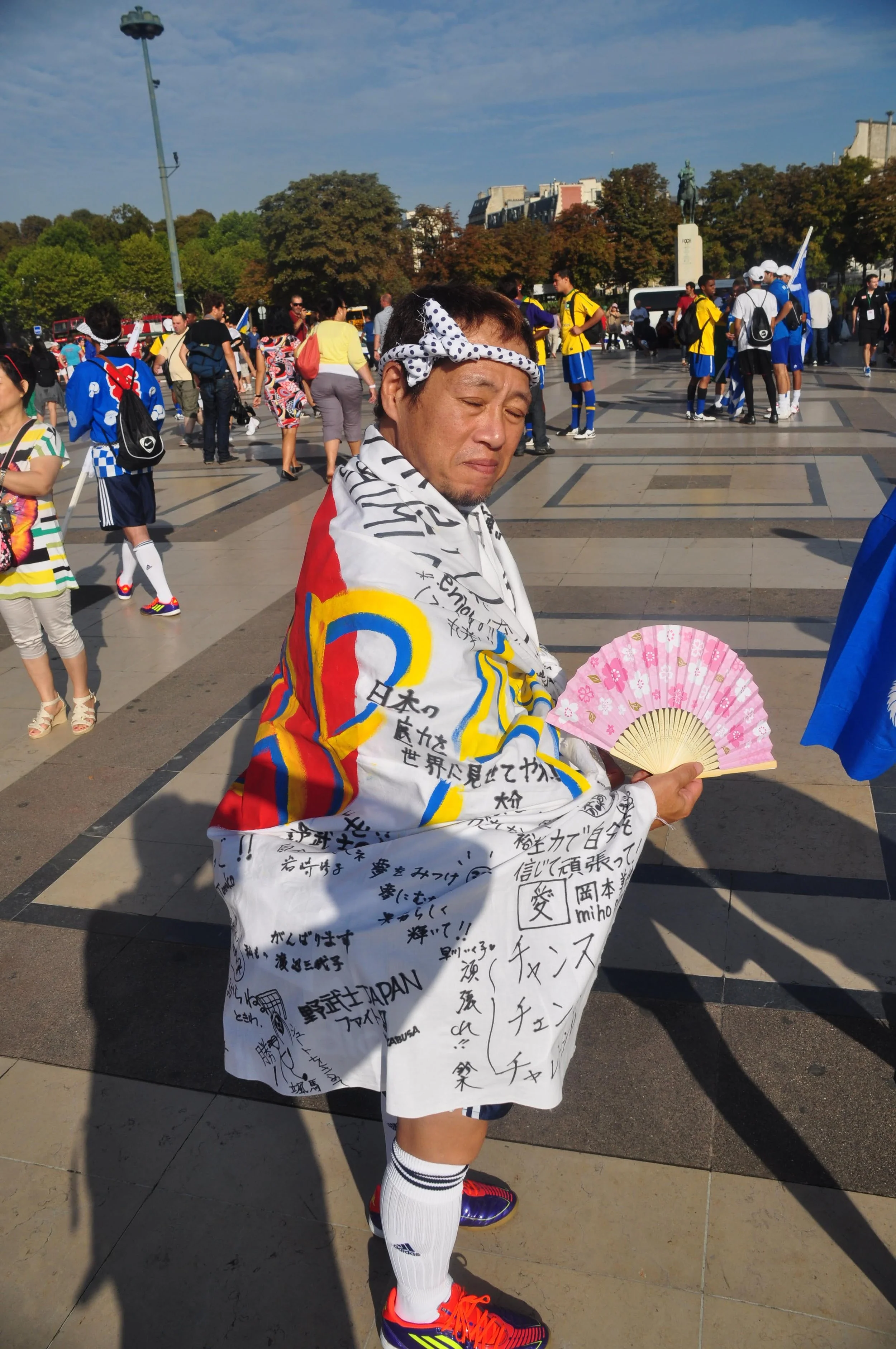
| Yoshi-Hiro proudly wore the Japanese flag during the opening parade at the Paris 2011 Homeless World Cup
The Surreal Moment
Yoshi-Hiro was at the Big Issue Japan office in Tokyo, he was a vendor with the street paper and had been taking part in their football programme. He’d just been told that he has been selected to represent Japan at the 2011 Paris Homeless World Cup.
Similar to many of the other players, the next step for Yoshi-Hiro was to get his passport and documents in order, ready for him to travel.
They filled in his application, but when they got to the official passport office, the officials looked confused, ‘but Yoshi-Hiro Matsuda is dead’.
The record in their files detailed a missing person enquiry which after seven years of no luck finding Yoshi-Hiro Matsuda, meant he’d been officially declared dead and removed from the system.
It was clear, there had been a mistake. He was very much alive and now a process had to begin to get the paperwork to prove he was who he said he was.
It was time for him to make a strange phone call. He needed to call his sister to let her know he was alive and to get his documents to prove he was part of their family and re-register himself.
The phone call broke years of estrangement from his family, he officially and emotionally re-joined the family.
What went wrong?
“I should have asked my family or my extended family for help earlier but I was in my thirties, and I thought I could live on my own. In hindsight I would have asked for help sooner.”
About ten years earlier, Yoshi-Hiro was working as a day labourer on construction and demolition sites in Osaka when his health began to decline, and he was no longer able to do the job. He then slowly stopped contacting his family, he didn’t want them to know he was struggling and over time they lost contact completely.
After he lost his job, he came to Big Issue Japan’s office in Osaka and became a street paper vendor. After working there for a while, he decided he wanted a new start and moved to Tokyo. In the Japanese capital he continued to sell the street paper and joined their football programme, playing with other vendors one night a week.
Meanwhile his family, concerned they hadn’t heard from him and unable to contact him, reported him missing to the police. The police opened a missing person’s enquiry but couldn’t find him anywhere. The case on Yoshi-Hiro Matsuda sat open for seven years but guidelines at the time were if there was no sign after that time, the case would be closed with the person assumed dead. They would then be removed from the system and no longer registered as a Japanese citizen.
The Homeless World Cup
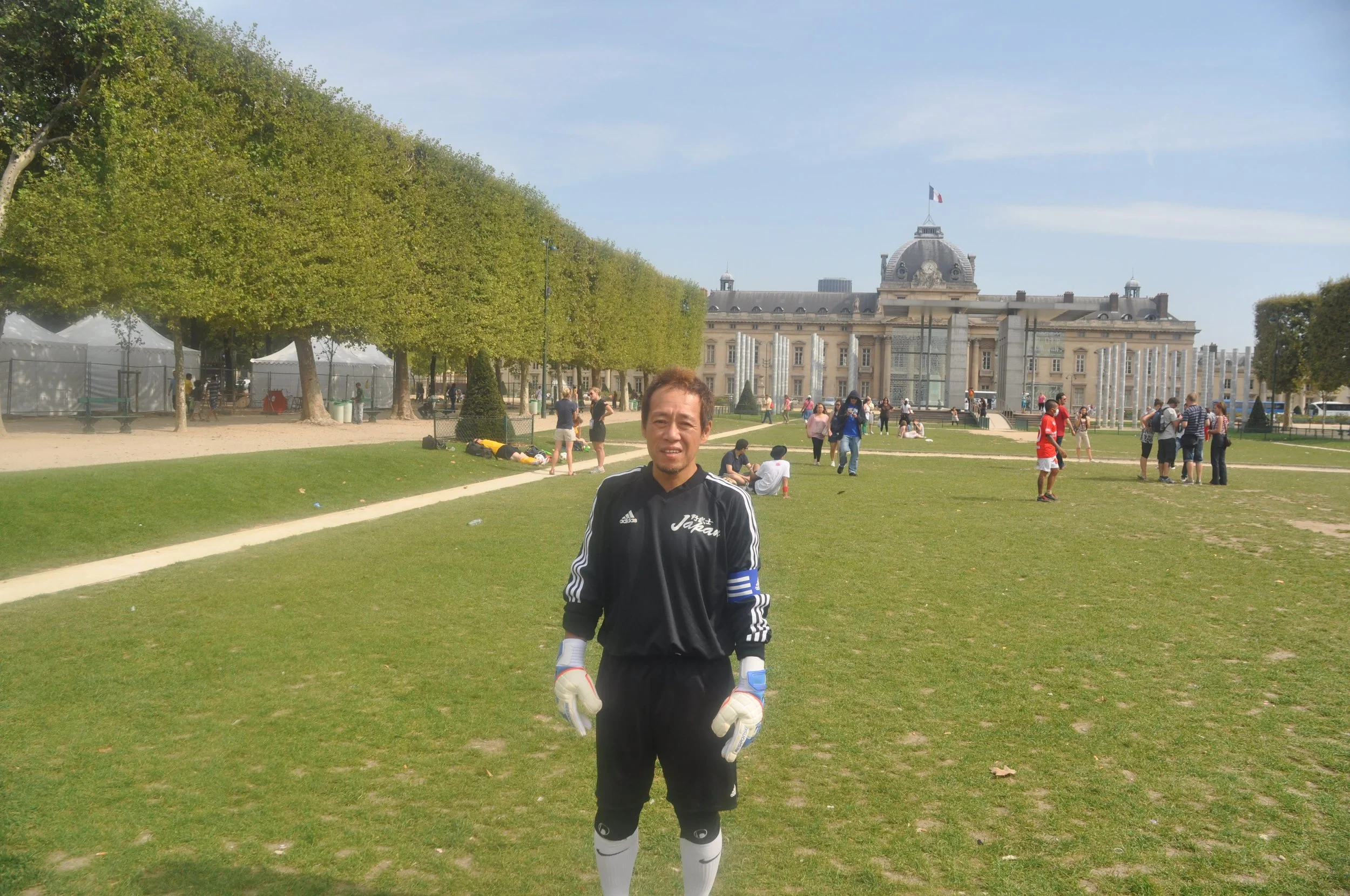
| “The Homeless World Cup was a very big change to start a new life” - Yoshi-Hiro Matsuda in Paris
With the help from his sister, Yoshi-Hiro was officially registered again and his Japanese passport arrived in time for him to travel to Paris for the 2011 Homeless World Cup with his team.
Leading them as captain, Yoshi-Hiro explained, “The Homeless World Cup was a very big chance to start a new life.”
However the tournament didn’t exactly go to plan. During their first game he broke his arm and as the team’s goalkeeper this didn’t help their chances as the tournament went on.
Remembering the chaos, he smiled and laughed, turning around to show ‘Japan’ proudly emblazoned on his shirt: “We lost all our games and everyone was arguing. Being the captain, it wasn’t easy but by the end of the week we had begun to overcome our differences and we had a really great time.”
Returning after the tournament, Yoshi-Hiro had regained his official identity, rebuilt his relationship with his family and had secured work.
He was sad to leave The Big Issue, but it was important for him to feel that he was moving forwards.
“The Big Issue helps to change people’s perceptions towards those who are homeless, I wanted to show that I could live without the help of The Big Issue. It’s how I can show the impact they’ve had on my life.
“I hope that more people from Japan will have the opportunity to participate in the Homeless World Cup.
It’s not a good thing to have prejudice about anything including homelessness, but it’s also hard to change people’s perceptions. I hope that by coming to the Homeless World Cup, it will make an impact on people, however small it might be.”
Yoshi-Hiro is now living and working in Tokyo. The man who was once presumed dead is still very much alive.
Our Japanese partner is Diversity Soccer Association, they work closely with Big Issue Japan, find out more about their work.
Words: Rebecca Corbett