
From on-screen entertainment to off-screen action - volunteering at the oslo 2025 homeless world cup

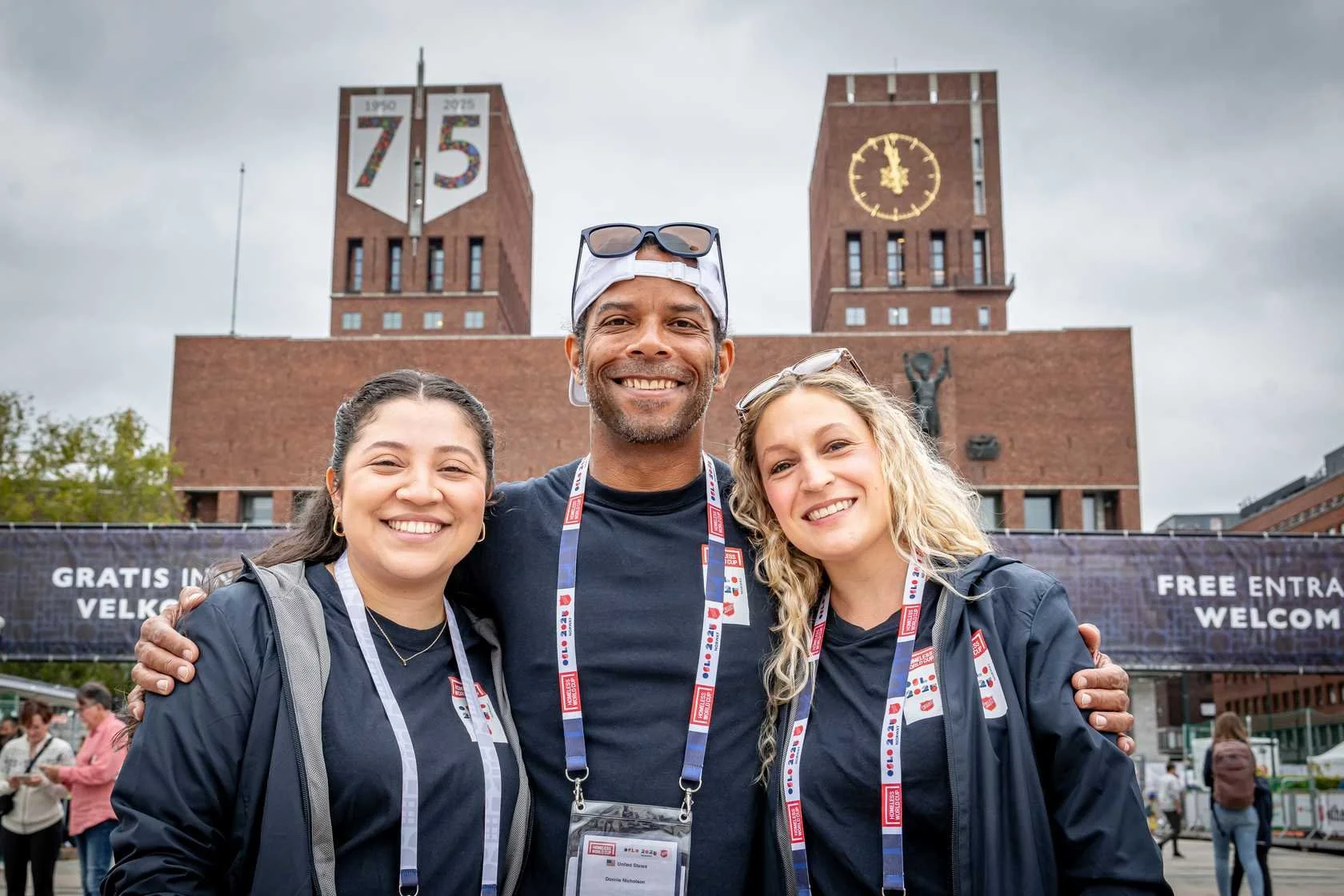
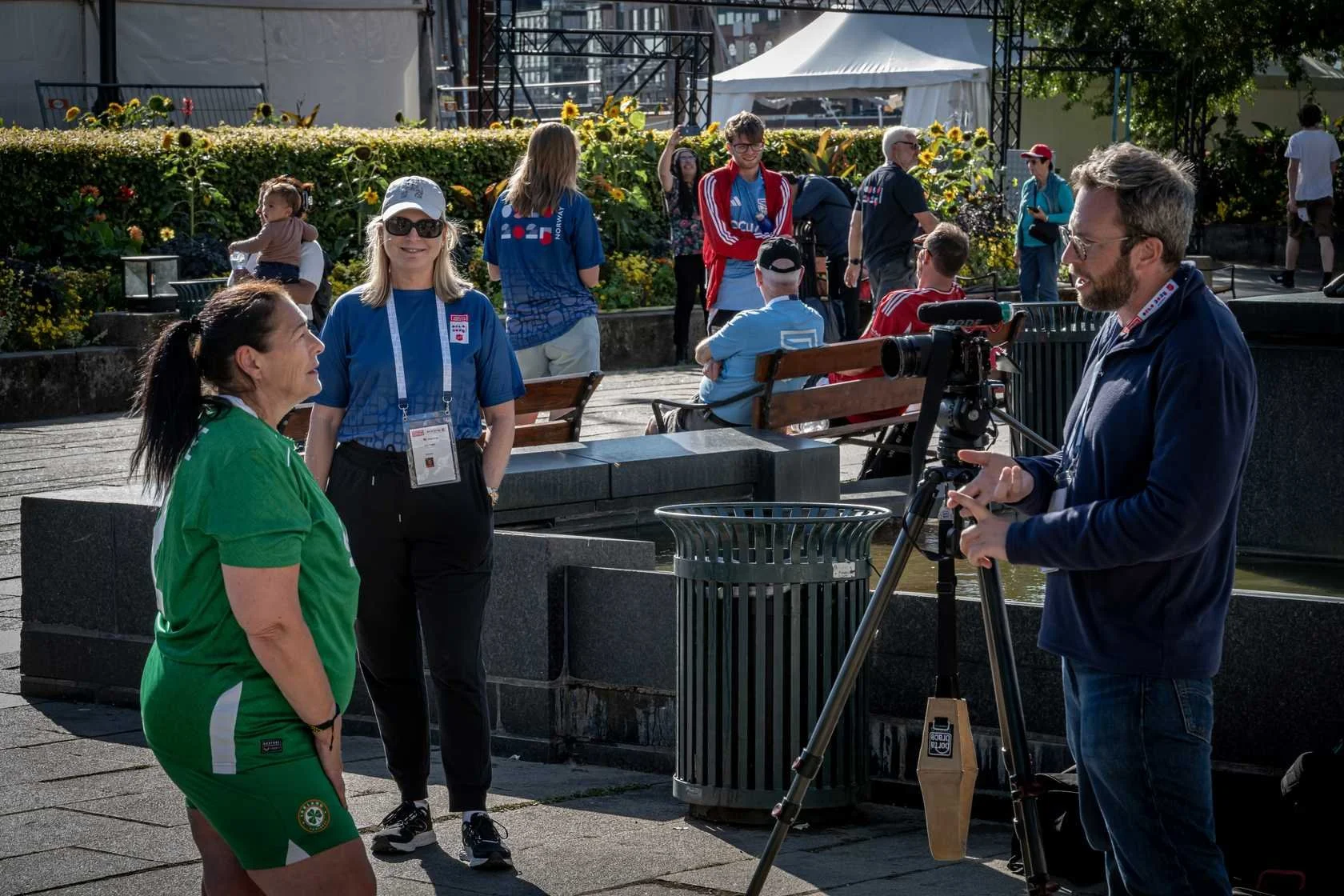
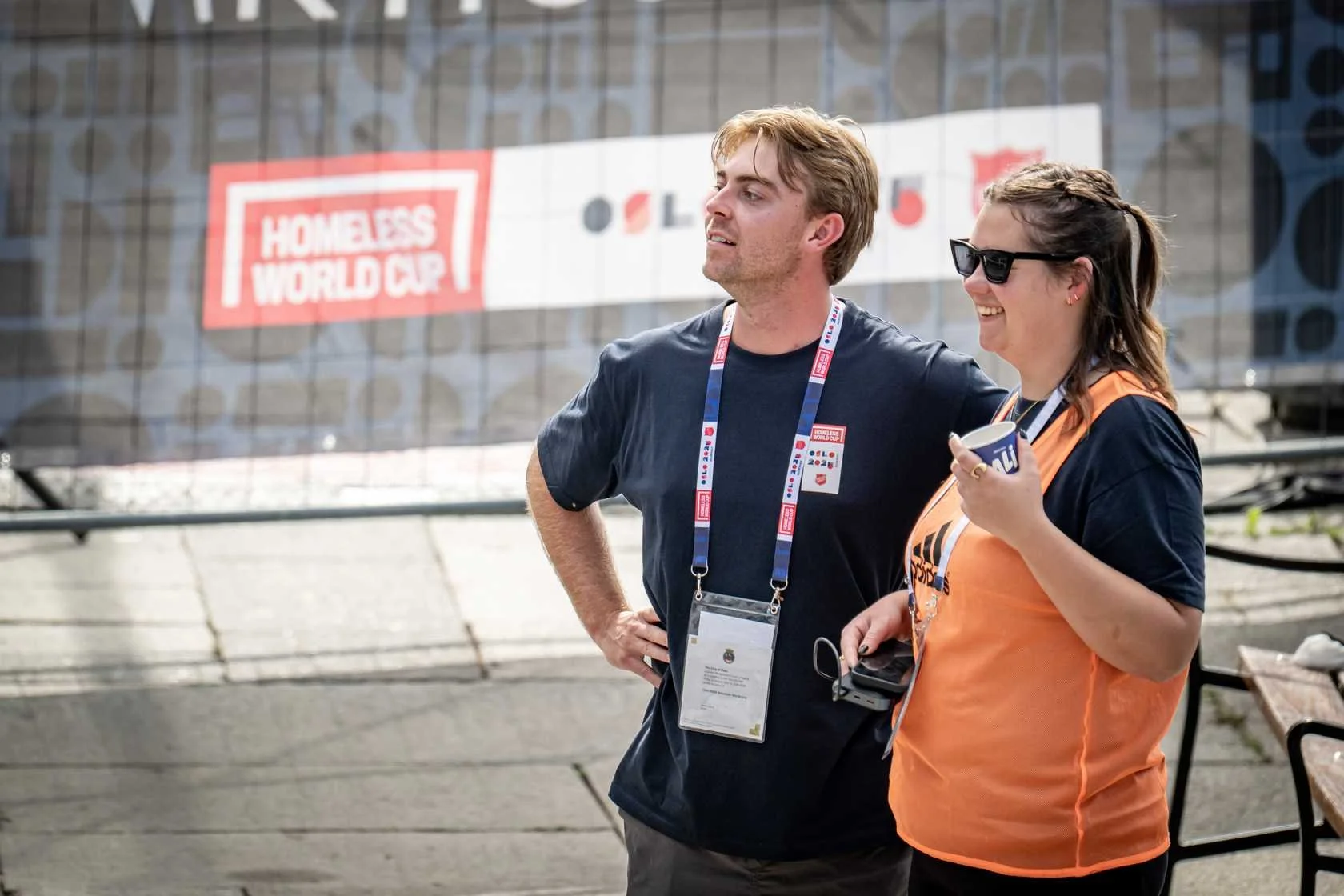
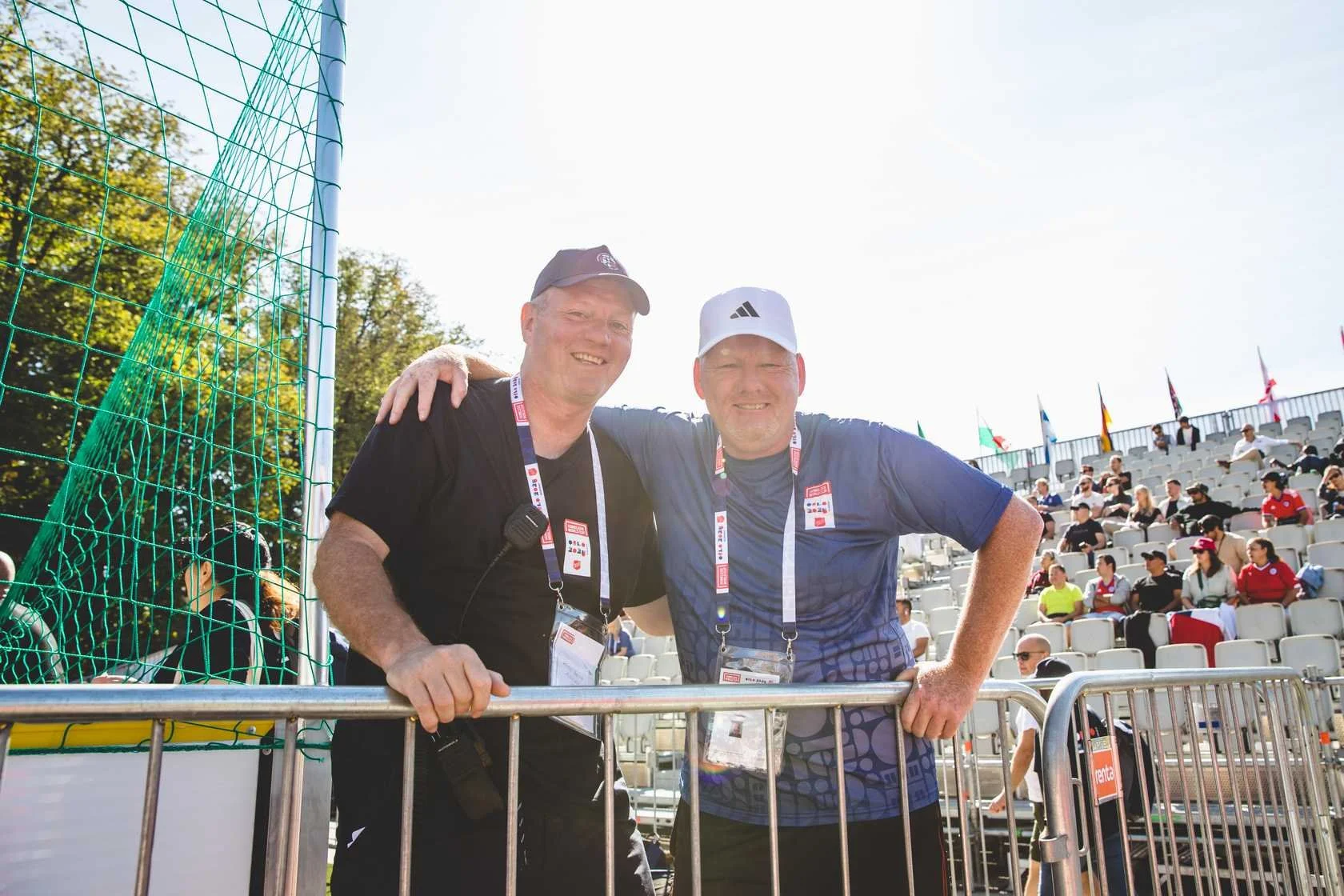
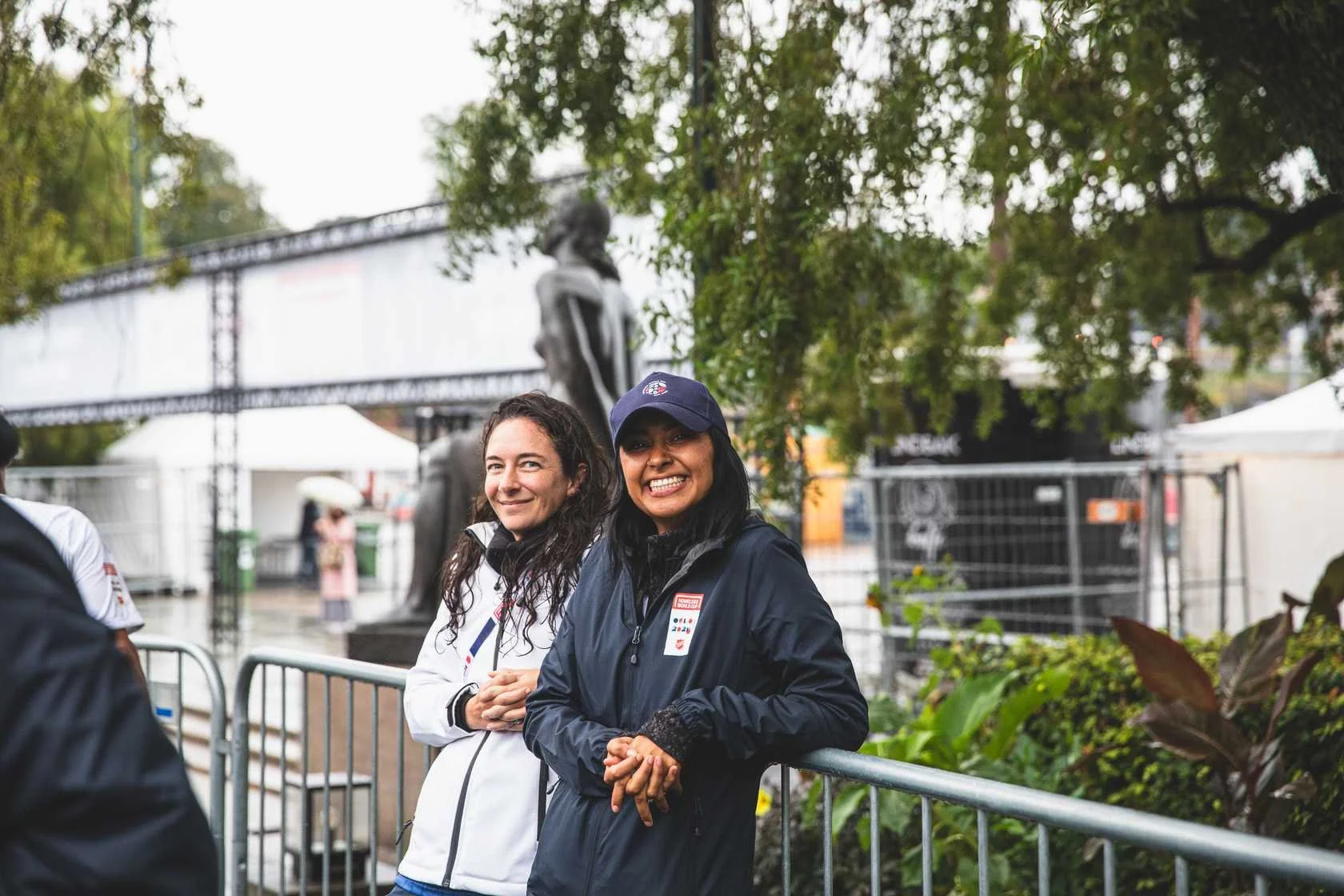
The Oslo 2025 Homeless World Cup was supported by a squad of International Volunteers who travel each year to help the Homeless World Cup Foundation at the tournament alongside Local City Volunteers, Homeless World Cup Foundation staff and Host City staff.
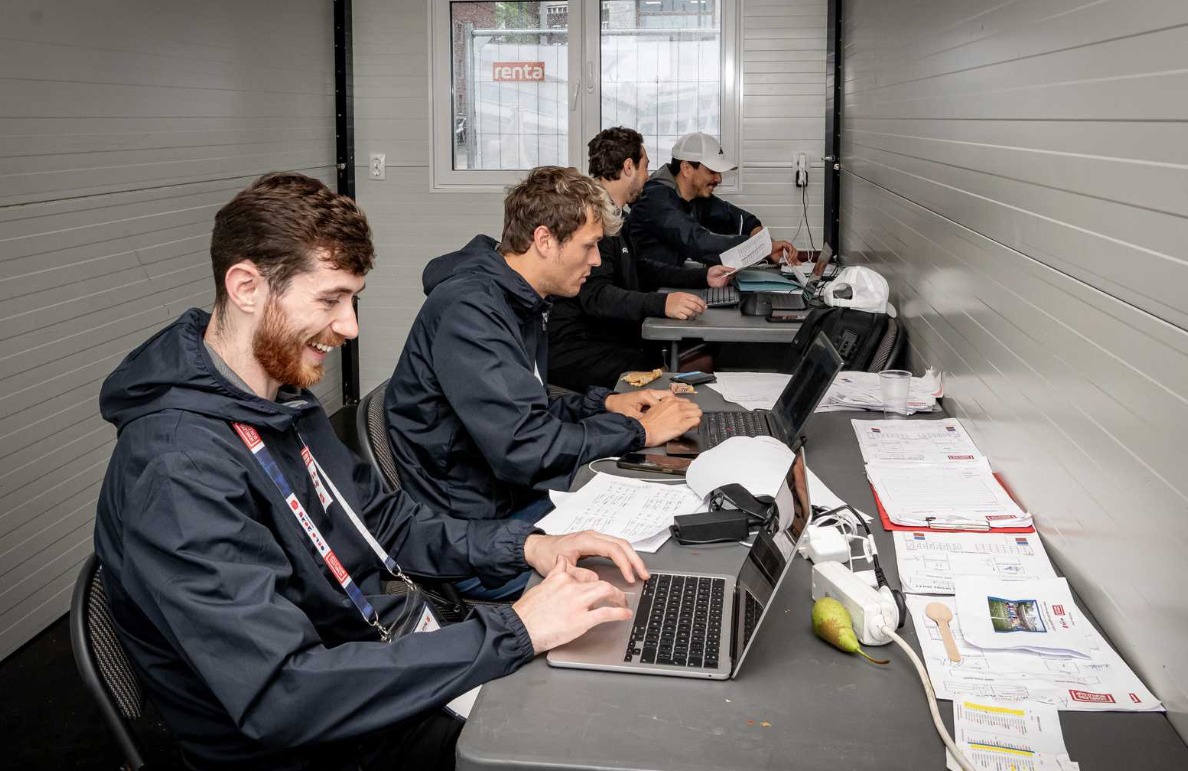
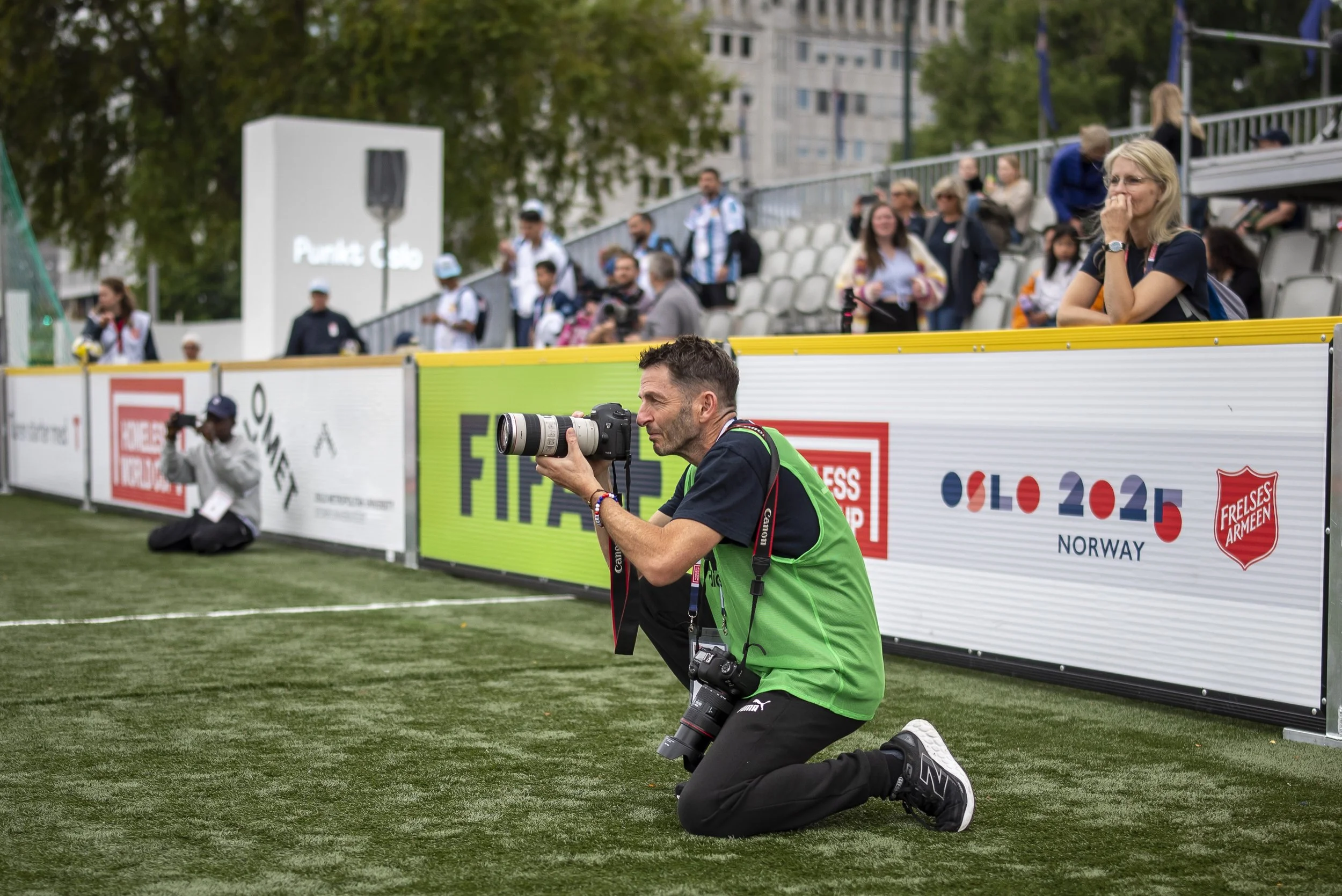
Image: Anita Milas (International Volunteer Photographer).
Volunteers at the Homeless World Cup Foundation contribute to the success and impact the charity has across the world, our International Volunteers support us year-round, taking on tasks big and small, helping to deliver regional events like the Africa Women’s Cup, play key roles in the Cities Ending Homelessness Forum and continue supporting Homeless World Cup Member Countries from their home nation long after the final whistle has blown at the annual tournament.
As Co-Founder and President Mel Young says to mark World International Volunteer Day (5th December), our International Volunteers are the best ambassadors the Homeless World Cup Foundation could hope for.
“Our volunteers don’t just support the Homeless World Cup - they are the Homeless World Cup.
“They are the heartbeat of the Homeless World Cup. Without our international volunteer community AND LOCAL VOLUNTEERS, this tournament simply couldn’t happen — they bring the compassion, professionalism and humanity that make this movement what it is.”
So how to you become a volunteer at the Homeless World Cup Foundation? Most of our volunteers have been supporting us for years and continue to come back every year to support us at our annual Homeless World Cup but in Oslo, we had a new wave of International Volunteers inspired by our work and also by the big screen.
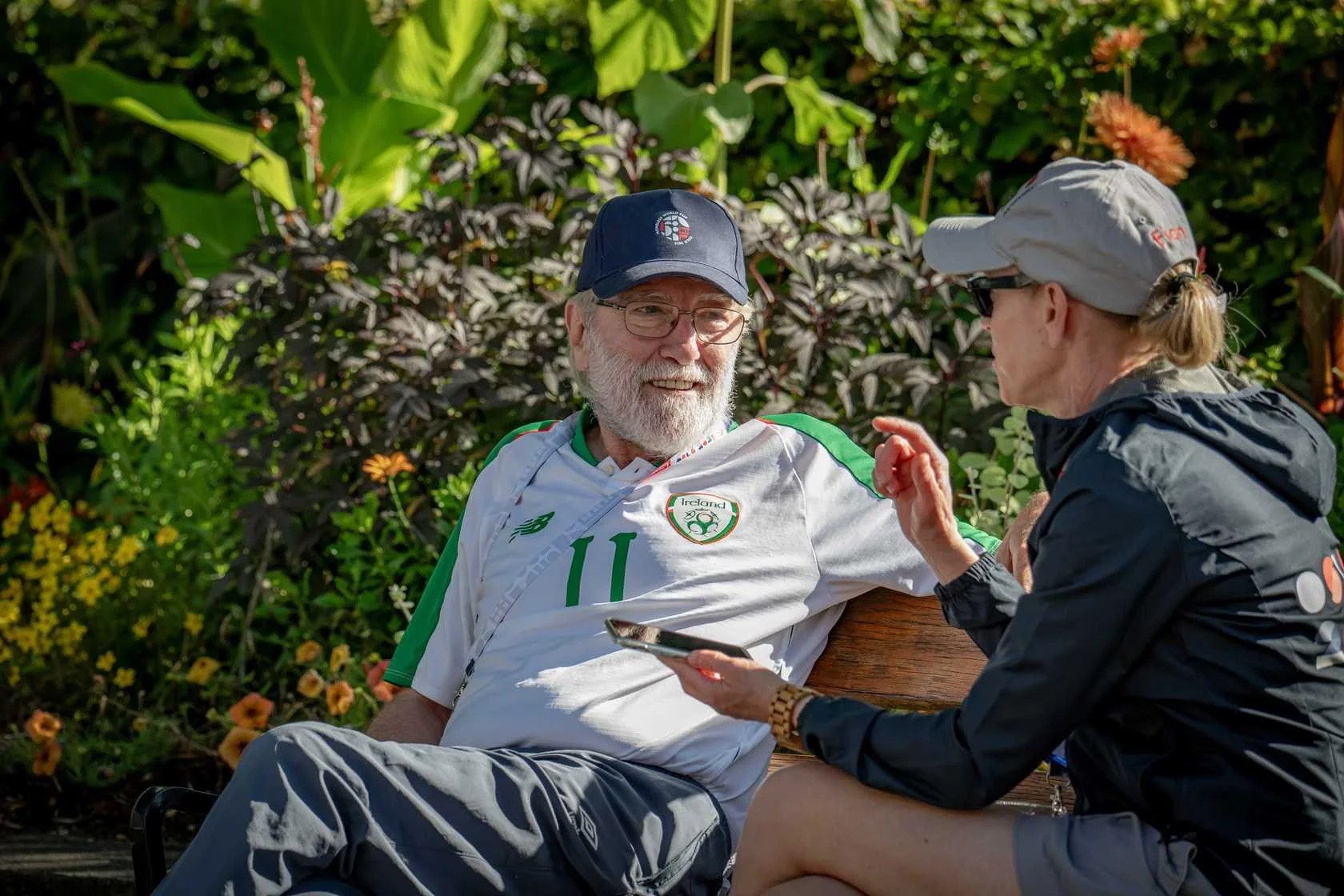
International Volunteer Fiona Crawford (who wrote this feature) travels from Australia to support at the tournament each year and was one of our International Writers in Oslo sharing the magic and stories from the event.
Image: Anita Milas
From on-screen entertainment to real-life involvement Netflix’s The Beautiful Game viewing experience has been twofold. For long-time Homeless World Cup volunteers, the film has represented a chance to re-live some of the tournament charm as well as show family and friends who haven’t experienced the tournament first-hand why they hop on long-haul flights each year to volunteer their time.
For first-time volunteers, it proved the impetus for them to get involved, turning on-screen entertainment into off-screen action.
“Basically, just at a loose end,” is how Birmingham-based Izaak Darvill explains how he came across The Beautiful Game via the Netflix algorithm-induced suggestions. “I think I’d been scrolling for about 15 minutes, couldn’t find anything and then it popped up. I really like Bill Nighy films and obviously I love football, so I clicked on it and then started watching it and really got into it.”
Having completed a sports journalism degree and with aspirations of working in the media and press domain for a professional football club, Izaak saw an opportunity to bring together his love of football and to gain some invaluable, career-relevant experience. So he contacted the Homeless World Cup Marketing and PR Manager and volunteered his services for the Oslo 2025 Homeless World Cup. (“Whenever I find something new, I tend to do a bit of a deep dive on Google. I started to Google the Homeless World Cup and realised that it had been going since 2003. I scrolled through all the tournaments and then saw there was one for this year.”
Day 1 of Izaak’s 2025 tournament experience started with utter technicolour: Just like in the film, 48 nations in their team colours, holding their country’s flag and a sign depicting their country name marching through Oslo’s main streets, accompanied and heralded by no fewer than four marching bands. It was a pinch-yourself moment.
“I just felt like the whole time I was there I had a massive smile on my face” izaak says. As in: “Wow, it’s real.”
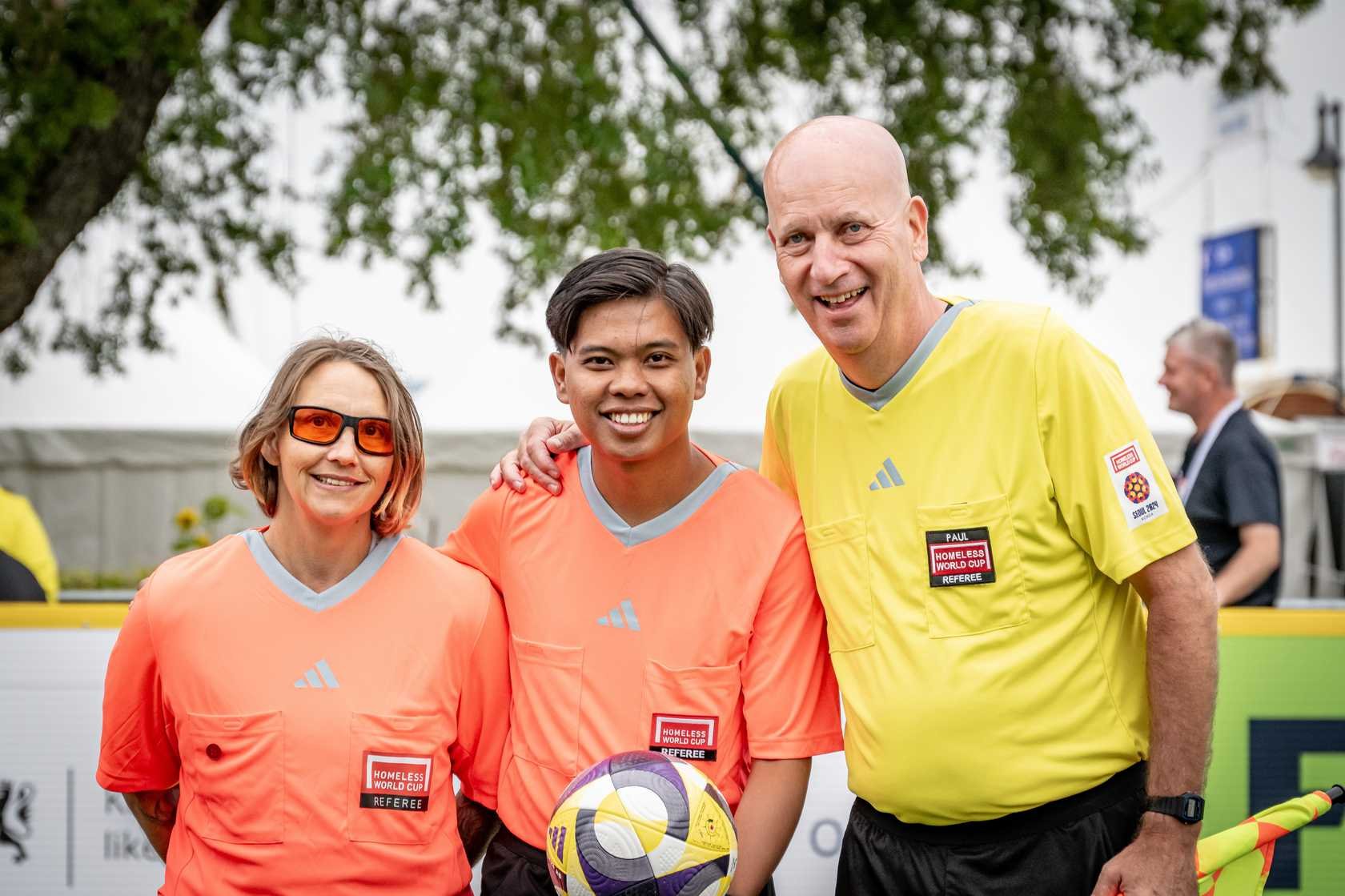
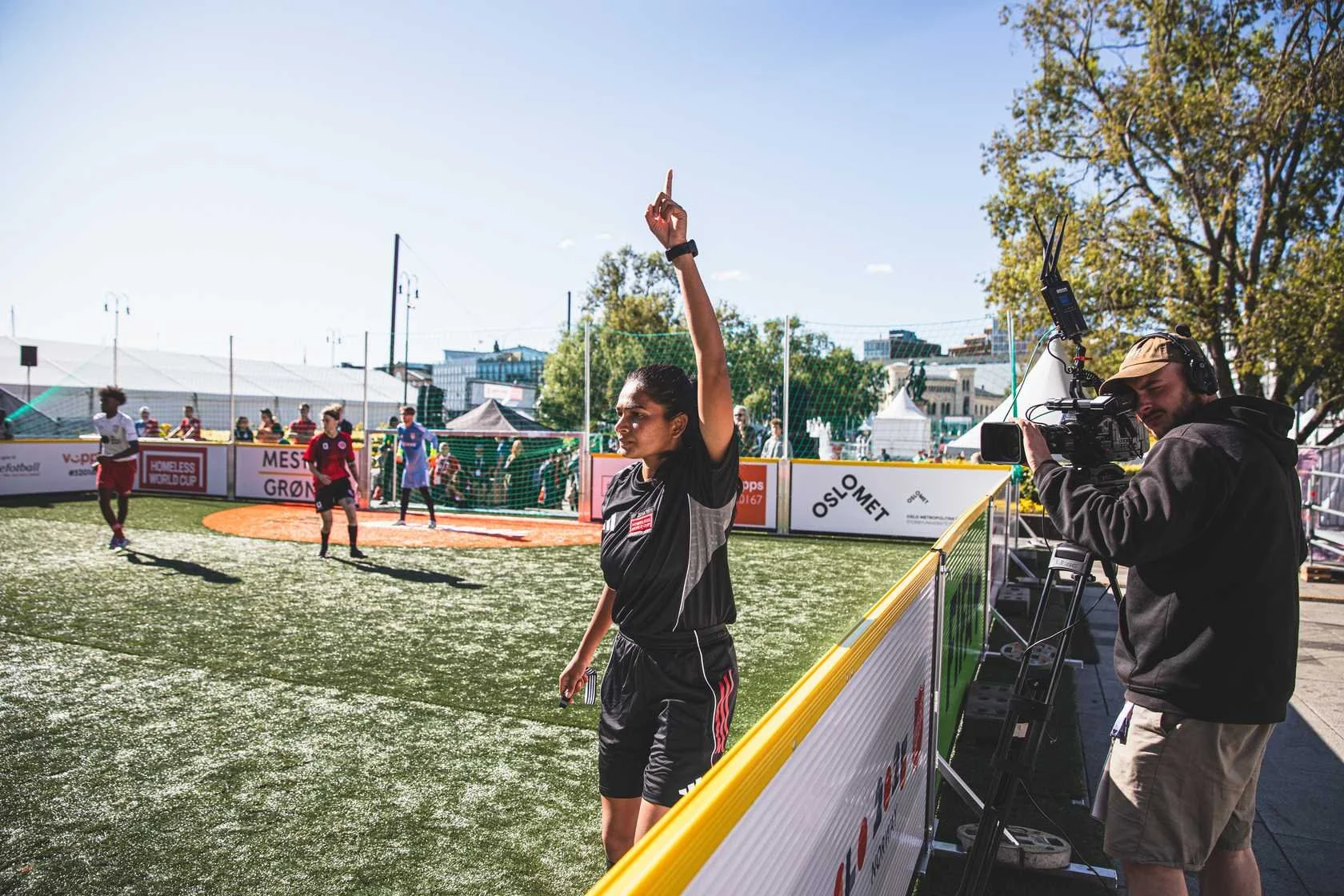
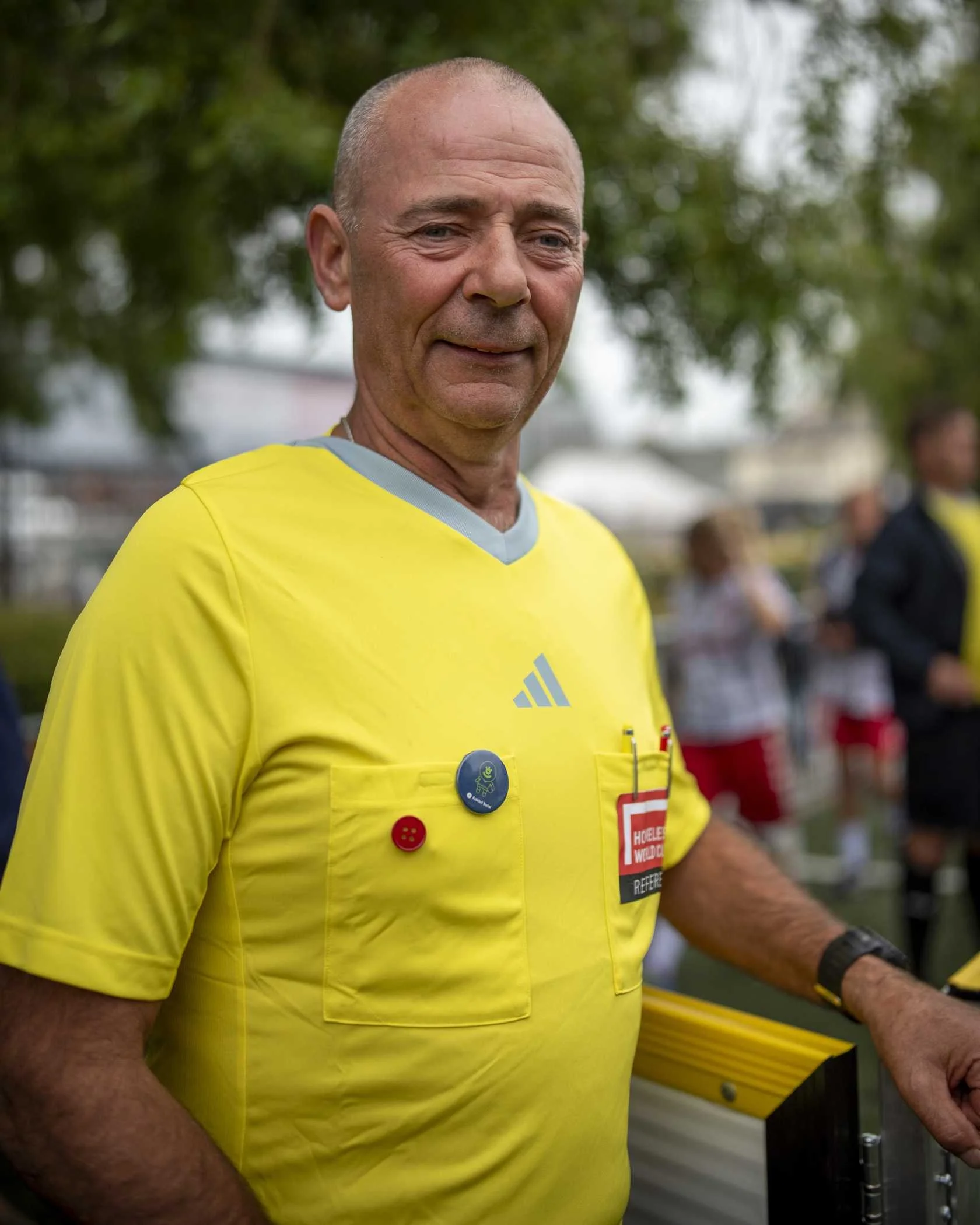
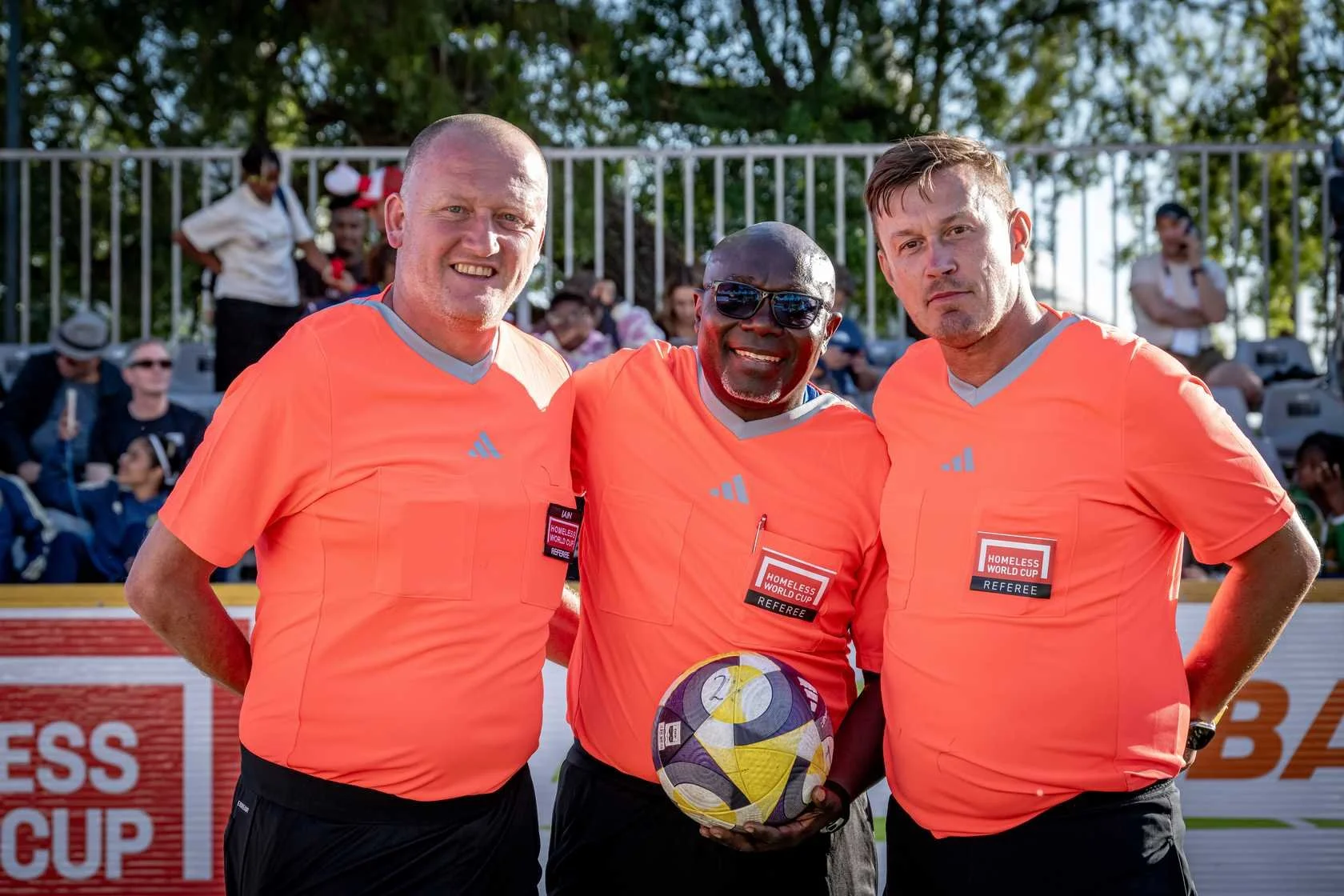
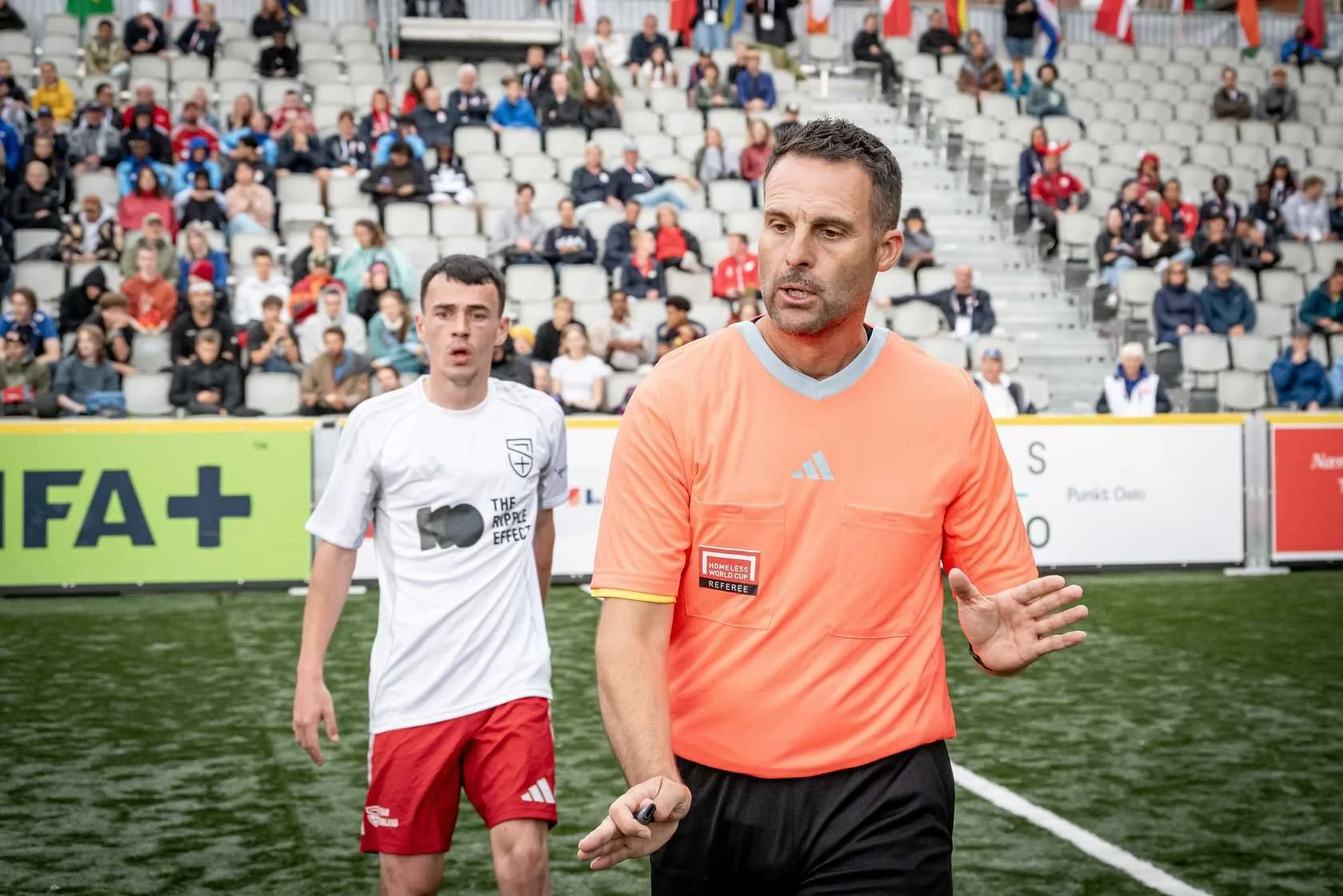
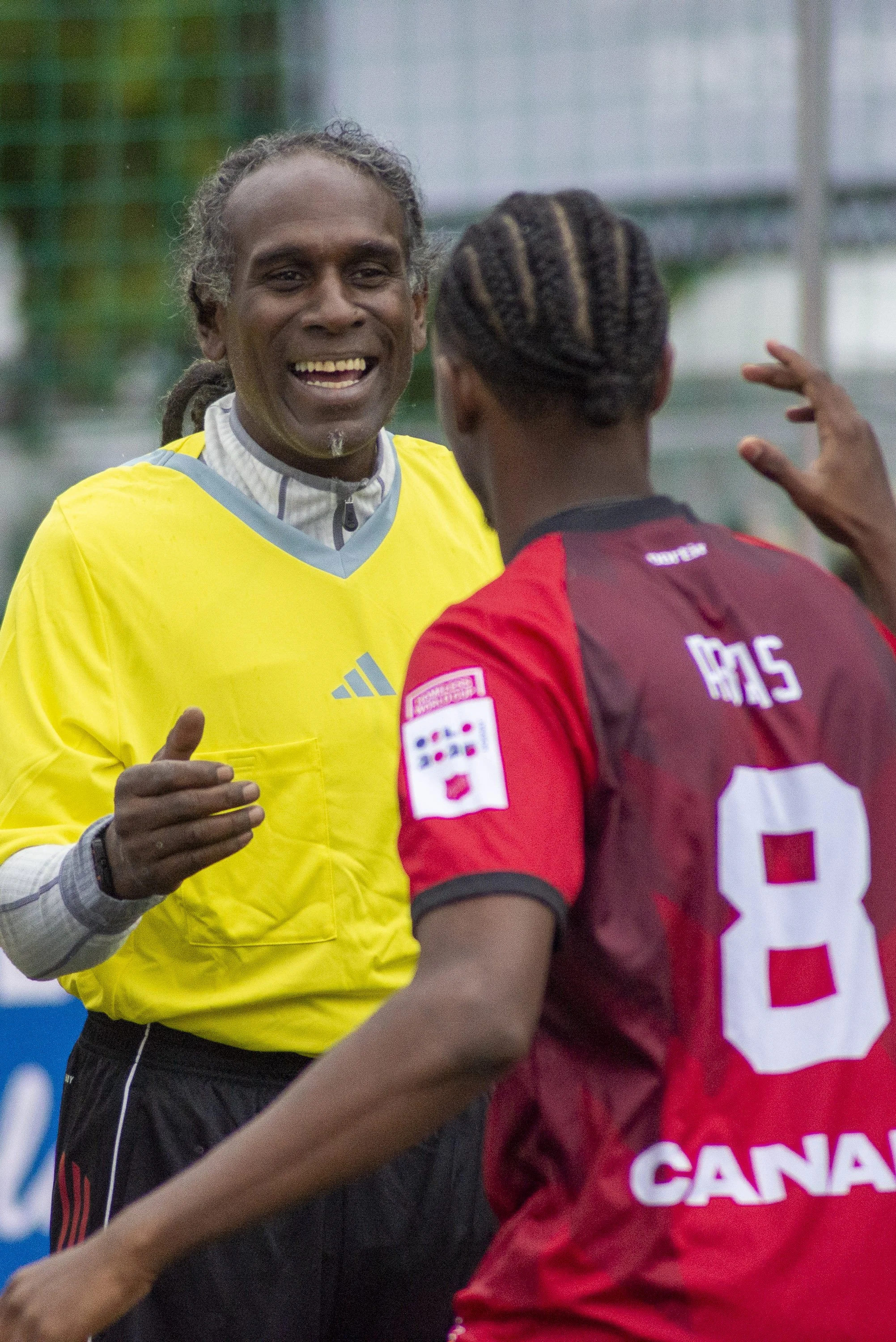
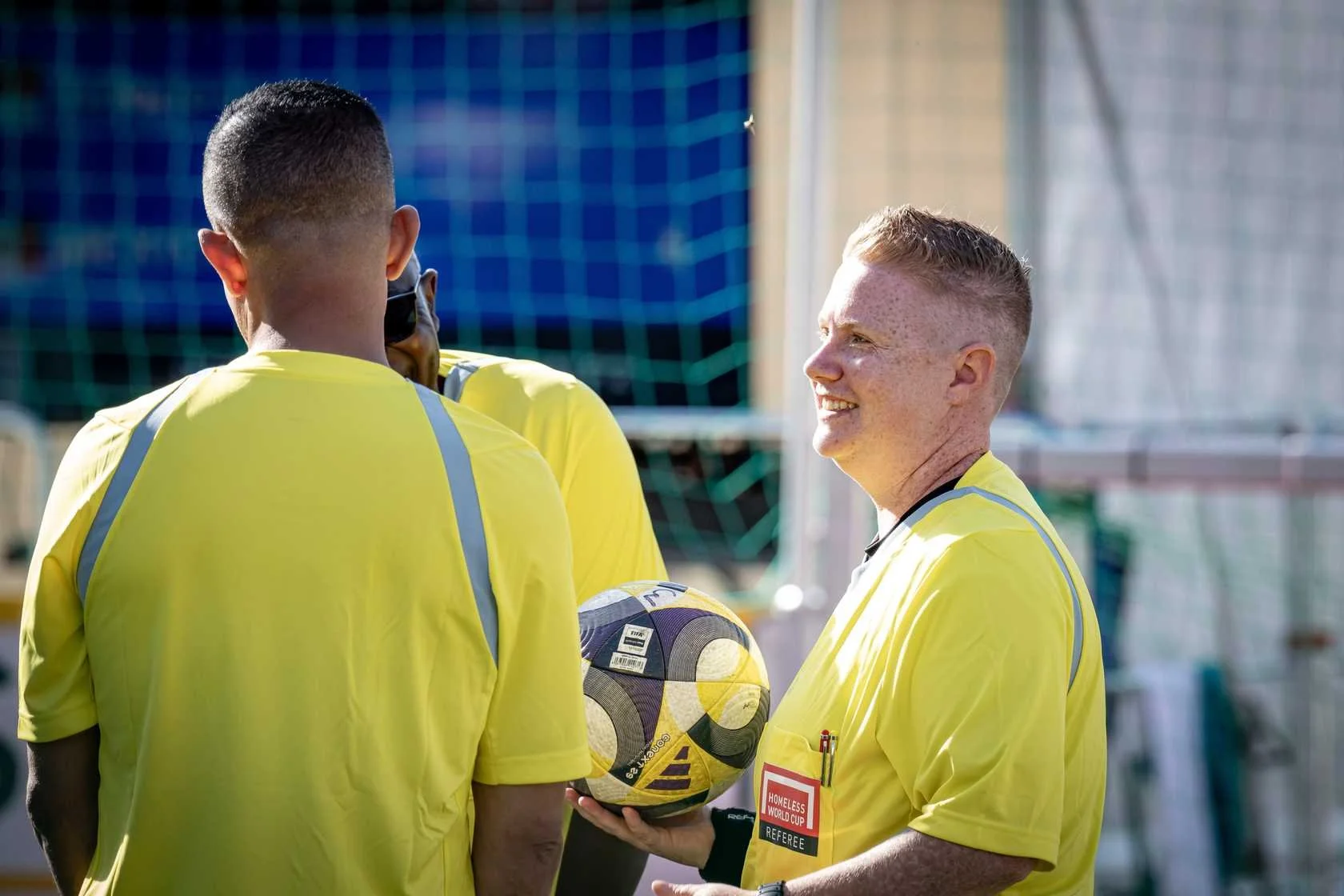
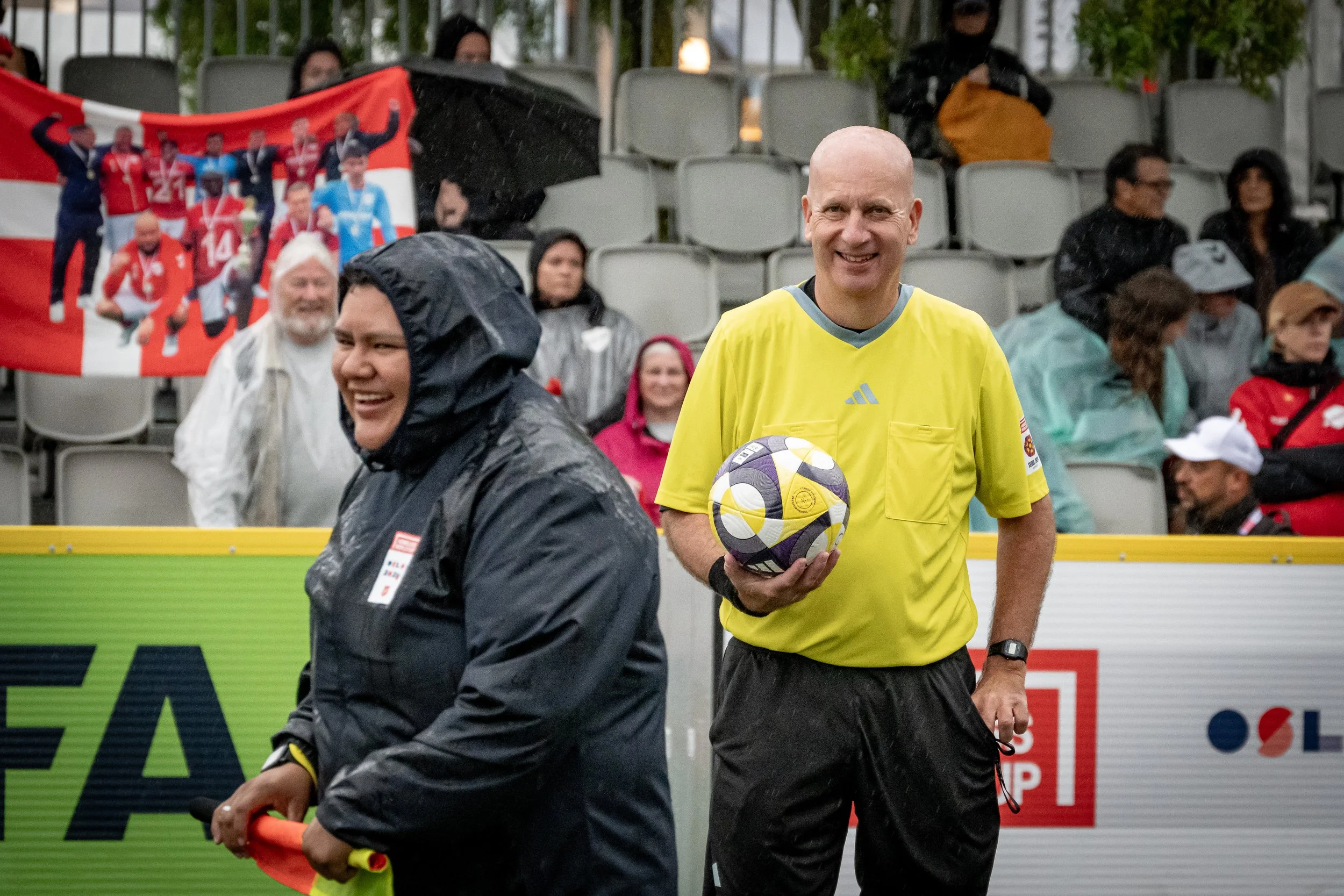
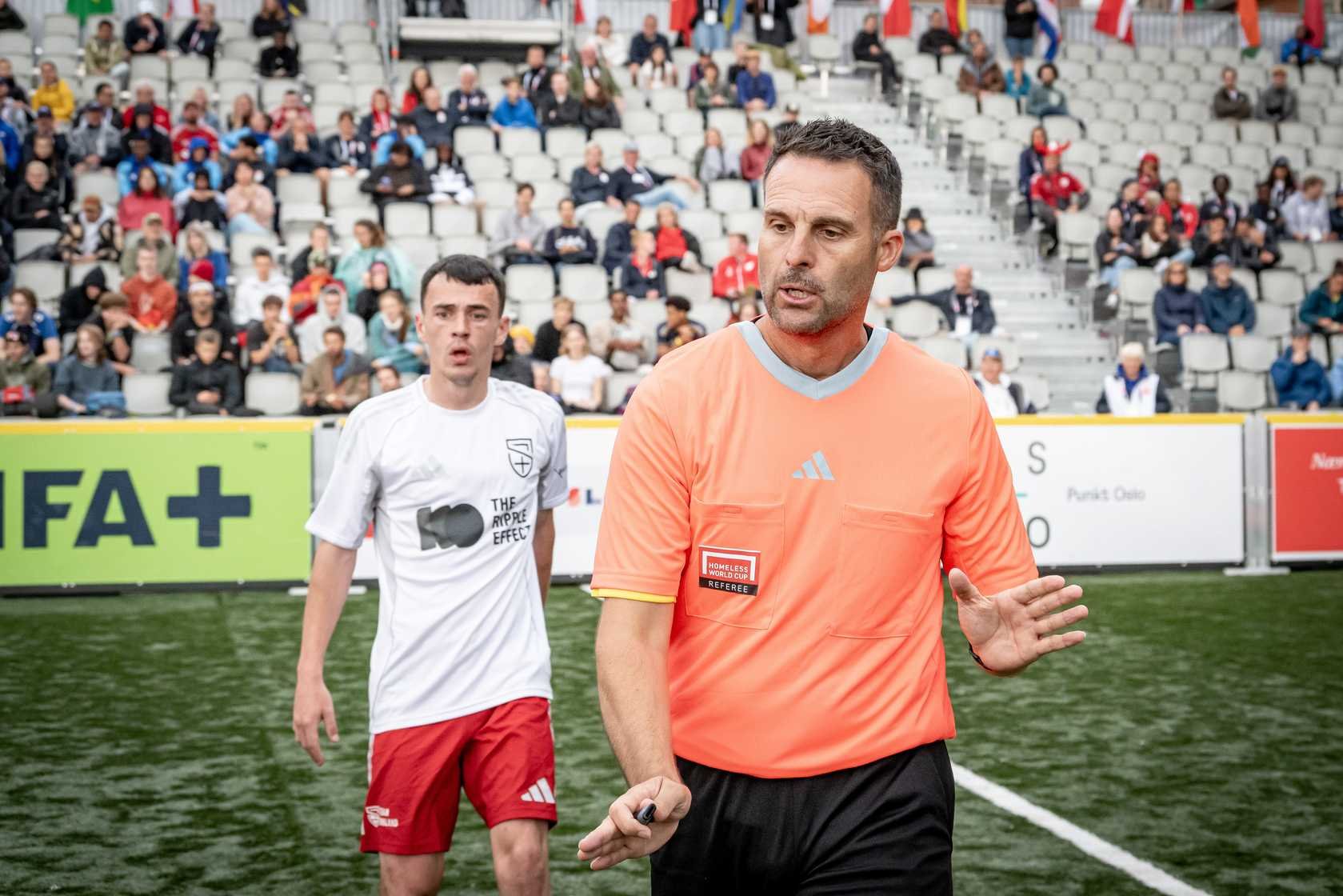
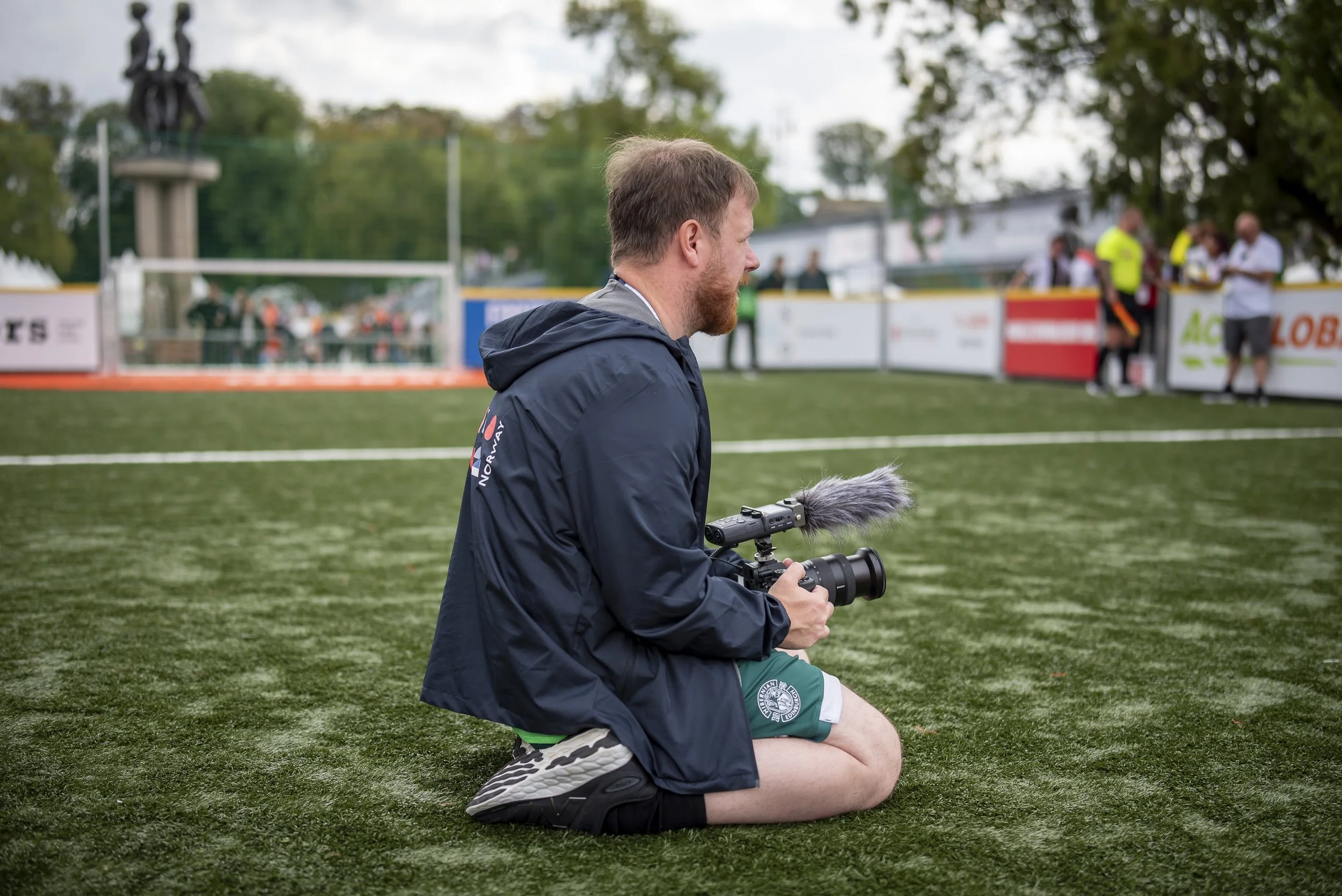
At the Homeless World Cup tournament all our referees at the tournament are Volunteers (12 international and 12 local)
(The line between The Beautiful Game’s fiction and the Homeless World Cup’s reality was something Izaak was trying to gauge throughout his 2025 tournament experience. For example, “I wasn’t sure whether they had kind of gone to an actual tournament [in The Beautiful Game],” he says, “because I looked through the cities the tournament had been held, I didn’t see Rome or anything.”
Correct. The Homeless World Cup moves location each year and was in Milan in 2009, but Rome is not yet a real-life Homeless World Cup host destination. (There’s still time.)
Indeed, the location might have been fictional and the characters actors in the film, but they’re characteristic or even an amalgam of real-life people and aspects. South Africa’s visa challenges in the film and delays and luggage not arriving, for instance, are something plenty of teams have experienced when travelling to our tournament.
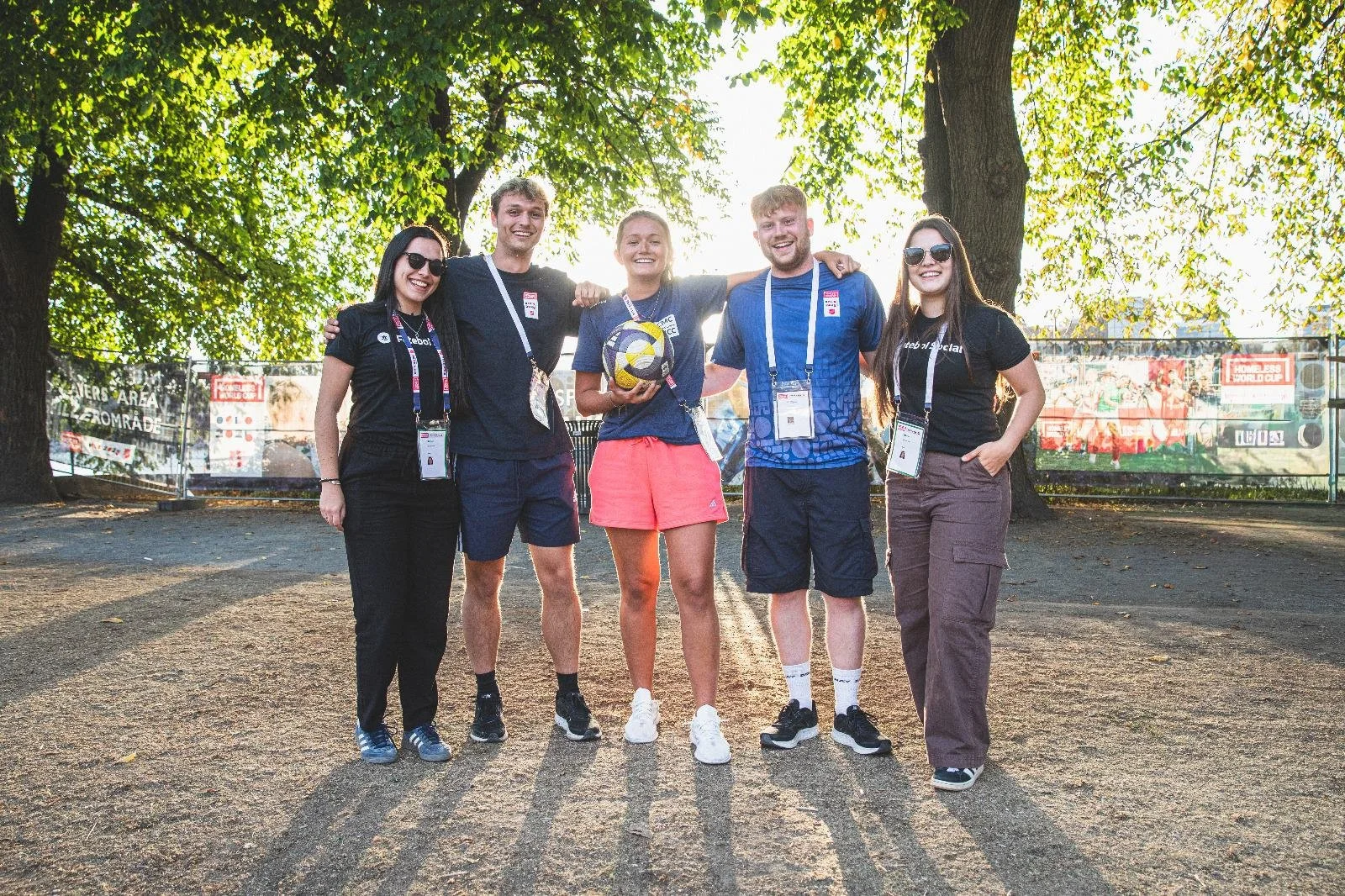
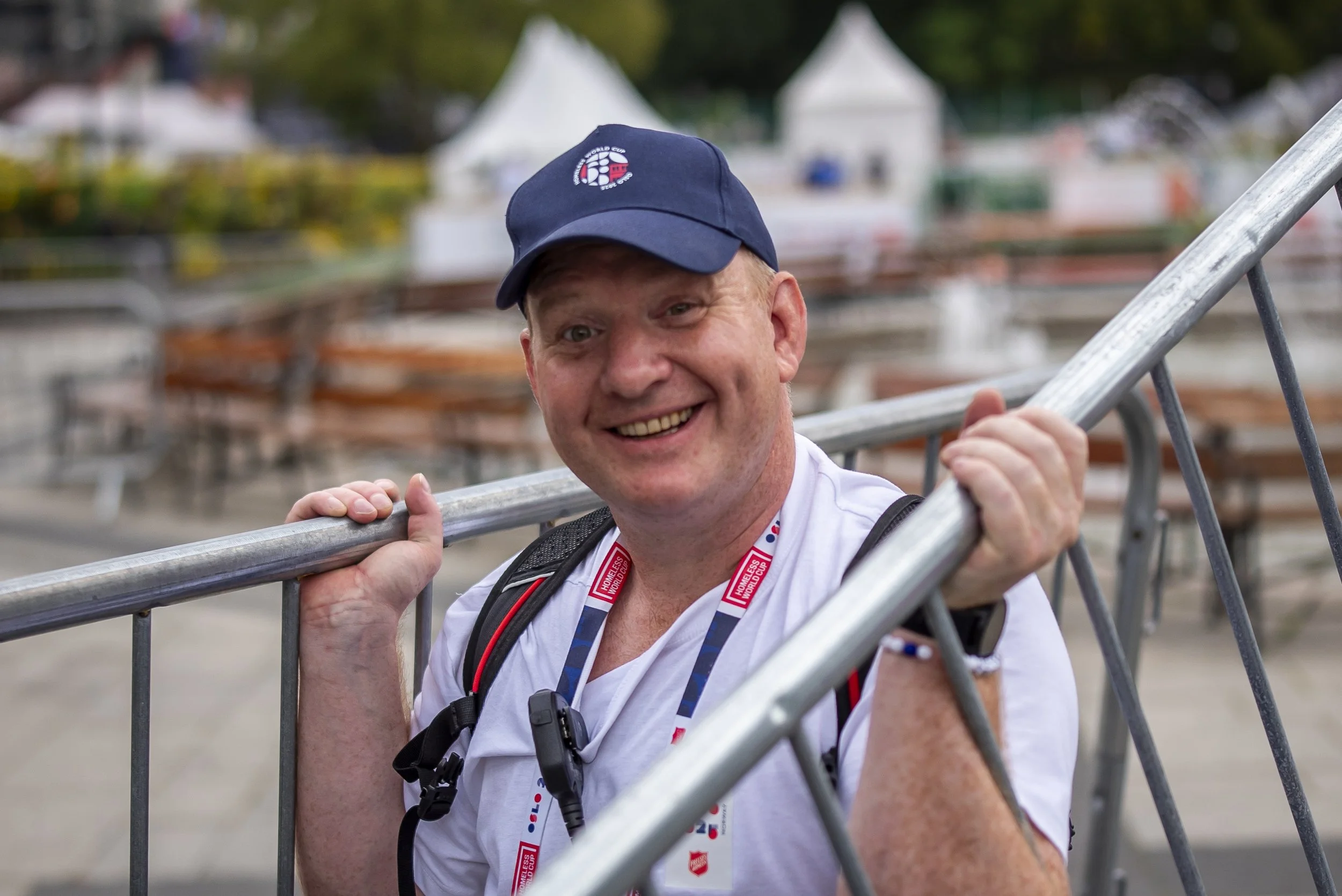
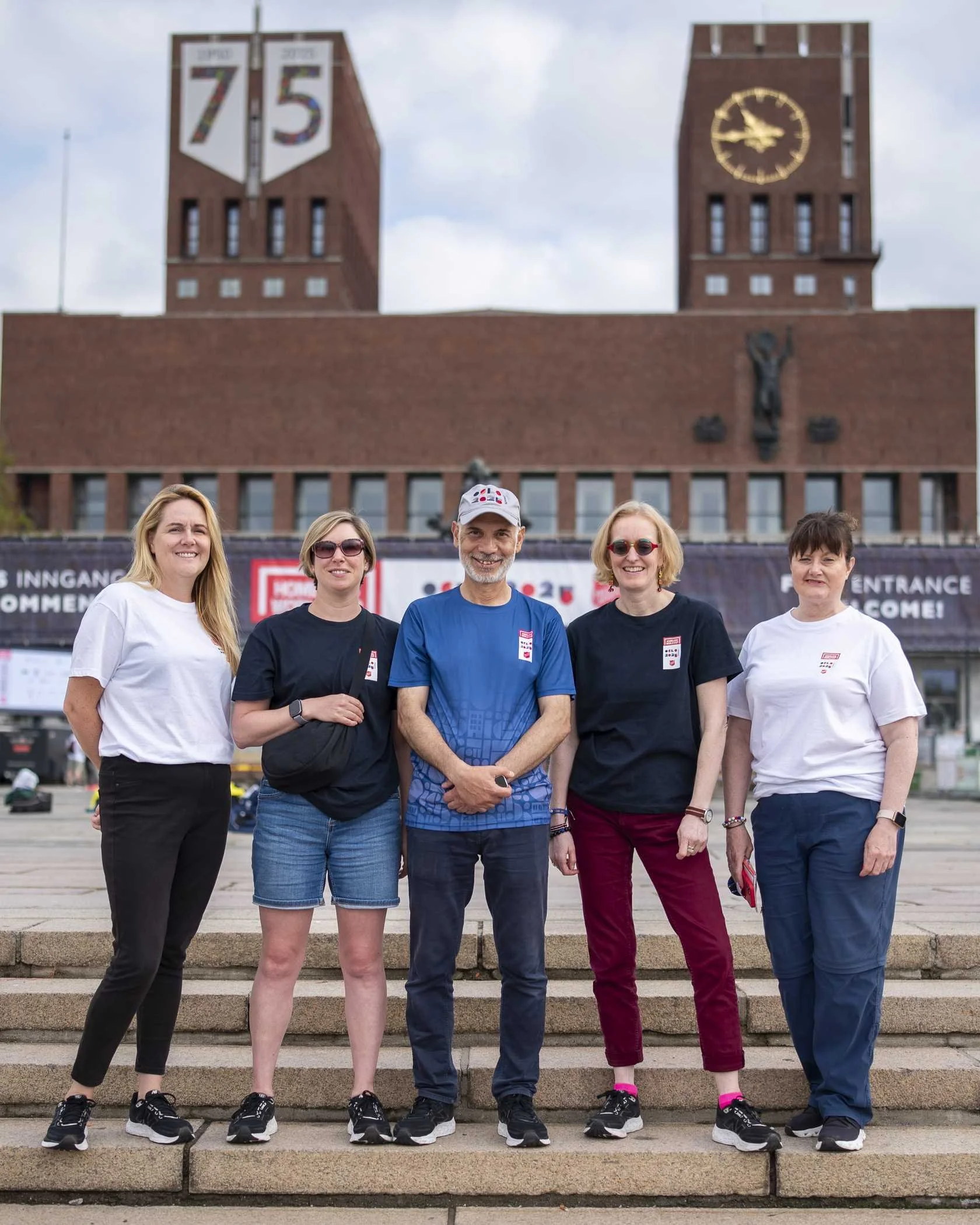
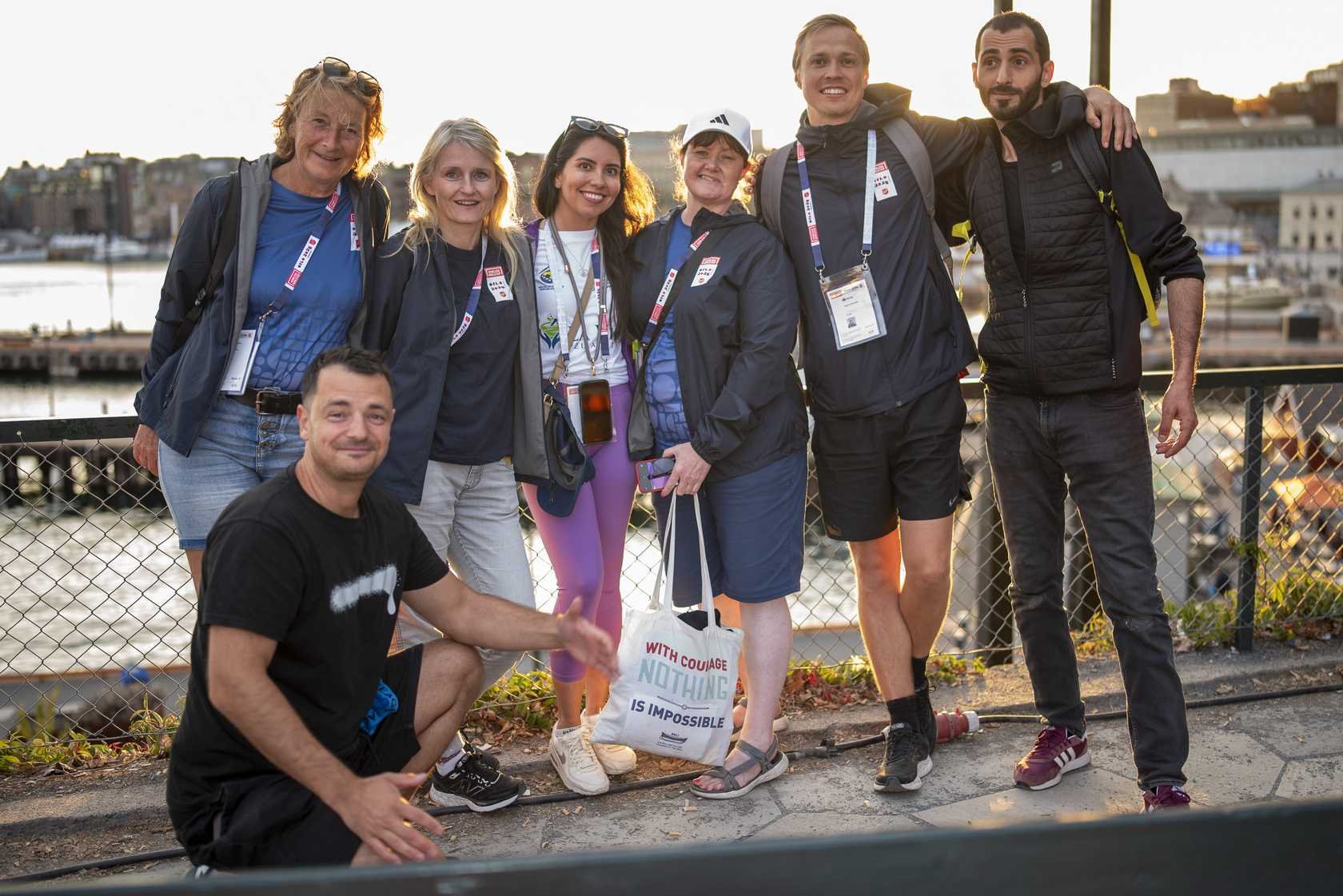
Mathieu Melis (second from the left) and Alice Camilleri (centre) alongside Izaak (Second from the right) in Oslo. We hear from Mathieu and Alice later in the article
Like most people who’ve discovered the wonder of the Homeless World Cup via the film, which also included Foundation staff and former players, Izaak started telling people about it, with both his volunteer experience and The Beautiful Game able to provide an entry point and shorthand.
The ‘Sorry, what? Explain how that works’ response he received was characteristic of most initial responses: absence of awareness of the event, then piqued interest. “So it’s kind of cool to be able to spread it by word of mouth and my experience.”
That word-of-mouth experience is something long-time volunteers Amber McMahon Danno, Anita Milas and Isobel Irvine know well. The film gave the three a film-based chance to show everyone at home how and why the tournament is so powerful.
“The first question I always get is, ‘Wait… what? The Homeless World Cup? What does that even mean?’
So now, instead of me blabbering on, teary-eyed about the magic of these players stepping onto the pitch and representing their country, the power of football to build life skills and teamwork to overcome challenges, and the life-altering opportunity this movement brings, you can watch the film to get a taste of how sport can and is changing lives,” Amber wrote on her LinkedIn.
It is changing lives, although as lead photographer Anita Milas pointed out (pictured below), the referees are quite a bit nicer in real life as well - with kind words and encouragement and Whistles of Hope (in honour of international referee and volunteers, Hary Milas) handed out much more liberally than red or yellow cards, their on and off pitch goal is to help players have a positive tournament experience, a legacy of Hary’s kindness at tournaments gone by.
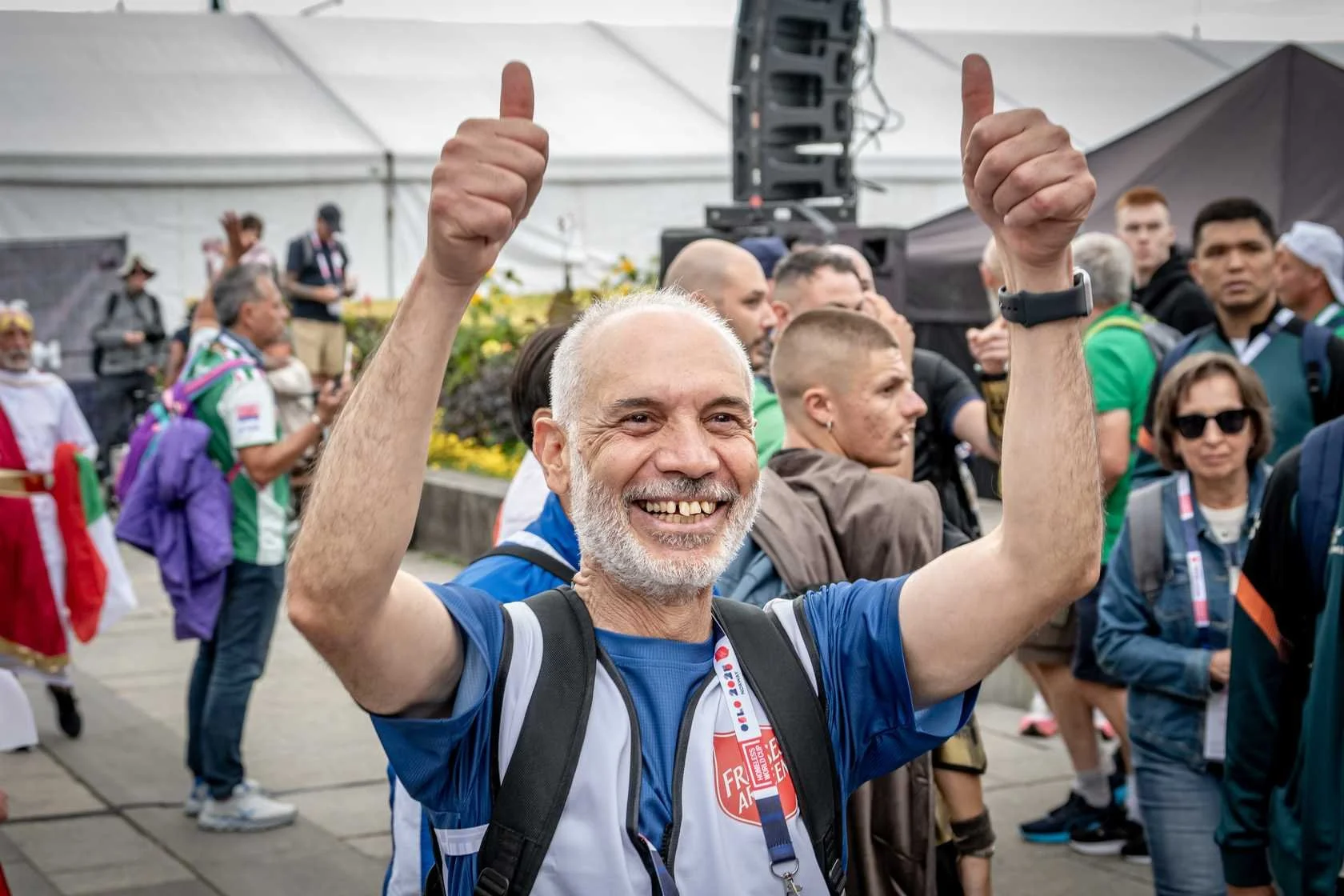

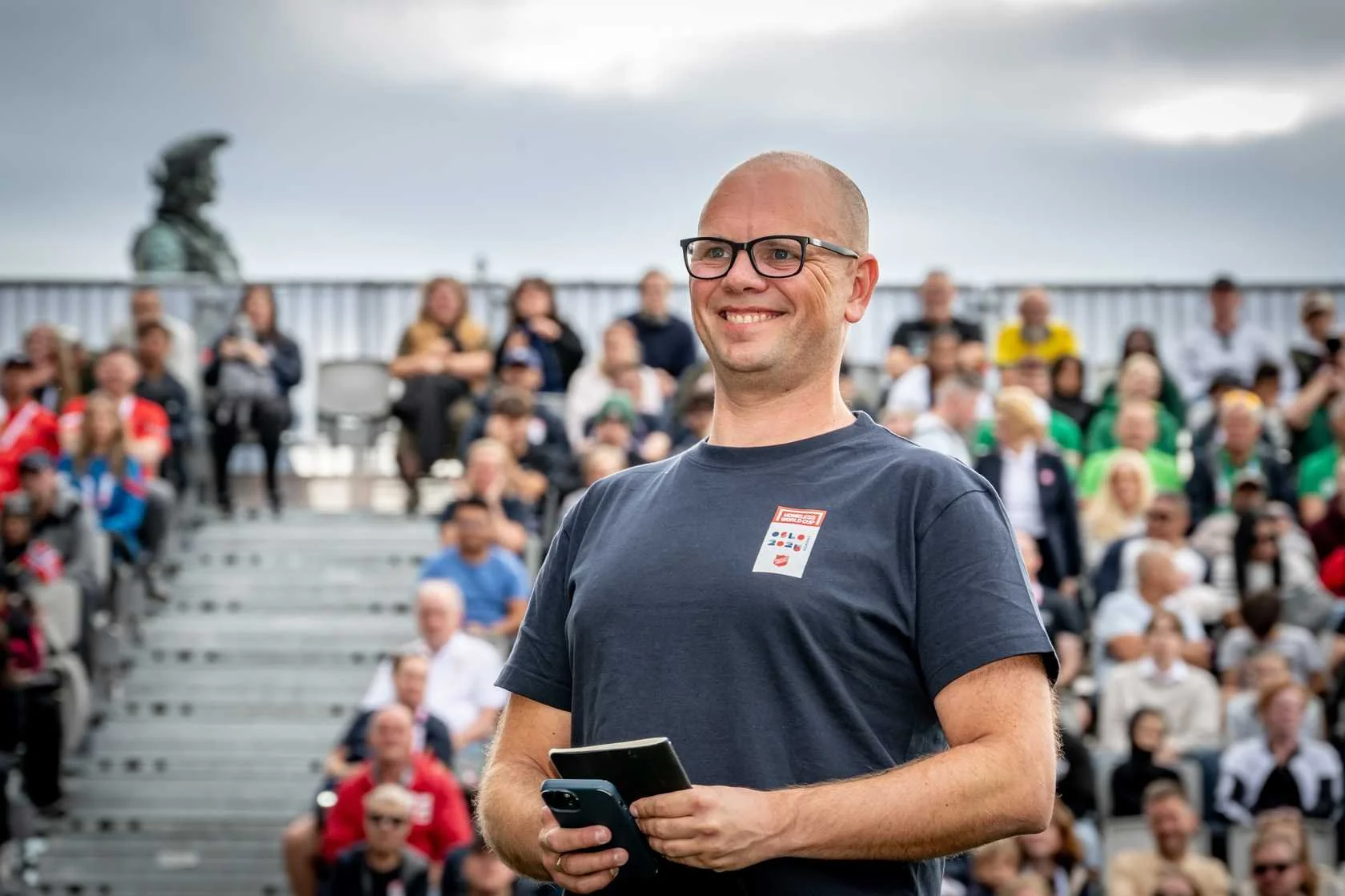

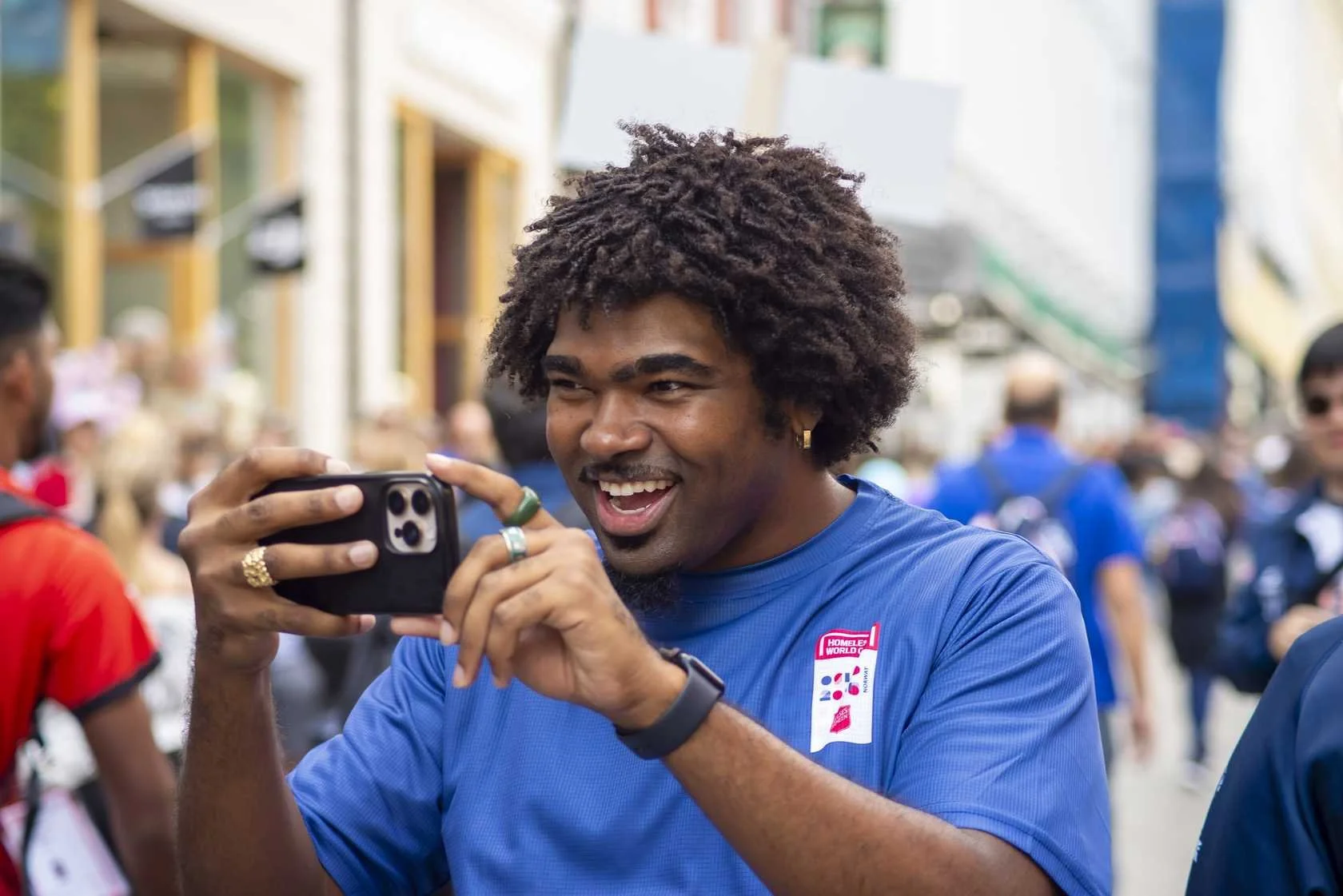
By day, Belgium-based Mathieu Melis is a consultant. He was looking for a way to apply some of those skills in the not-for-profit space. Like Izaak, he came across the tournament through Netflix algorithm recommendations and was intrigued.
‘I watch a lot Netflix movies when at home or when I have some free time,” he explains. “I’m a big fan of sports, definitely football. I play football at home in Belgium as well... So when I saw a movie about football, I thought this might be very interesting… And it quickly became very appealing to me that it’s linked to a charity and linked to homelessness. It was also a very beautiful story.”
Mathieu noticed in the closing credits that the tournament is based on a true event, which he says increased its effect on him and inspired him to investigate the origin story more. “What’s the website? Is it real initiatives that are going on? How many times is it organised? A lot of questions,” he explains. “When I started to get to the bottom of it all after speaking to the Homeless World Cup Foundation, it really felt more interesting. I felt a desire to get to know about and contribute to the tournament itself.”
Mathieu experienced that screen-to-reality aspect Izaak also reports:
“I had a feeling when I was watching South Africa one day, when the sun was going down, everything was feeling perfect, everyone was enjoying everything. So that you really had the movie feeling,” Mathieu explains
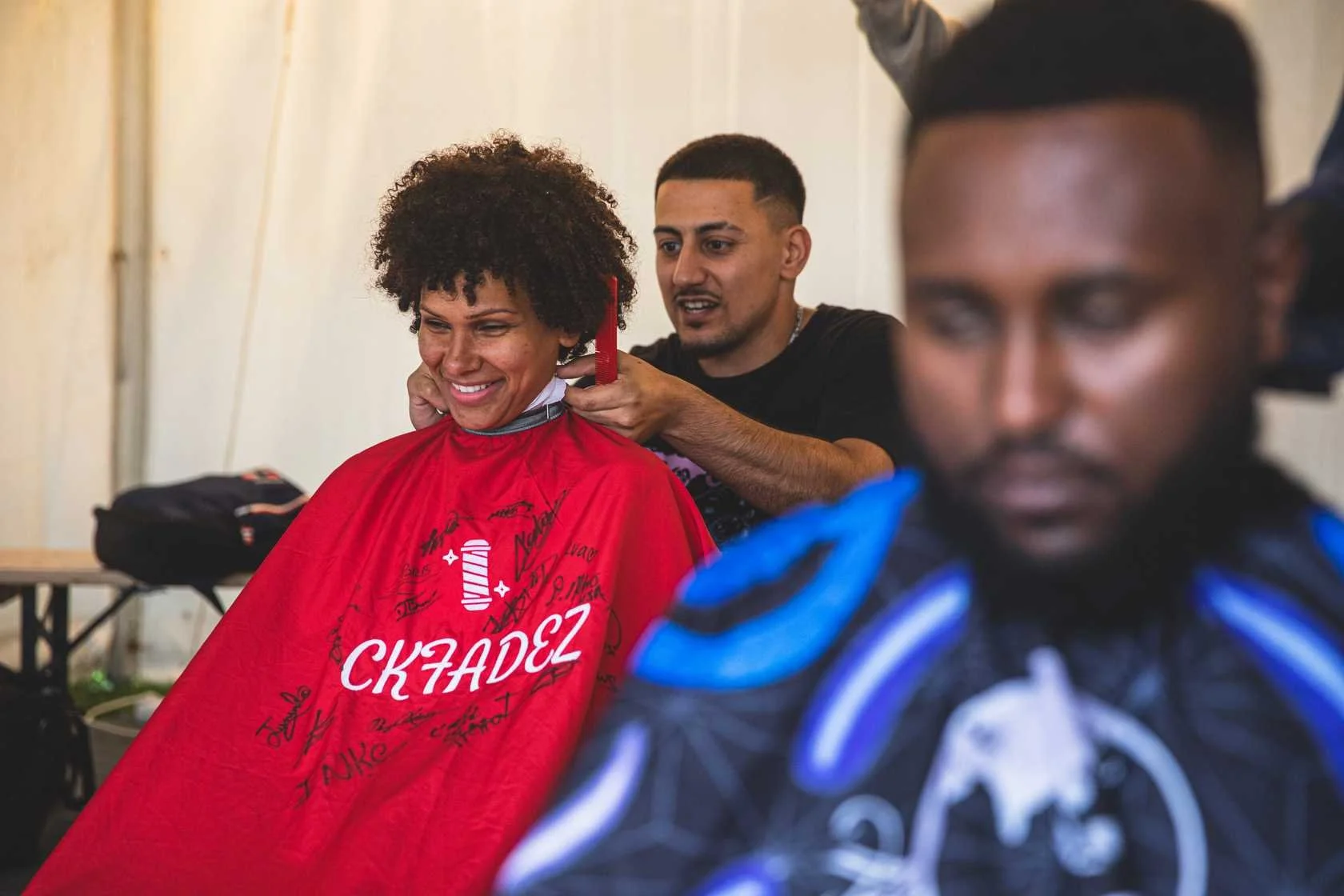
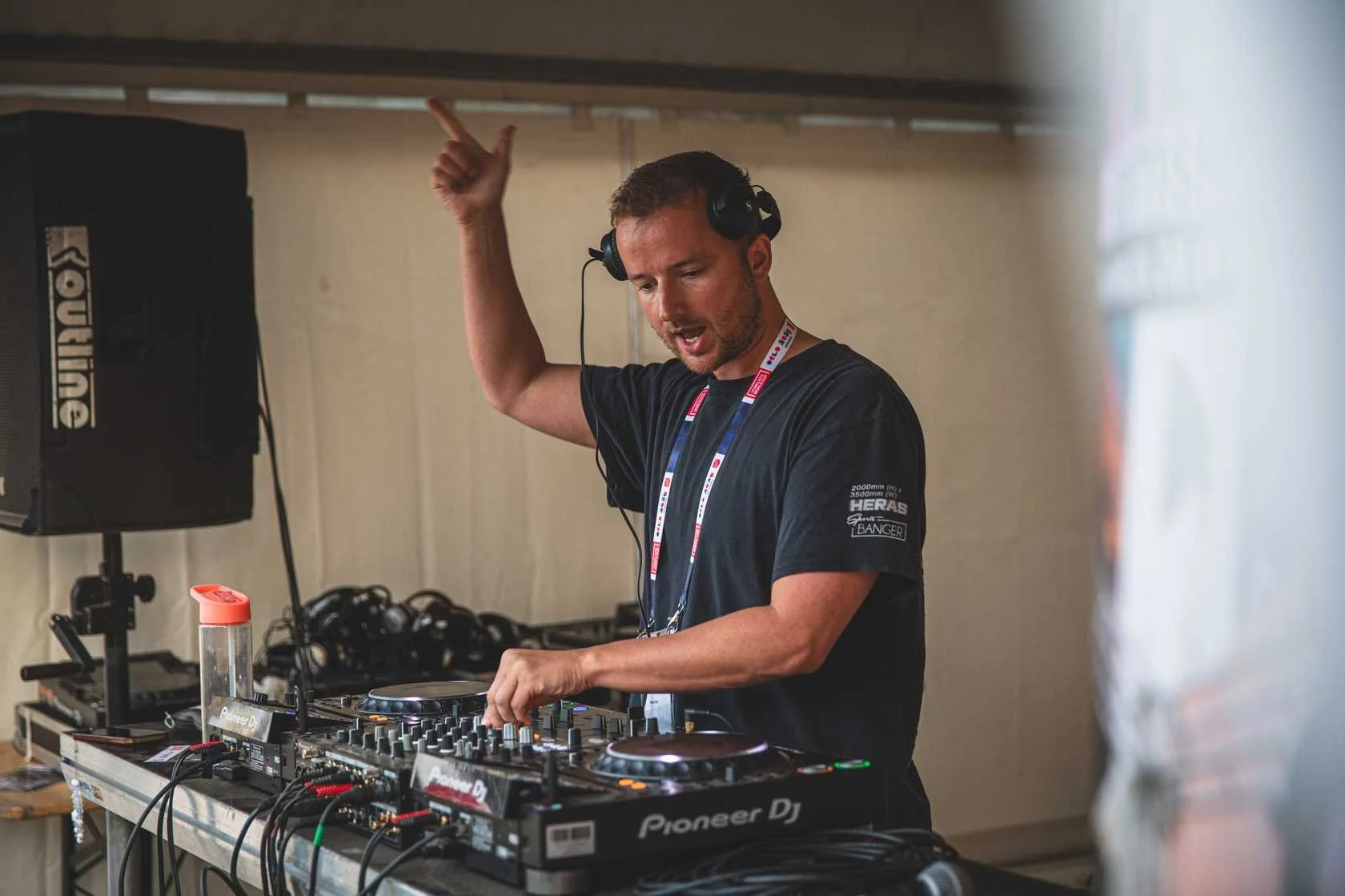
In Oslo there were volunteers providing a free barber service to all players at the tournament and Edinburgh charity Turn the Tables provided DJ workshops all week.
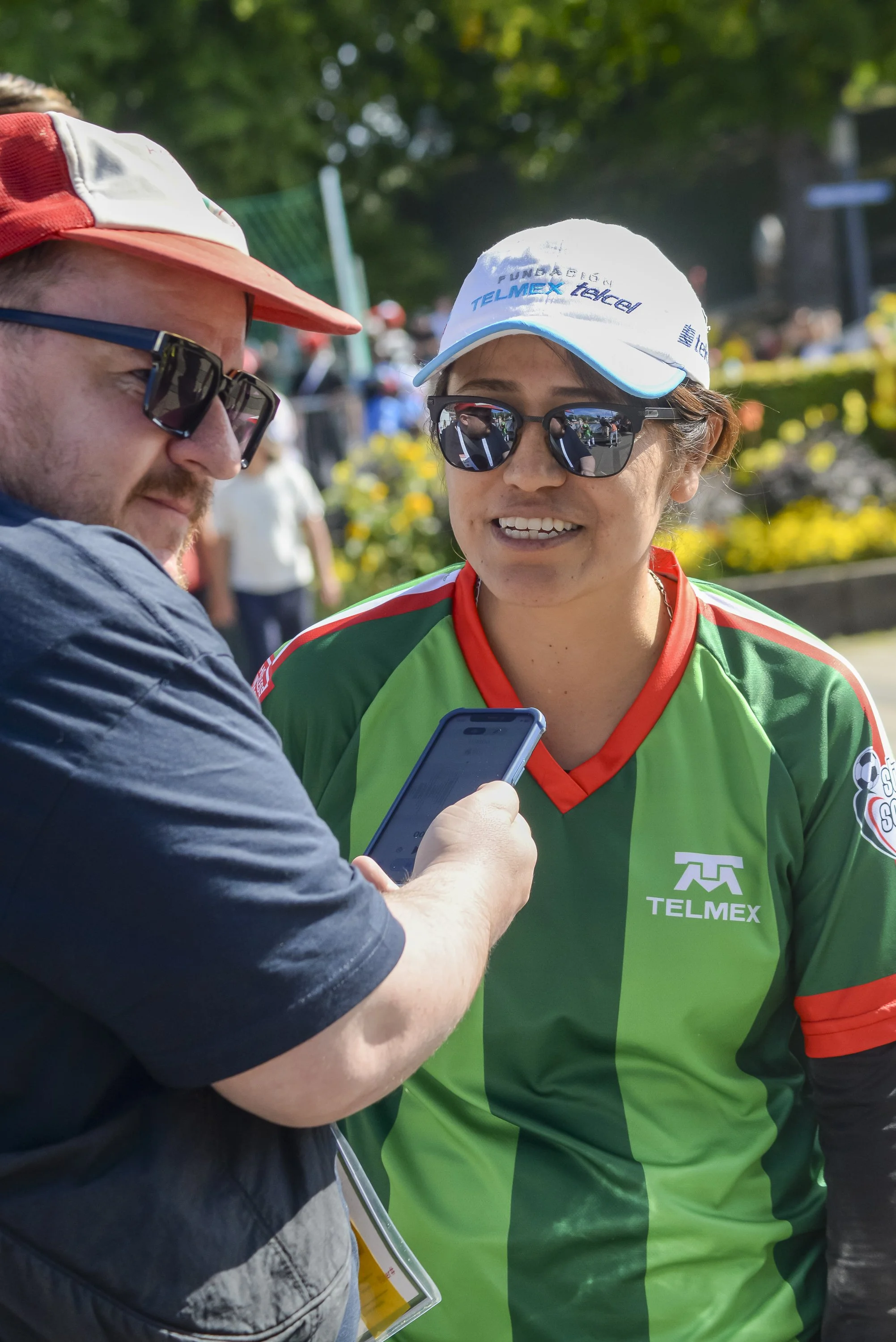
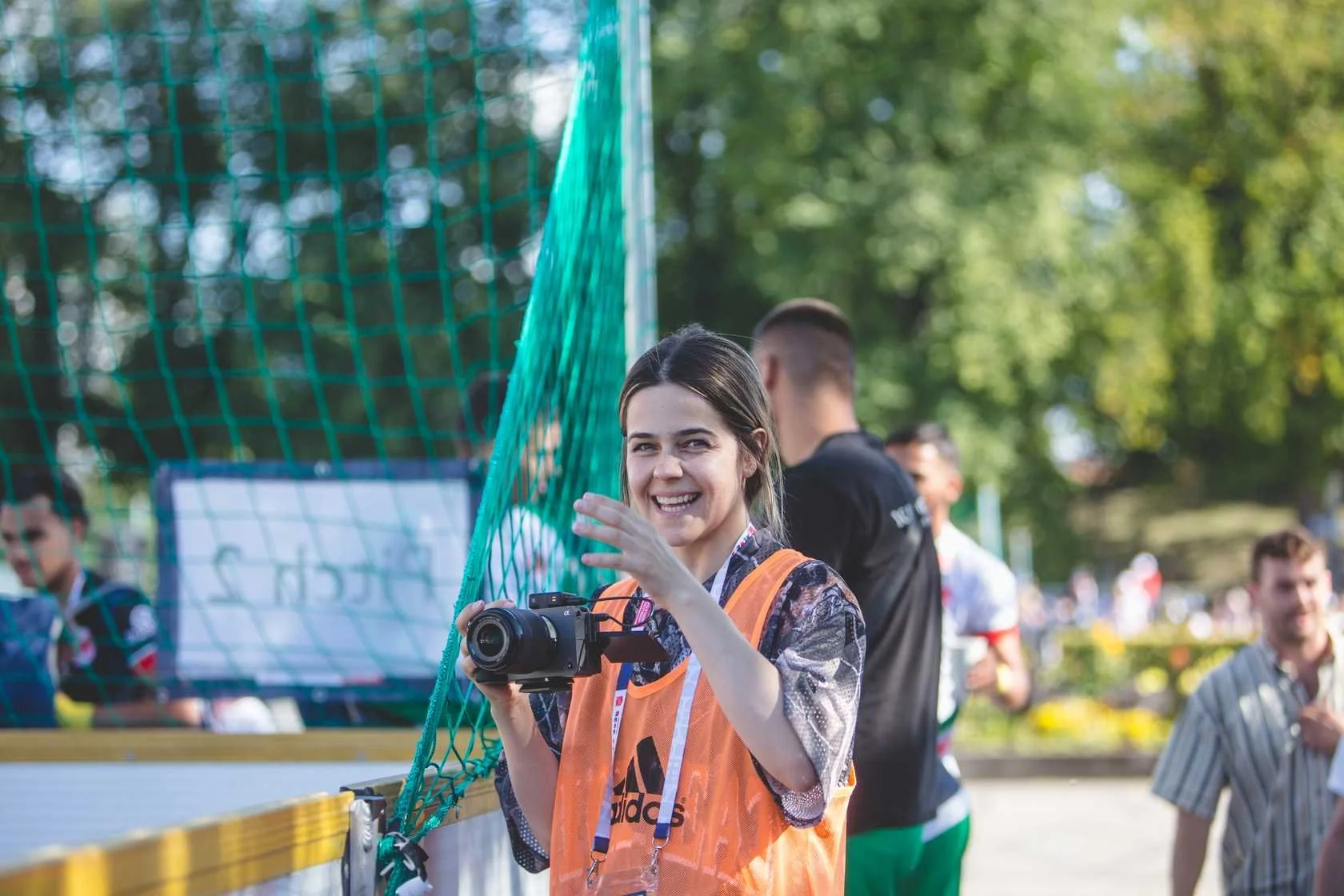
For Brazilian journalism student Ana Guerbali, part of the Local Volunteer setup in Oslo (the tournament is supported by local and international volunteers), the Homeless World Cup represented unmissable, meaningful subject matter for her final university project. The film combined with some healthy social media research and outreach led to her 2025 tournament attendance.
That involved looking after the Brazilian team’s social media and filming content that will double has her university assignment. The project’s also personal. She can see football’s and particularly the Homeless World Cup’s potential to have huge impact in her home country.
‘I’ve been playing football since I was a child. So I know that football can change a life. I don’t know how to explain it, but this, it’s amazing for me…”
“I really want the Brazilian team get more opportunities, because Brazil is the football country. To become a football player there, you need to have money. You need to know the people with money. So I really want to see the team becoming superstars, getting opportunity …” She notes it’s a natural way to achieve positive outcomes—one refreshingly free of drugs and alcohol. “You can play, you can do it the natural way,” she says, adding: “It doesn’t have to be about drug and alcohol addiction either. I think particularly with Brazil it’s just about opportunity and money.”
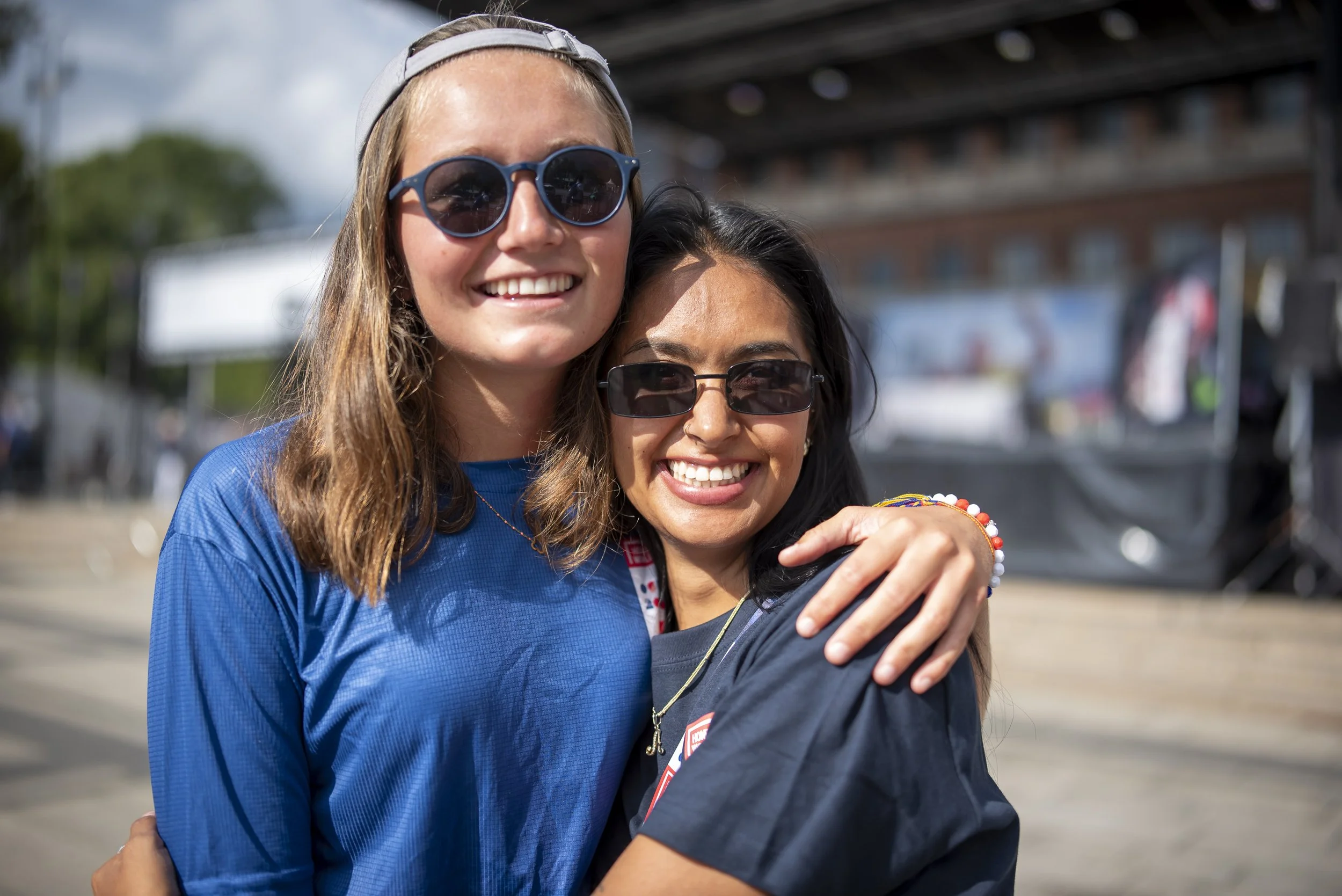
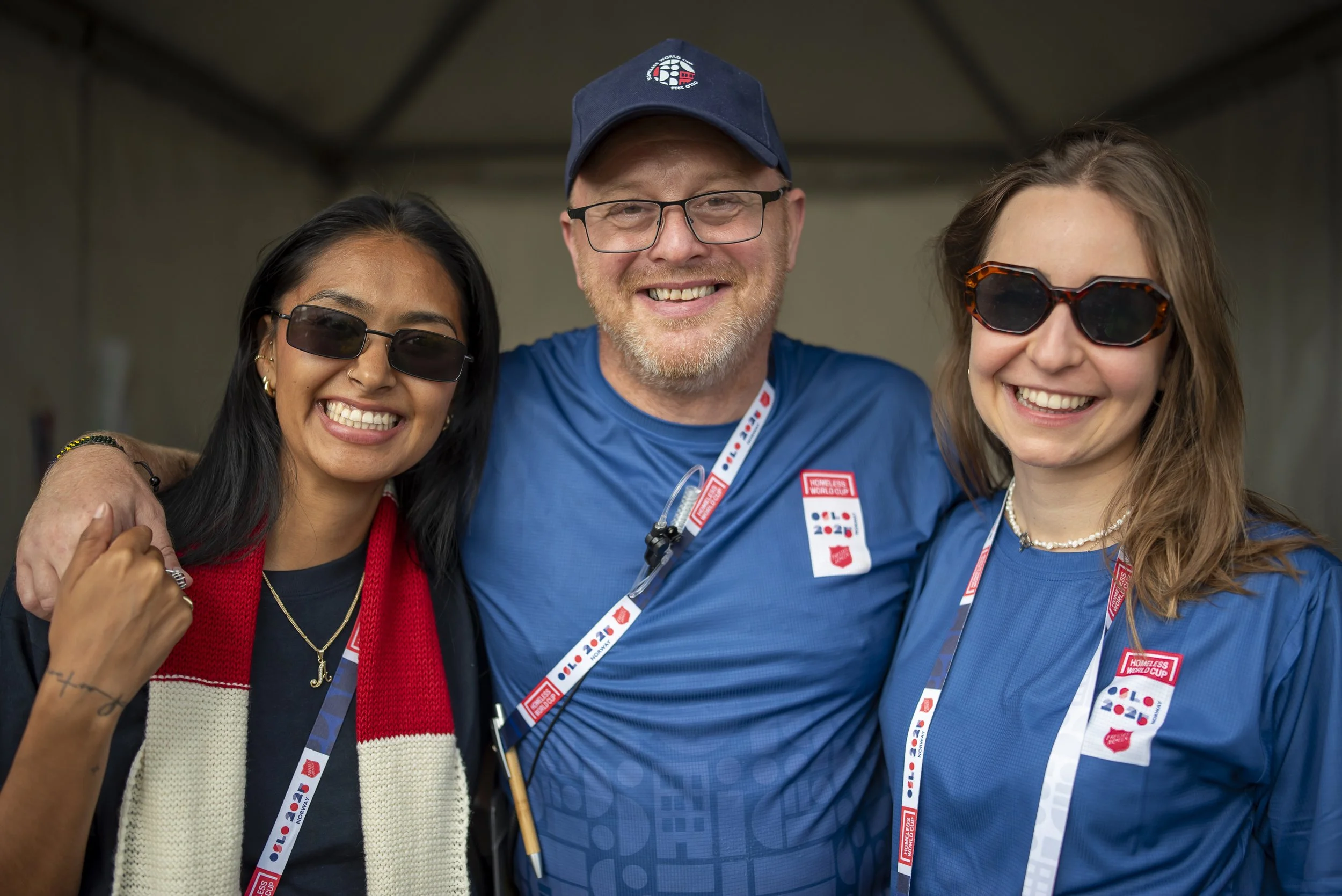
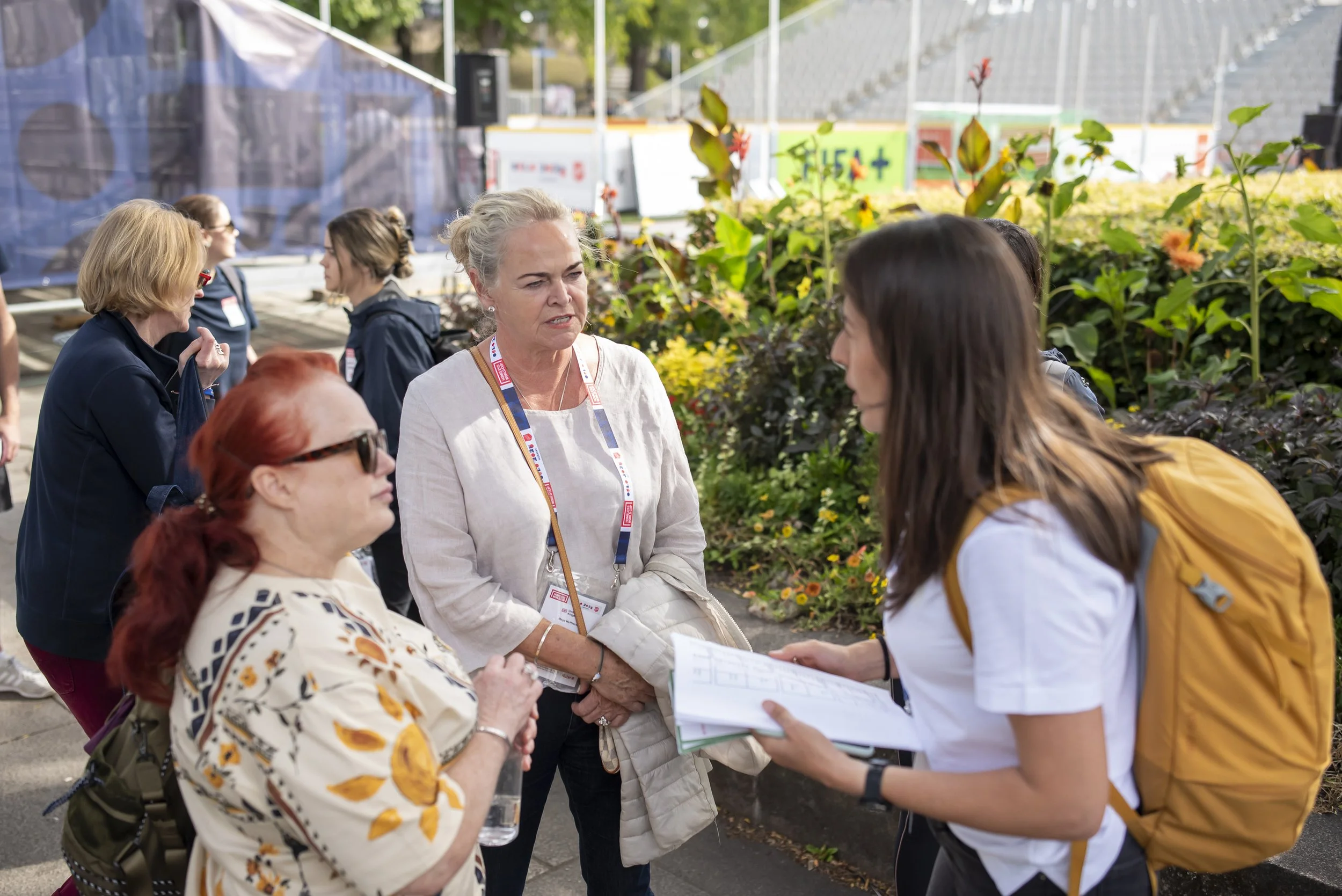
Paris-based Alice Camilleri (pictured above) heard about the tournament through both The Beautiful Game and also the Homeless World Cup Foundation’s recent affiliation with Saint-Etienne football club, an historic French professional football club who wore the Homeless World Cup logo on the shirt in the 2024/25 Ligue 1 season.
“I’m a huge football fan and I love going to matches pretty much everywhere, especially in France. For a long time, I wanted to see a Saint-Etienne game at their iconic Geoffroy-Guichard Stadium, and on April 20th 2025, I finally went there to watch the derby against Lyon. While I was in the stadium, I noticed the big screens around the pitch showing the Homeless World Cup in Oslo, and it immediately caught my eye. I wanted to know what it was. I looked it up online, and I instantly loved the idea - it really spoke to me and was directly connected to the kind of work I was doing. So I decided right away to find out how I can volunteer.”
She reached out through Homeless World Cup Champion Honey Thaljieh, with whom she had worked on another project. Alice soon found herself immersed in the tournament’s event team:
“The film definitely made me want to get involved, but honestly, being in oslo was even better than I imagined. The movie is really well done and shows things quite accurately, but living it for real is something else. It’s such an intense week full of emotions, it’s incredible to be right at the heart of it, meeting people from all over the world, all united through football,” she says.
We spoke halfway through the tournament, at which point Alice nominated the Opening Parade and ceremony as a highlight.
“It was such a powerful and emotional experience. All the teams were there together, marching, singing, dancing, showing off their colours with pride. You could really feel the joy and the pride of being there, it was so meaningful for them. Everyone was smiling, and even the people watching the parade were happy just to see it. To witness so many people from different backgrounds coming together like that - it really showed me how much we can achieve with tolerance and respect.”
She adds: “In just four days, I’ve already learned so much. With kindness, respect, fair play, and simply living together, we can all coexist. Football is such a powerful way to bring people together - anyone can play, and it unites us all. I’ve learned that you need to be curious, go towards others, embrace differences, and that sport and especially football, really does have a kind of magic power.”
That’s something long-time volunteers Isobel and Anita second: The film necessarily provides a snapshot of a small number of players’ experiences, but the tournament itself is a rich tapestry of hundreds of players’, volunteers’ and referees’ experiences.
The film and any sequels could follow any number of those stories, including and especially the life-changing effects the tournament has on the volunteers.
“What about the wider relationships forged with officials, volunteers, photographers, local volunteers, etc? Players who have gone on to do any of these roles?”
Isobel muses of the broader context and insight into who the volunteers are and what keeps them returning. “Maybe there will be a Beautiful Game 2!” she hints.
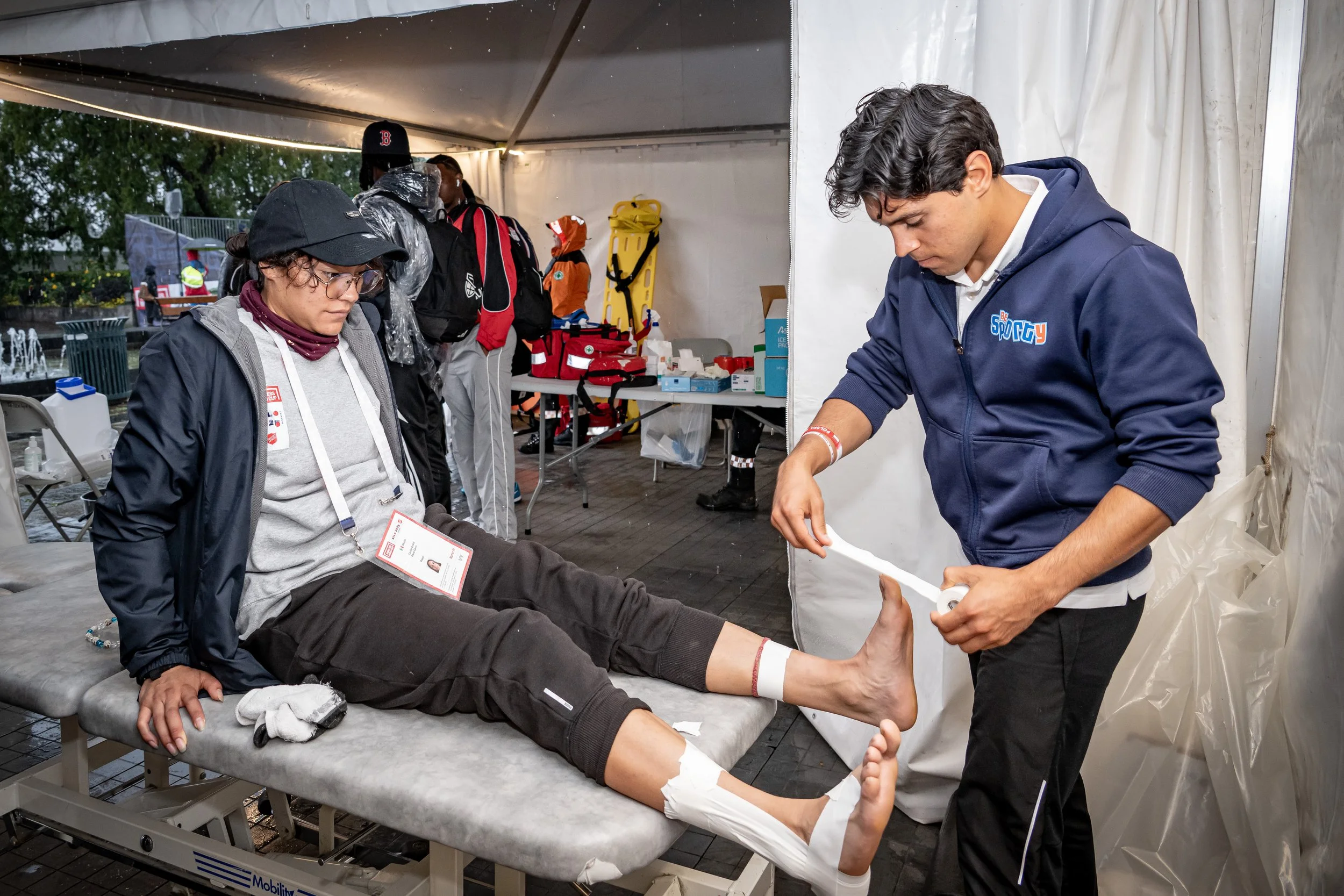
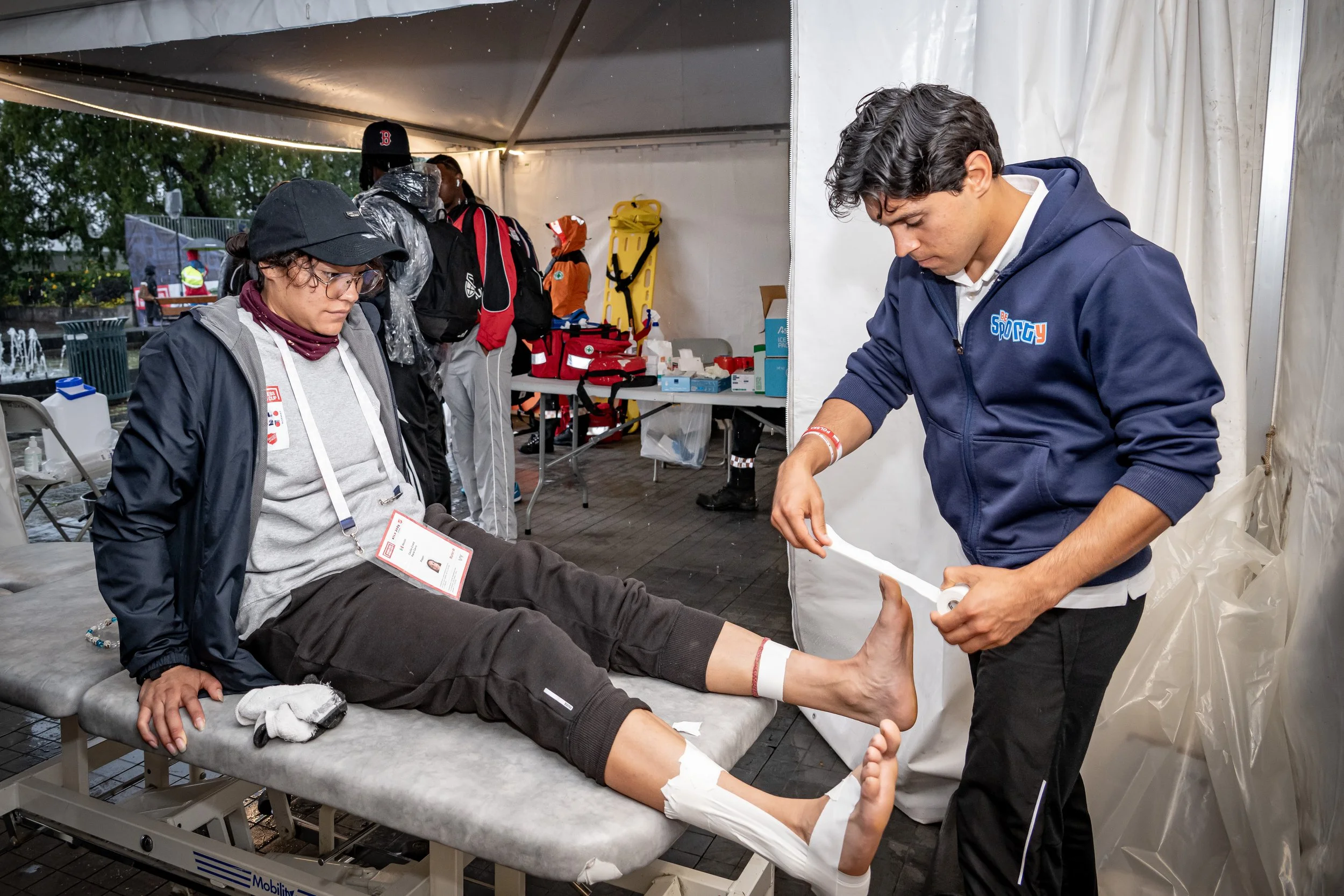
At the tournament, a whole team of physios look after our players and their welfare - all of whom are International Volunteers and support us at regional events as well.
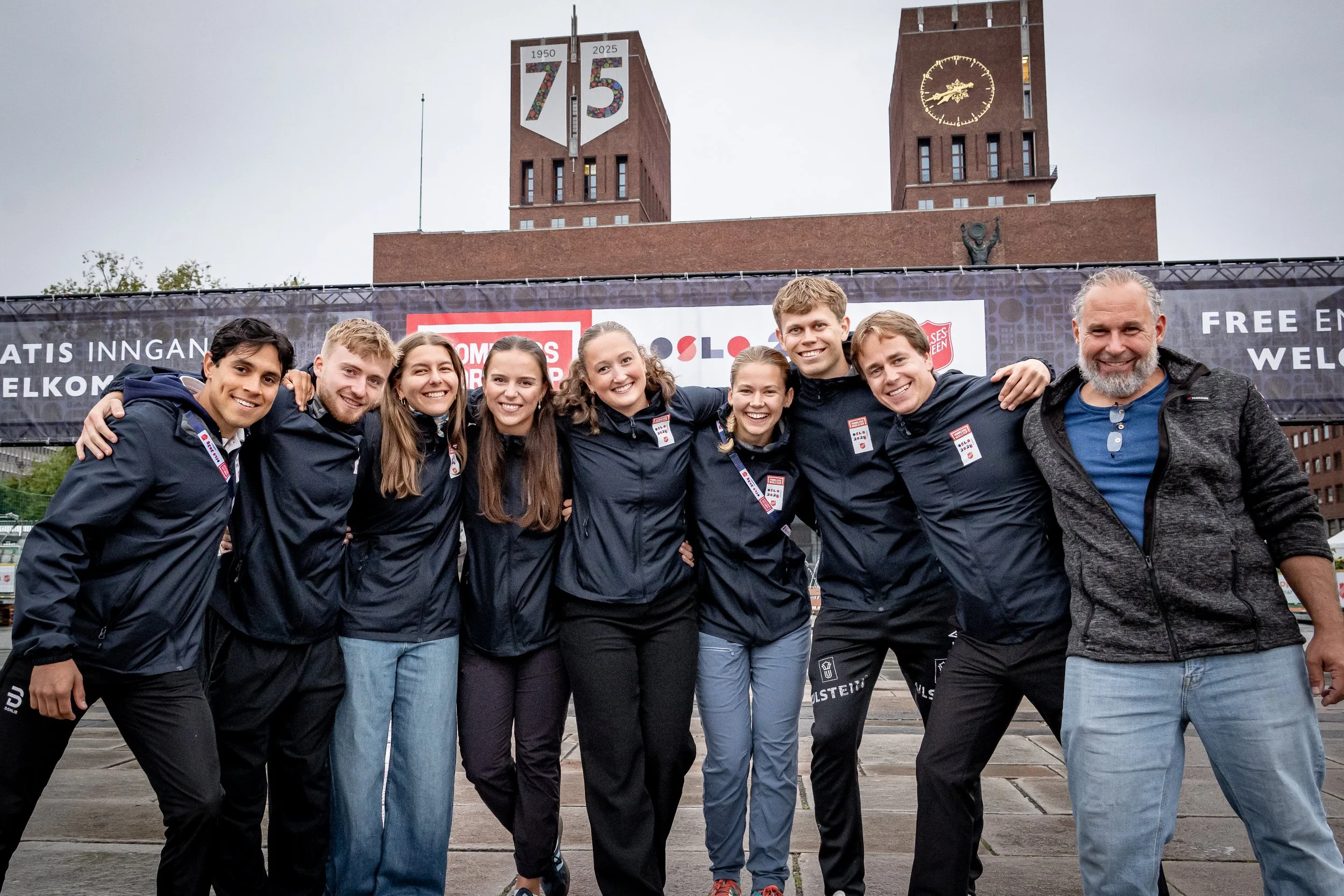
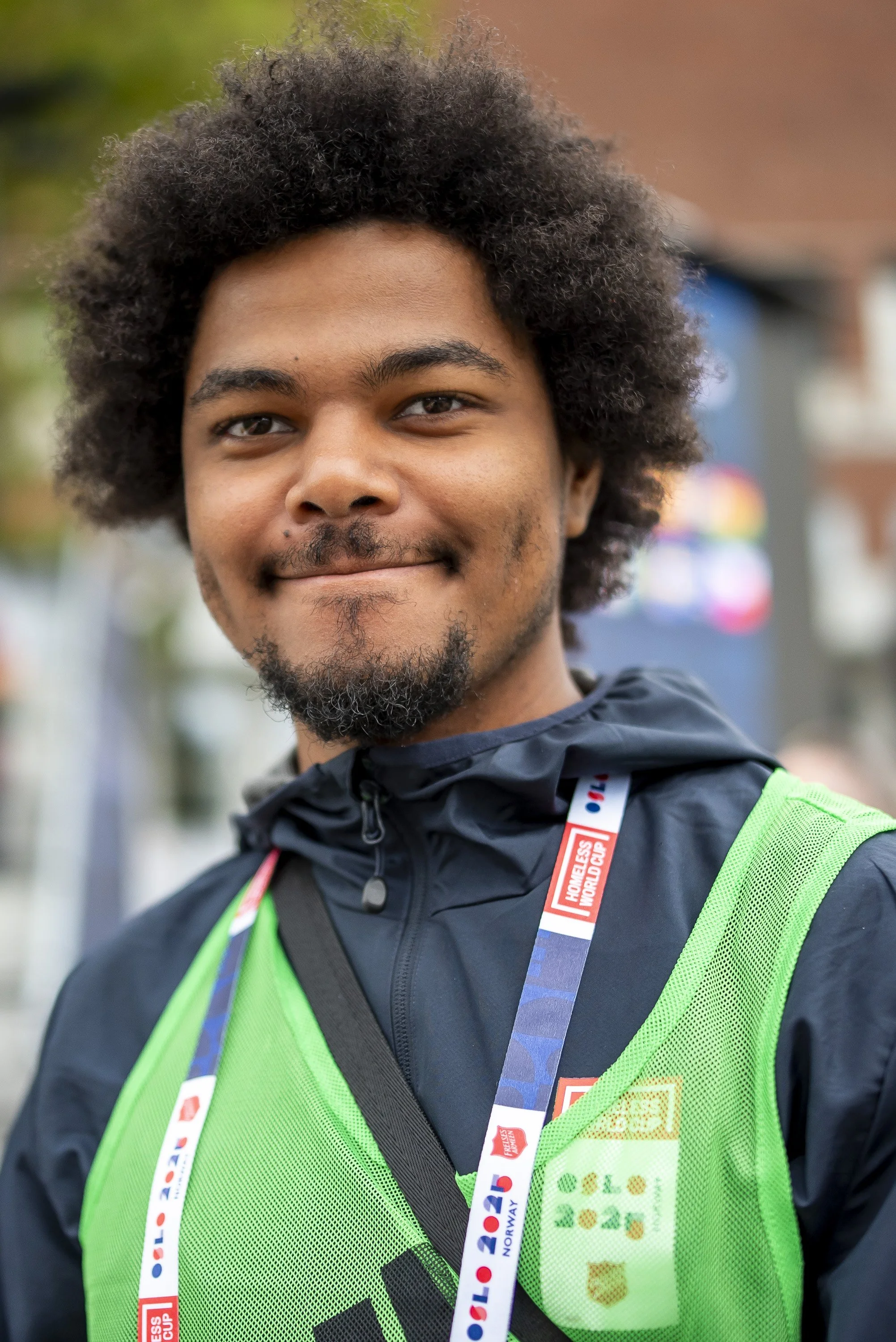
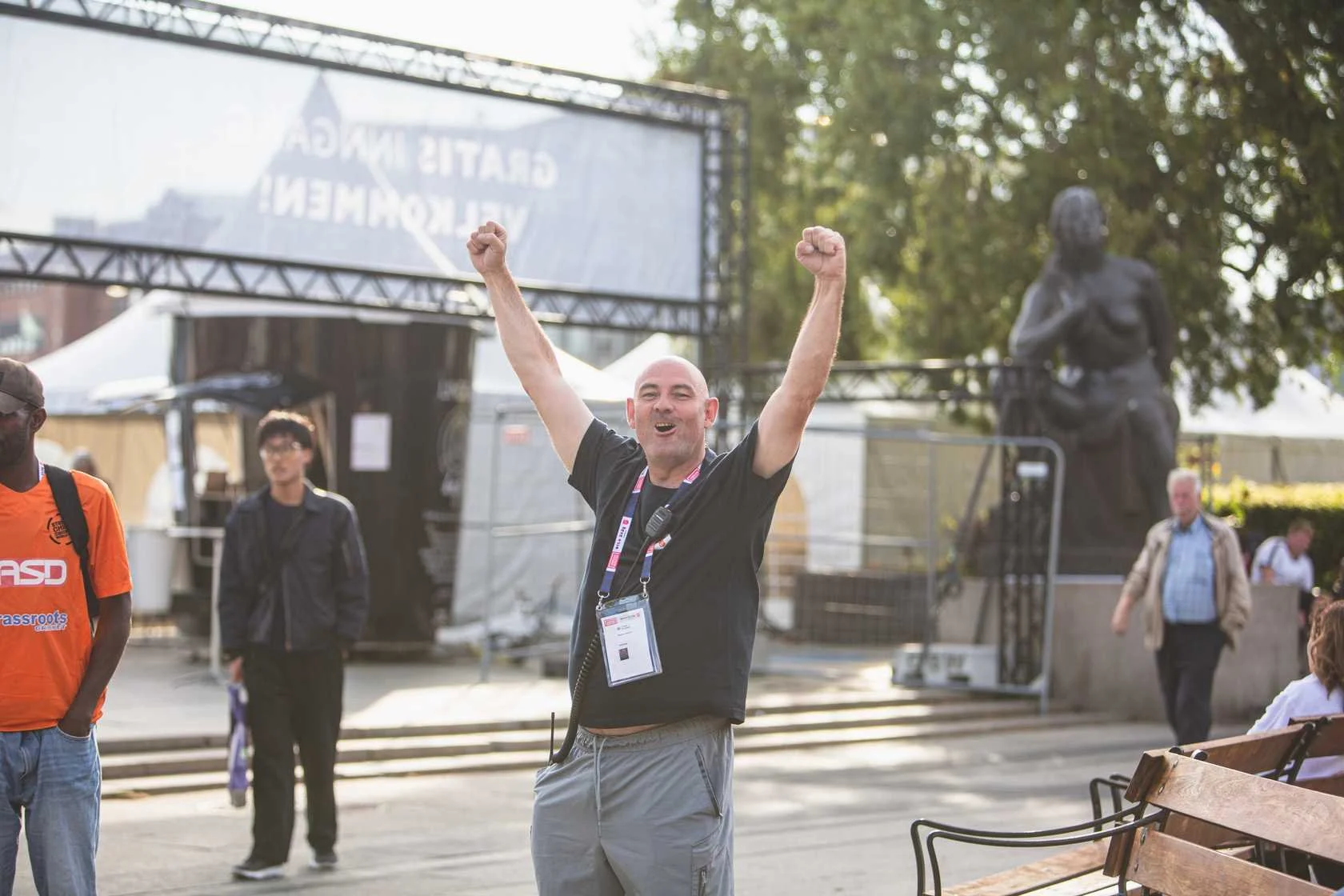
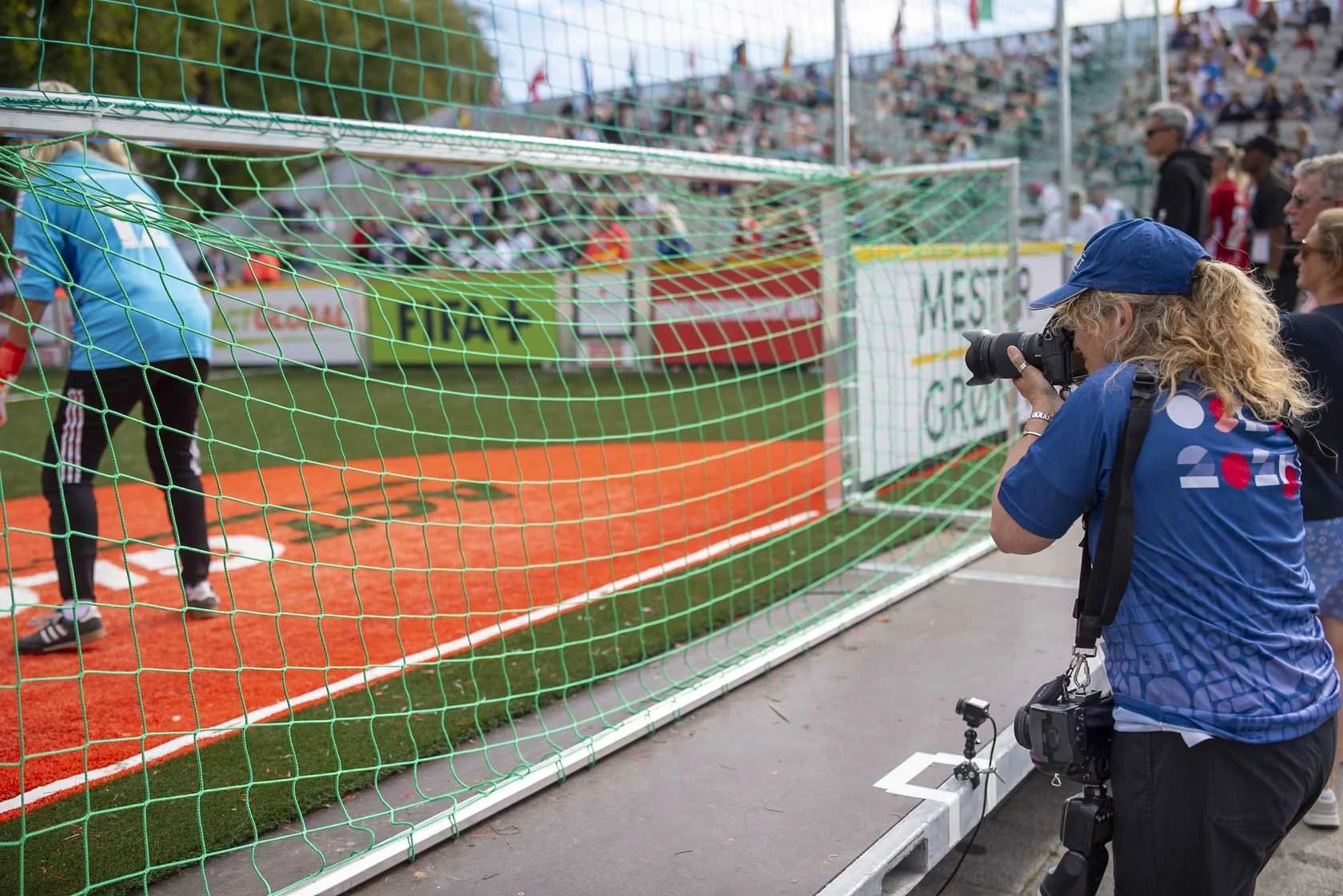
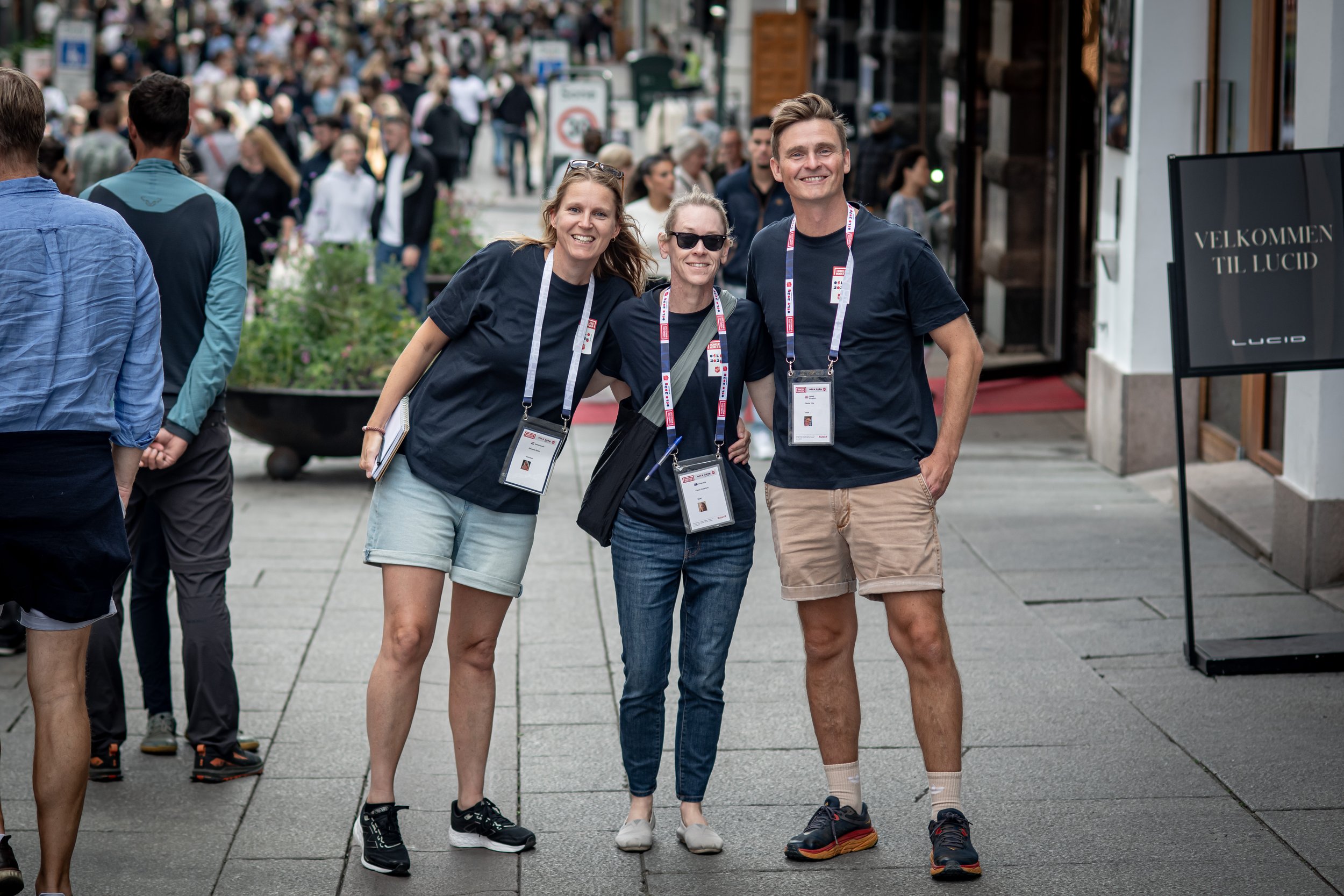
Words by Fiona Crawford, images by Anita Milas, Donnie Nicholson and John Anderson: All Homeless World Cup Foundation International Volunteers