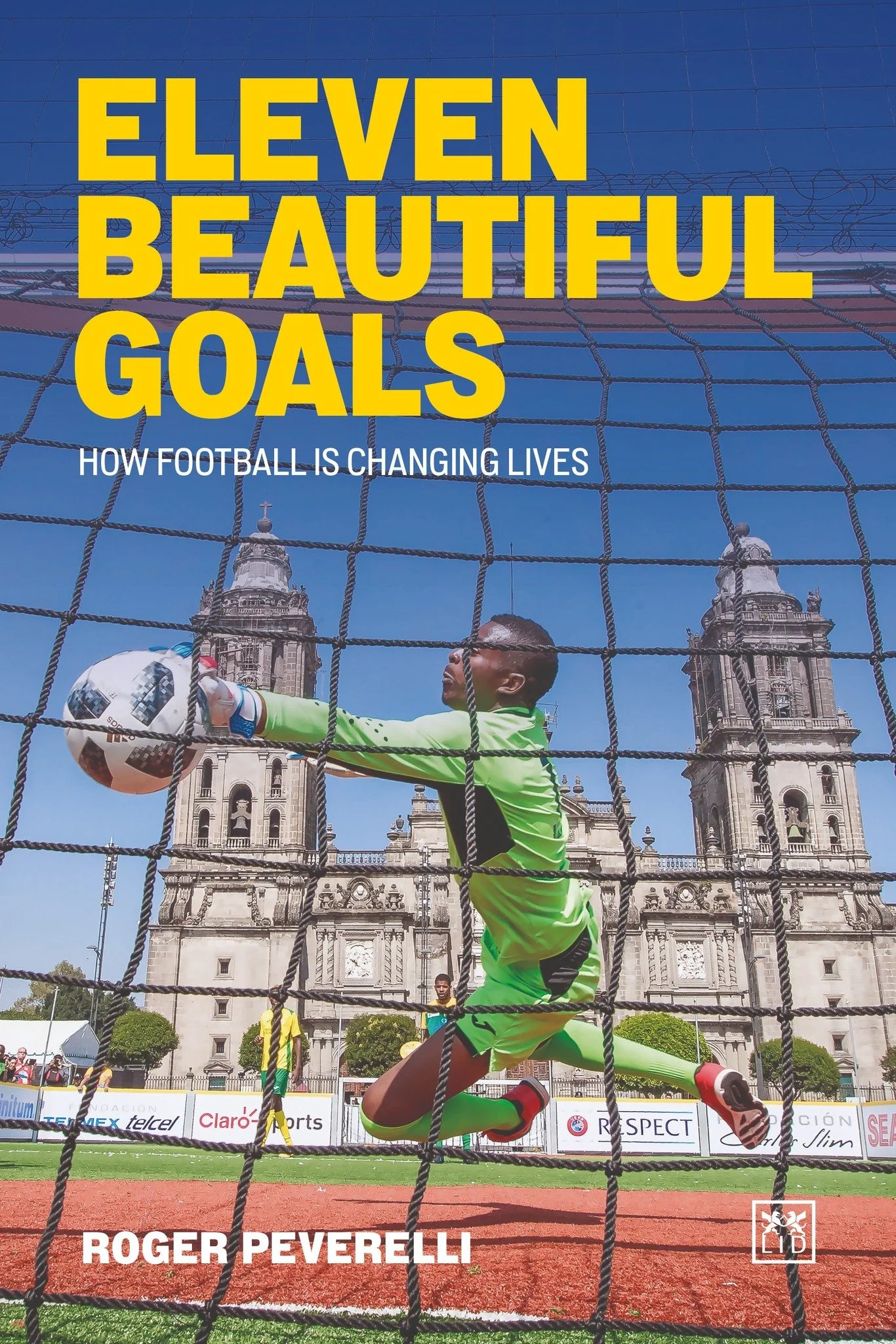
At the start of the year, Matthew Williams, Marketing & PR Manager at the Homeless World Cup Foundation, sat down with Roger Peverelli to talk about his new book, Eleven Beautiful Goals, a celebration of football’s power to inspire hope, connection and meaningful social change.
Roger’s connection to the Homeless World Cup Foundation stretches back over a decade. First introduced to the tournament in 2014 through a presentation by Co-Founder and President Mel Young, he was immediately struck by the simplicity of the idea and the scale of its impact. Since then, Roger has followed the work of the Foundation closely, inviting both Mel and Matthew to speak at international conferences and witnessing first-hand how football can be used as a force for transformation.
In Eleven Beautiful Goals, Roger brings together powerful human stories from around the world that show how football can change lives far beyond the pitch. The Homeless World Cup Foundation features prominently in the book as a global example of how sport, when used with purpose, can shift perceptions, rebuild confidence and help people move away from homelessness towards stability, opportunity and belonging.
Royalties from the book are donated back to the organisations featured, ensuring that the stories shared also directly support ongoing work on the ground.
In this Q&A, Roger reflects on what drew him to the Homeless World Cup Foundation and our annual tournament, the moments that left the deepest emotional impact, including attending the Oslo 2025 Homeless World Cup and why he believes football remains one of the most powerful tools we have for social change.
What first inspired you to include the Homeless World Cup in Eleven Beautiful Goals and what drew you to our story specifically?
I first encountered the Homeless World Cup back in 2014. I still vividly remember Homeless World Cup Co-founder and President Mel Young’s presentation at the launch event of Ashoka Netherlands in Amsterdam. The entire concept of the tournament and of course, its impact, made a huge impression on me.
I later invited Mel and Matthew Williams from the Foundation to speak at conferences I organised in 2020 and 2022, aimed at inspiring insurance executives from around the world on how to create large-scale impact. So, when I decided to write a book about the social impact of football, the Homeless World Cup Foundation and their annual tournament was right at the top of my list.
I was also captivated by the Homeless World Cup Foundation inspired Netflix film The Beautiful Game, which attracted millions of viewers within days of its release.
It’s a family film that doesn’t dwell on how people became homeless but instead focuses on how they turn their lives around through football, the whole film is based on the true story of the Homeless World Cup Foundation and the tournament and sends a positive message that resonates with so many.
This idea of positivity became my starting point for the book. Eleven Beautiful Goals had to be, above all, fun and accessible and a book every football lover would enjoy.
When you were researching and speaking with people connected to the Homeless World Cup Foundation, what moment or insight had the biggest emotional impact on you?
I am simply fascinated by how the vision and every element of the Homeless World Cup Foundation and the tournament fit together to create such incredible impact.
Its global reach - touching no fewer than 1.7 million homeless people since its inception in 2003. The passion of the Homeless World Cup Foundation in Edinburgh, alongside all their Homeless World Cup Member Country partners across the globe and volunteers in participating countries. The set-up of the tournament itself. From the iconic venues to the fast-paced, street-football-style matches - every element contributes to its power and impact.
When I visited the Oslo 2025 Homeless World Cup tournament last August, I witnessed firsthand how the event changes perceptions among spectators in the stands. People passing by, some in business suits on their lunch break, others carrying shopping bags might previously have ignored homeless people on the streets, but now they cheer for these players.
They start seeing them differently: as footballers giving everything they have.
And to be honest, since I first learned about the Homeless World Cup Foundation and their work in 2014, my own perceptions have changed in much the same way.
Your book highlights powerful human stories from around the world. What role do you feel the Homeless World Cup Foundation plays within that global narrative of hope and change?
There are very few initiatives with an impact comparable to that of the Homeless World Cup. So global yet so personal, so scalable yet so intimate, so cleverly structured yet so authentic.
I think every social initiative can learn from it. Many organisations use the power of football, for instance, to promote healthy lifestyles, sustainability, or to keep vulnerable young people away from crime. The challenge for all these initiatives is to increase their impact. In my view, the Homeless World Cup sets the standard for how to do that.
Secondly, the Homeless World Cup also transforms perceptions. The way it achieves this is something every social initiative can learn from - whether it’s addressing racism and homophobia or promoting gender equality. Especially in today’s polarised world, that feels more important than ever.
Why do you believe football is such an effective tool for transformation, especially for people experiencing homelessness?
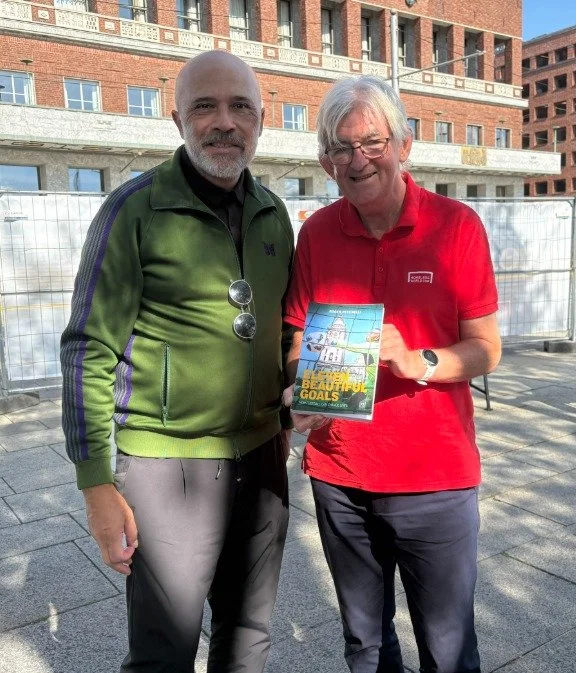
Roger and Mel at the Oslo 2025 Homeless World Cup
In my view, real football isn’t played by stars in stadiums, but by millions of people having kickabouts in squares, parks and on amateur pitches. The beauty of football lies in its simplicity, all you need is a ball. Put a ball on the ground anywhere in the world and something immediately happens: people start playing, laughing, and connecting. It doesn’t matter where you come from or where you’re going, you meet and appreciate people for who they are. You can be very skilled or not so skilled but still be part of the same team. It’s all about participation. Football is almost a universal language and astonishingly accessible.What I love about the Homeless World Cup’s Member Countries is how they harness this power when working with homeless people in their cities and countries. They go to where people are, on the streets or in hostels and encourage them to start playing football. Just kicking a ball around, on a small pitch or in the street, brings people together. Simply participating builds confidence. The next step is creating individual pathways off the streets, into jobs and housing, away from drugs and alcohol, gaining qualifications and gradually reintegrating into society.
At the centre of it all, every step of the way, is football. The results speak for themselves.
What do you hope readers will feel or understand about the Homeless World Cup Foundation after reading the chapter inspired by our work?
First and foremost, I hope to raise awareness of the Homeless World Cup among regular football fans, even if just a little. I also hope that major brands already sponsoring football will become more aware of the opportunity to combine sport with social impact, for instance, by supporting the Homeless World Cup Foundation as well.
Finally, I hope that readers working in the ‘football for good’ sector will take the Homeless World Cup as an example - a best practice - to learn from and become even more effective than they already are. The world is facing a wide range of social challenges, and football is the most powerful cultural force we have to help address them.