Former Scottish Homeless World Cup player tells story in new book ‘Scars Under the Jersey’
“We are all just one decision away from a particular event which could prove to be life-changing”
Sarah Rhind is exceptional and an exception – she’s one of the few who have managed to overcome heroin addiction and successfully move into recovery and stay there.
Since 2016 she’s been working with Street Soccer Scotland after joining their programme as a player. Sarah represented Scotland at the Homeless World Cup in Amsterdam in 2015.
Now she’s helping people who are struggling with addiction, using her own lived experience to offer guidance, a listening ear and compassion to support their recovery.
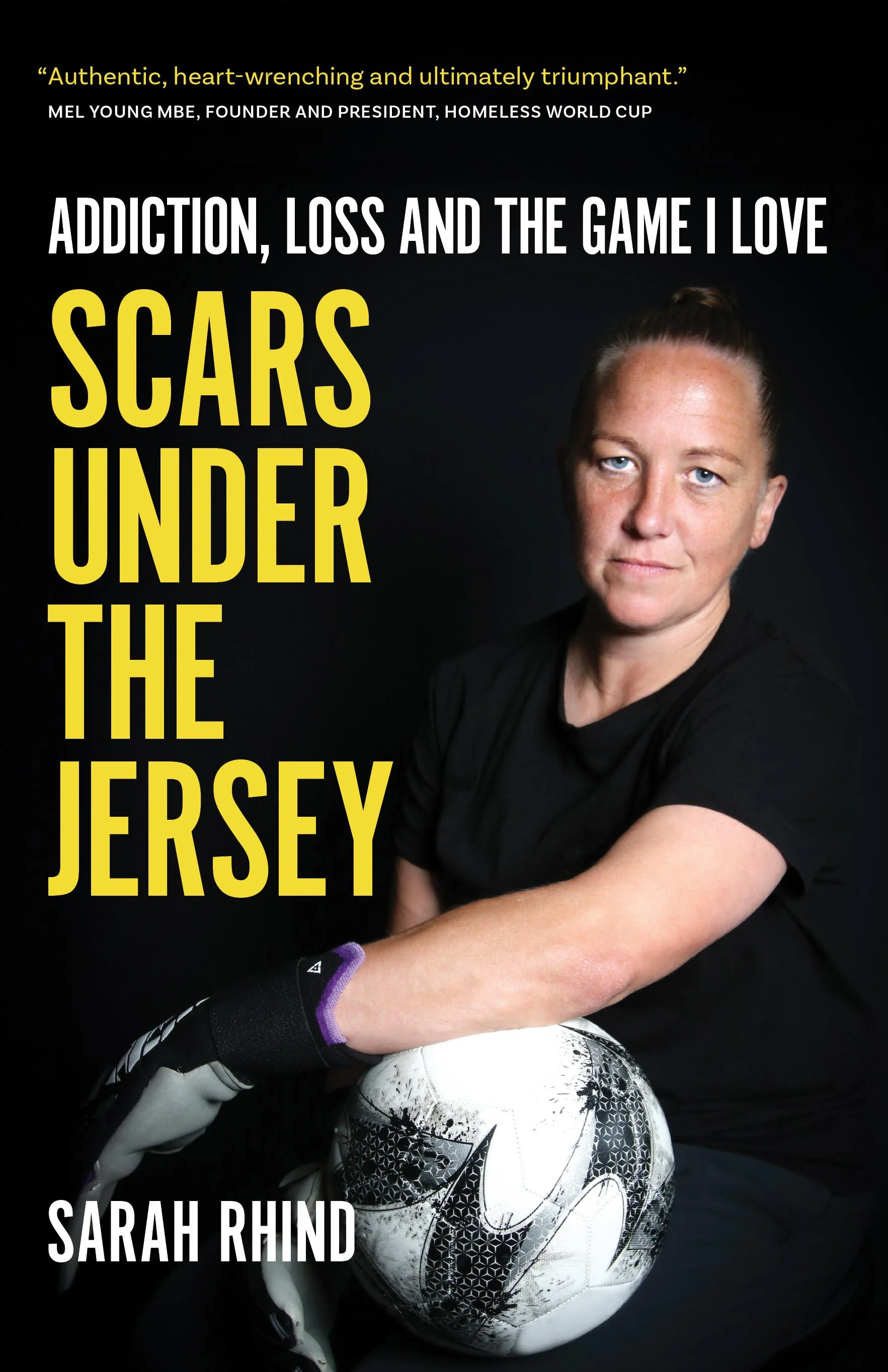
Sarah is sharing her story in her new book ‘Scars Under the Jersey’ - published on 31st March 2026.
Her book ‘Scars Under the Jersey’ is a heart-felt and honest telling of her dyslexia, self-harm, drug addiction, rehabilitation, and recovery. It’s poignant, thought-provoking and humbling and a powerful reminder that addiction can choose anyone and that the key to recovery is respect, care, compassion and ultimately kindness.
“My recovery started with a tiny seed. A seed of hope.”
At one point Sarah was trying to think of any strengths she might have, the list of weaknesses went off the page, but the only strength she could think of was football. A childhood love of being in goal and her natural ability gave her an inner strength and self-belief.
Football would ultimately save her life and enable her to change the lives of countless others.
“I learned over time that I no longer had to be a chameleon and become a version of myself that best suited my environment. I could just be me. There is something freeing about that. For the first time in my life, [at Street Soccer Scotland] I felt like I had found my place in this world.”
We spoke to Sarah about football, representing Scotland and what it meant to her to share her story in ‘Scars Under the Jersey’.
What inspired you to write ‘Scars Under the Jersey’?
When I started writing I wasn’t in a great place – I was very lost and misunderstood and unheard in those couple of years after I lost Jo (my sister). I was so reactive and so angry. I would talk to people, and I didn’t think that anyone really got it. I thought I need to get these words out and I need it not to come back with well wishes or people trying to help. I had done a little journaling in my darkest times when I didn’t feel like I had another channel and I remembered that it had helped. My aunty had said to me one day you’ll write a book about your experiences, and I just decided, I’m going to write my book and once I started it was an unbelievable experience – it was so cathartic, I healed so much from writing.
What does football mean to you and what role has it played in your life?
Football is life. It’s my first love. It makes me happy. Football – it’s the whole package – I used to think it was just about playing and over the years I’ve come to realise that it wasn’t just about playing. It’s the belonging, you have a sense of purpose, you have a role – an important role. It’s about showing up for your team on and off the pitch. It’s the friendships, the comradery, the togetherness, being part of something. It’s absolutely everything. It’s given me so much in my life confidence wise and it’s given me so many incredible platforms.
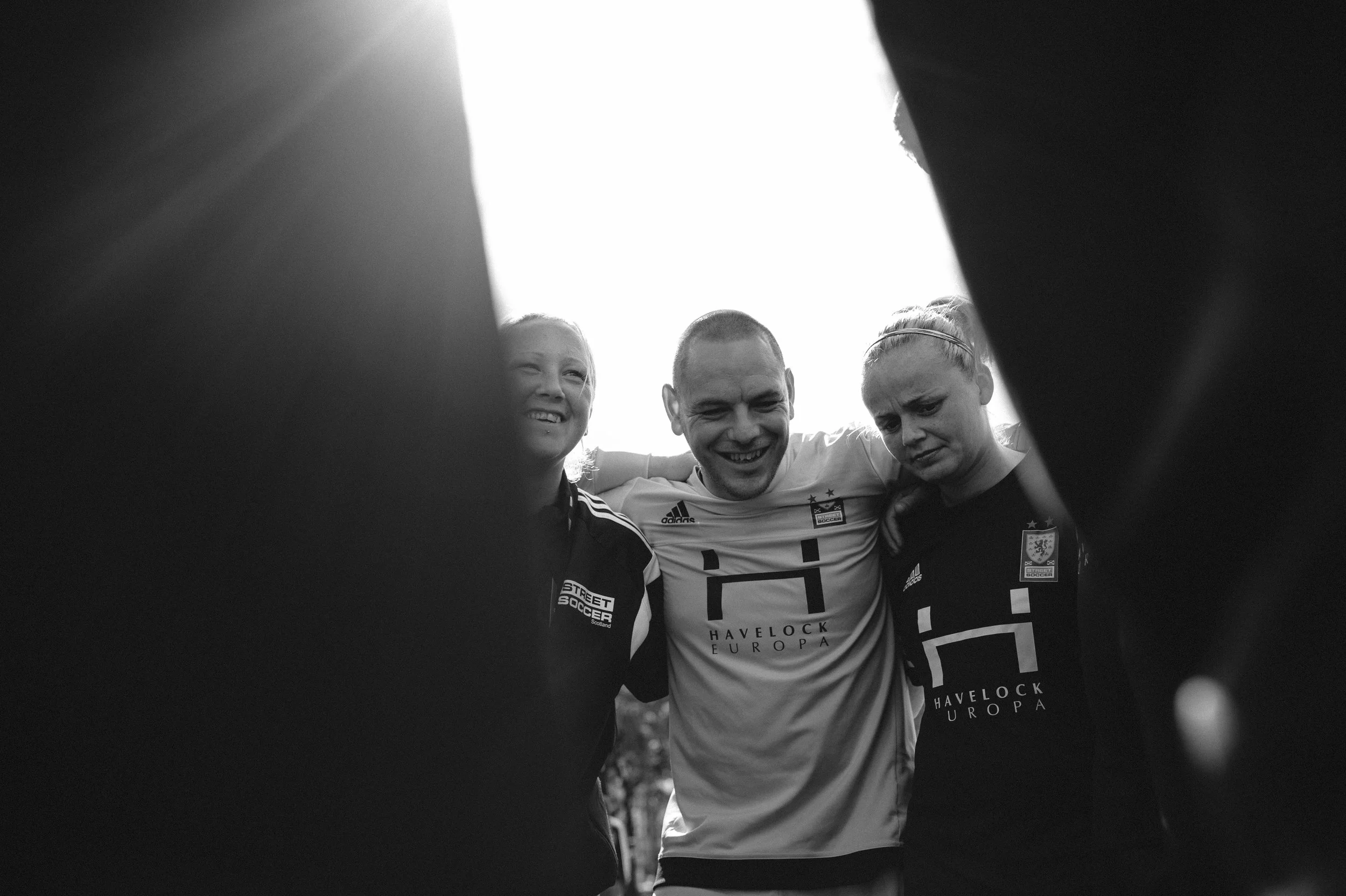
“It was an incredible honour, it was heartfelt, it was inspiring” Image: Paul Bence
How did you feel representing Scotland at the Homeless World Cup?
I get goosebumps just thinking about it, anytime anyone says anything about the Homeless World Cup it just brings me back – the memories, the experience, it was absolutely incredible. From getting told I was chosen, that I was representing Scotland – that’s a pipe dream. That happens to someone else. I used to say I don’t have the comparison playing for the Women’s National Team, but they don’t get to play here. It’s not to be compared.
It was an incredible honour, it was heartfelt, it was inspiring, it was insane and the football – playing against the Netherlands (the hosts in 2015) was one of the standouts in my memory. We played that game and we won on penalties after it ended 4-4 – When it came to be my turn to do my bit for the team it was that pin-point focus, I didn’t hear anything around me, didn’t see anything around me – just completely focused on the ball and the save and it was the sheer high and the elation we felt. It was incredible. That moment will always stay with me. We celebrated like we’d won it.
The bit I remember the most is when you were in that big crowd with people from all over the world and just hearing peoples’ stories and just that level of connection was unbelievable. I’ve come to realise that life is all about connection and we need people and life isn’t missing anyone. Everyone is going to have to deal with stuff and I just wish we could be more understanding and more supportive and that’s why I’m doing what I’m doing and trying to fix the narrative.
How do you think the women’s game has changed since you started and what do you think needs to change to keep improving things?
It’s been night and day, it’s nothing short of incredible. My experience growing up was that I played football with the boys team until P7 and I was lucky that the school teacher started a girls team, but after I went to secondary (school) and I found myself in limbo again so I ended up playing senior football at 14.
It still frustrates the life out of me when I see the keyboard warriors – for me it’s the whole comparison thing, I wish people would stop comparing it to the men’s game. Why can we not just have it for what it is, it’s women’s football – for a start physiologically men and women are totally different, so the game is different.
There are so many incredible female footballers out there, why we are not just celebrating that on its own? Why does it always have to get compared? There’s a lot of negativity around it and that really frustrates me to see it, but it’s incredible to see so many young girls and women getting involved in sport but what I also see is that there is a generation gap. In my role we’re trying to give opportunities to my generation and older - they used to play, or they played for a bit, and because that was never really an option so they just stopped and now people think ‘I’m too old, I’m too unfit’ and first of all, that’s not true, and when did society mean that you have to be amazing to go and try something? Why did it have to be that you have to be the best at something to be able to go and try something. I’m going to go and enjoy that and I’m going to be free, but we’ve lost that and those barriers is what’s stopping people getting involved.
I love seeing the women’s game grow now and its grown massively but don’t get me wrong it’s still got a long way to go but it’s not about the comparisons, I’d love to see more opportunities and it going in the right direction. I’d also love for society to start celebrating that for what it is instead of comparing it to the men’s game.
From your own experience, how would you describe what living with addiction is like?
Addiction is like living in pure hell for years. It is the worst. The worst experience I’ve ever been through in my life because it doesn’t just affect you, it affects everyone around you. It doesn’t affect one aspect of your life; it affects every aspect of your life. It doesn’t miss anything. It takes everything away from you – who you are, it strips you of who you are, it strips you of connection, of support and love – I say it strips you of love, it didn’t strip me of love because I was incredibly lucky to have support throughout that, but people are human and people have limits.
I’ve lost friends who have gone back out and sadly died from it and it’s been the hardest thing because I can’t imagine for people who don’t know both sides of it, but I do know both sides of it and I know how bloody hard that is. I have the inside knowledge that they couldn’t have done any more than what they did, they couldn’t have tried any more than they did, it mattered in so many ways, but it also didn’t matter.
You cannot make someone get to that point, when someone in addiction reaches their rock bottom, that’s when change happens. The problem is that it’s so hard for people to watch that happen so there’s a lot of enabling that happens, there’s a lot of family and friends trying to step in and save and do what they can – whether that’s having someone still living at home or giving them money or however that looks – until you reach rock bottom you’re not going to come out of that – it sounds insane and it’s the hardest thing to step back and be like, I’m here for you, I love you, and I’ll always be here for you but I can’t actively be involved in this.
I just wish there was a method to find a way to make it work but it’s very individual. It’s just can we get the right support? Can we get the right understanding? I think that’s what is a big miss in the world right now, it’s that link up of understanding. That’s why it's so important that people with the experience share their voices.
What would you say to people who are in the middle of addiction or struggling with their mental health and / or self-harm?
I would say that I care. I care about their existence. I care about their wellbeing. I care about them as a person because not everyone has that. I’m very blessed with my family. To feel that you’re so alone. I have had moments where I just wanted to give up because it was too hard and I just couldn’t do it and I didn’t think I would ever get past it but it’s little quotes that I’ve picked up along the way like ‘everything is alright in the end, if it’s not alright, it’s not the end’. Its simplistic but its complex and actually I can apply that to every experience in my life that’s difficult and tough, it’s true. No matter how bad things get, no matter how overwhelming, I think so this can’t be the end because it’s not right, but it will be. It’s just finding that connection. You have to keep hope and faith that better days are ahead. If they’ve survived this long, they’ve got resilience to survive what comes next.